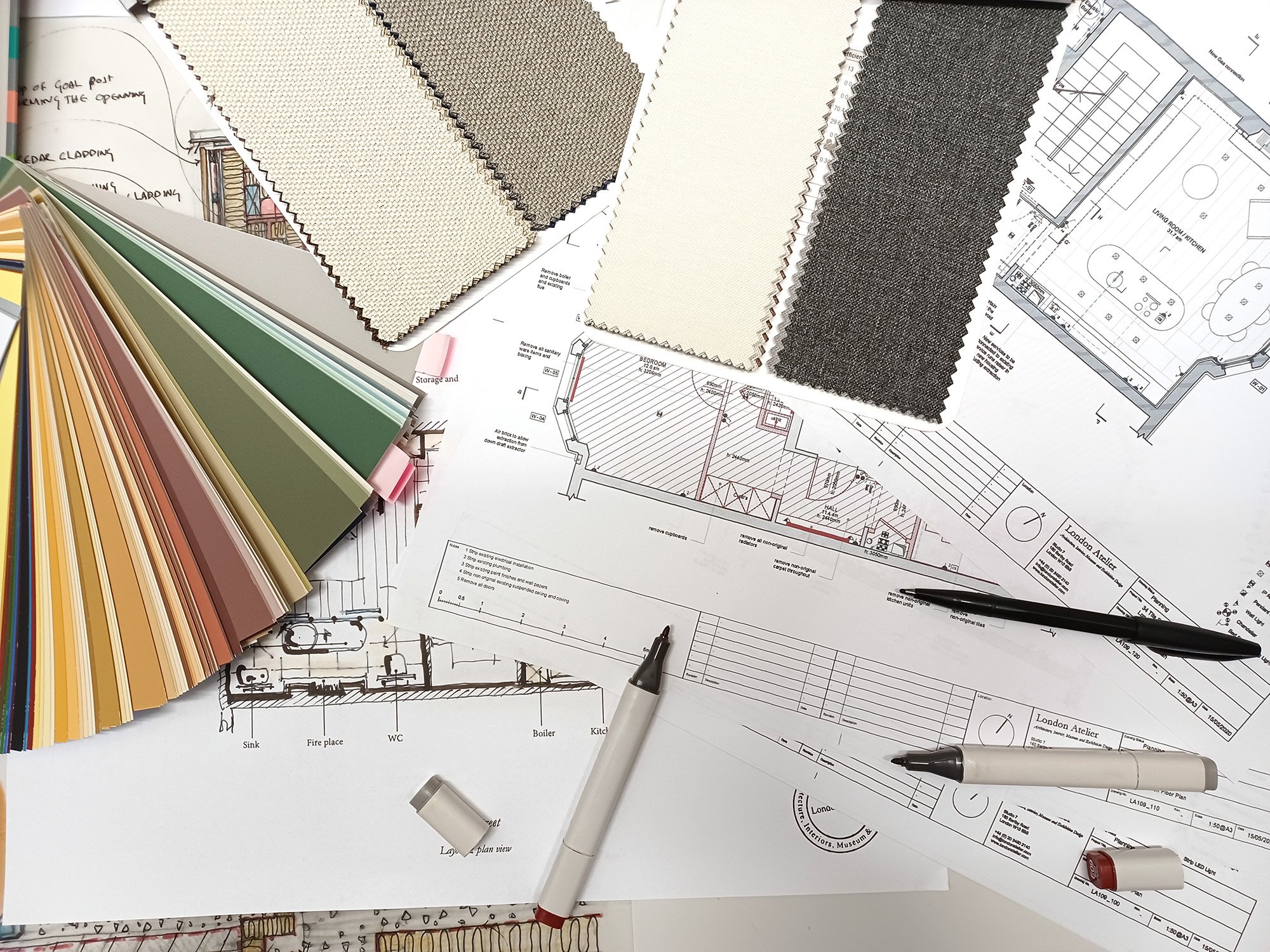
The Feasibility Study
A feasibility study forms the foundation of any considered development.
At a small fixed cost, testing multiple design options, materiality, site constrains and indicative project costs and timelines, while ensuring we are the right architect for your project.
1 The feasibility process engages with a broad field of influences, such as physical and regulatory condition
Projects often involves working within tightly defined parameters - conservation areas, listed fabric, neighbouring rights, and complex planning controls. A clear understanding of these constraints allows opportunities to be identified early, before they become limiting.
Planning - local planning authorities and policy frameworks
Site - neighbouring properties and rights to light, site context
Listed fabric - conservation and heritage considerations
Access - highways, access, and servicing requirements
Environment - environmental factors such as flood risk and orientation
Infrastructure - utilities and existing infrastructure

Feasibility Study for a Basement Extension to a Terraced Edwardian House in Fulham
2 Key Design Considerations
Further, a feasibility study establishes the foundations of a project - testing what a site can accommodate, how it can perform, and how design, planning and viability can align. It brings clarity at an early stage, allowing informed decisions before committing to a defined scheme.
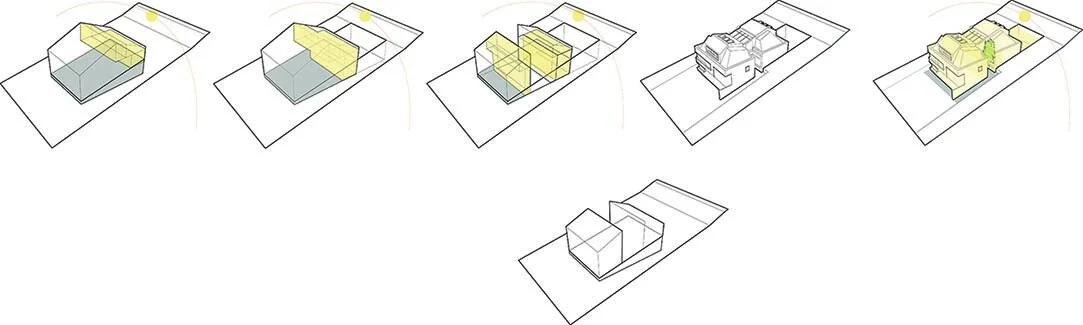
Light - Sun path and orientation studies test how the site can be shaped, guiding massing, openings and internal depth to reveal where spatial quality can be achieved within constraint
Material - Early decisions consider retention, adaptation or replacement of existing fabric
Spatial Capacity - The study assesses buildable volume, layout potential, access and thresholds
Viability - High-level cost alignment, GDV, specification and long-term performance
Design Testing - Massing studies, diagrammatic plans and comparative options
Performance - Environmental strategies such as insulation, airtightness, solar gain and ventilation are considered
Timing - Undertaken early, the study informs acquisition, planning strategy or project direction, reducing uncertainty and supporting confident decision-making
3 The Feasibility Document and Workshop
The feasibility study explores aspects of sections 1 and 2 to to an appropriate depth, forming a structured document for clients to review and reflect on. It also provides the basis for a workshop discussion - either on site or at our offices - allowing the project to be examined in detail, aligning expectations, and establishing a clear direction for how to potentially move forward.
Submit your details below for an initial discussion …

Feasibility Study of a 2 Storey Rear and Basement Extension to a Victorian Terraced House in Battersea
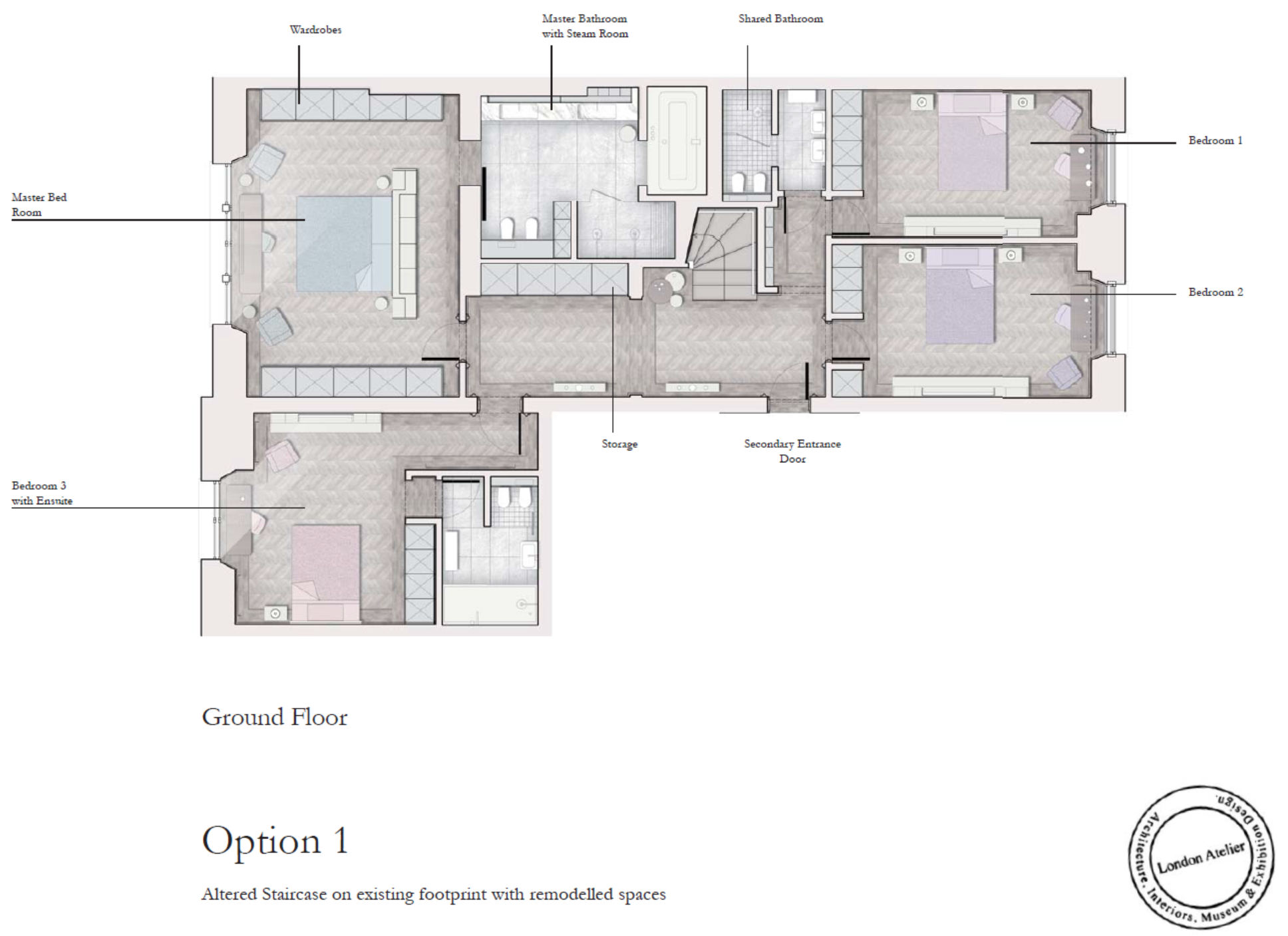
Feasibility Study for a large 2 level Flat at Hyde Park

Feasibility Study of options for a new build solution on a plot of Land in Putney.
4 Our fees for the Feasibility Study Service
Feasibility studies are typically offered at a fixed fee, tailored to the scale and complexity of the project. This reflects the size of the property, the level of detail required, and any specific requests or constraints that need to be explored. As a guide, feasibility study fees typically range between £1,750 and £4,000, depending on the scope of the project.
In some cases, it is advisable - though not essential - to have accurate survey information available, such as measured plans or sectional data. Where this is not in place, initial assessments can still be undertaken based on available information, with further detail incorporated as the project develops.
We are also able to assist in identifying and coordinating appropriate surveyors, ensuring that any additional information required is obtained efficiently and to the appropriate level of accuracy.
5 Budget
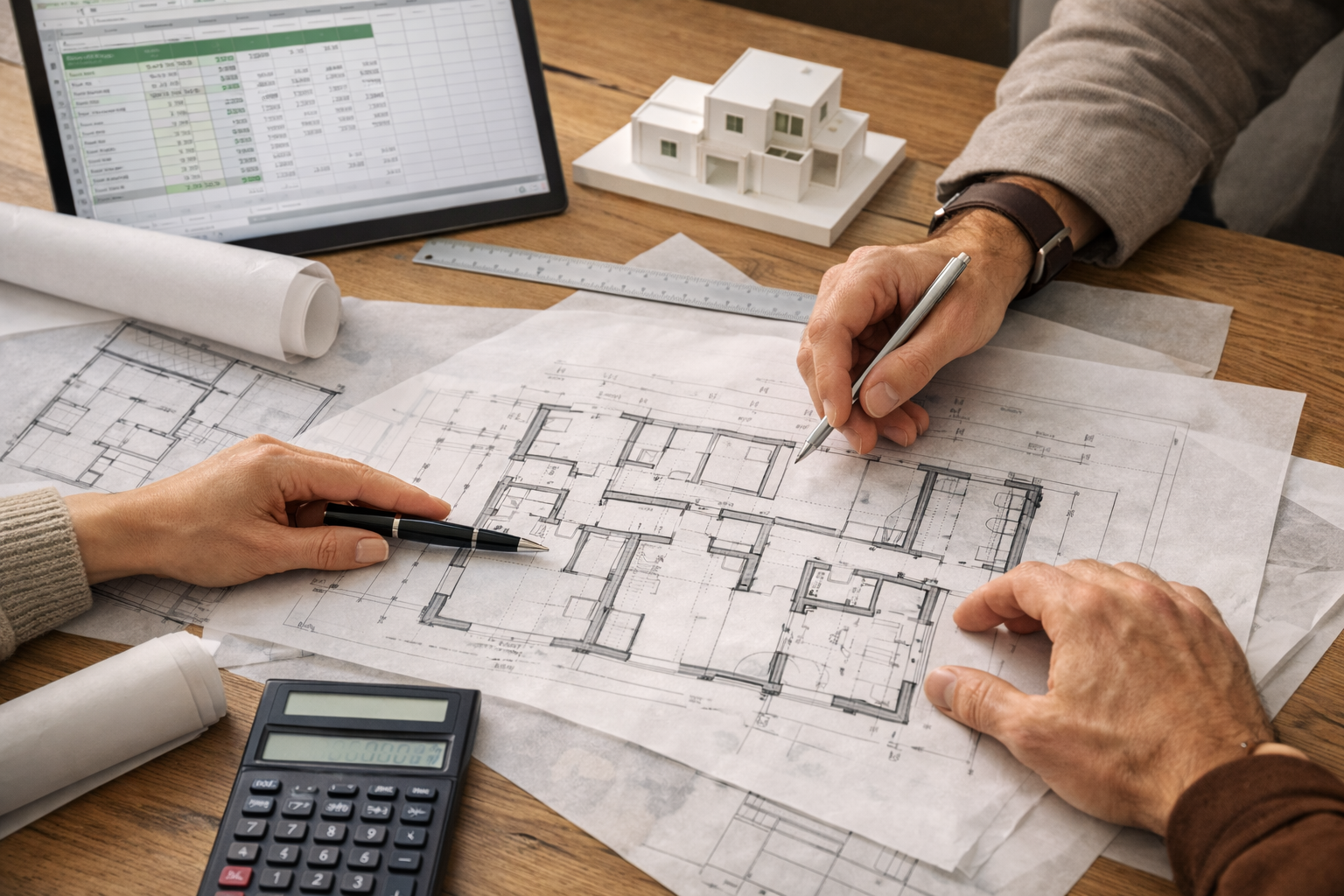
Would you like to get an idea of how much your redevelopment will cost ?
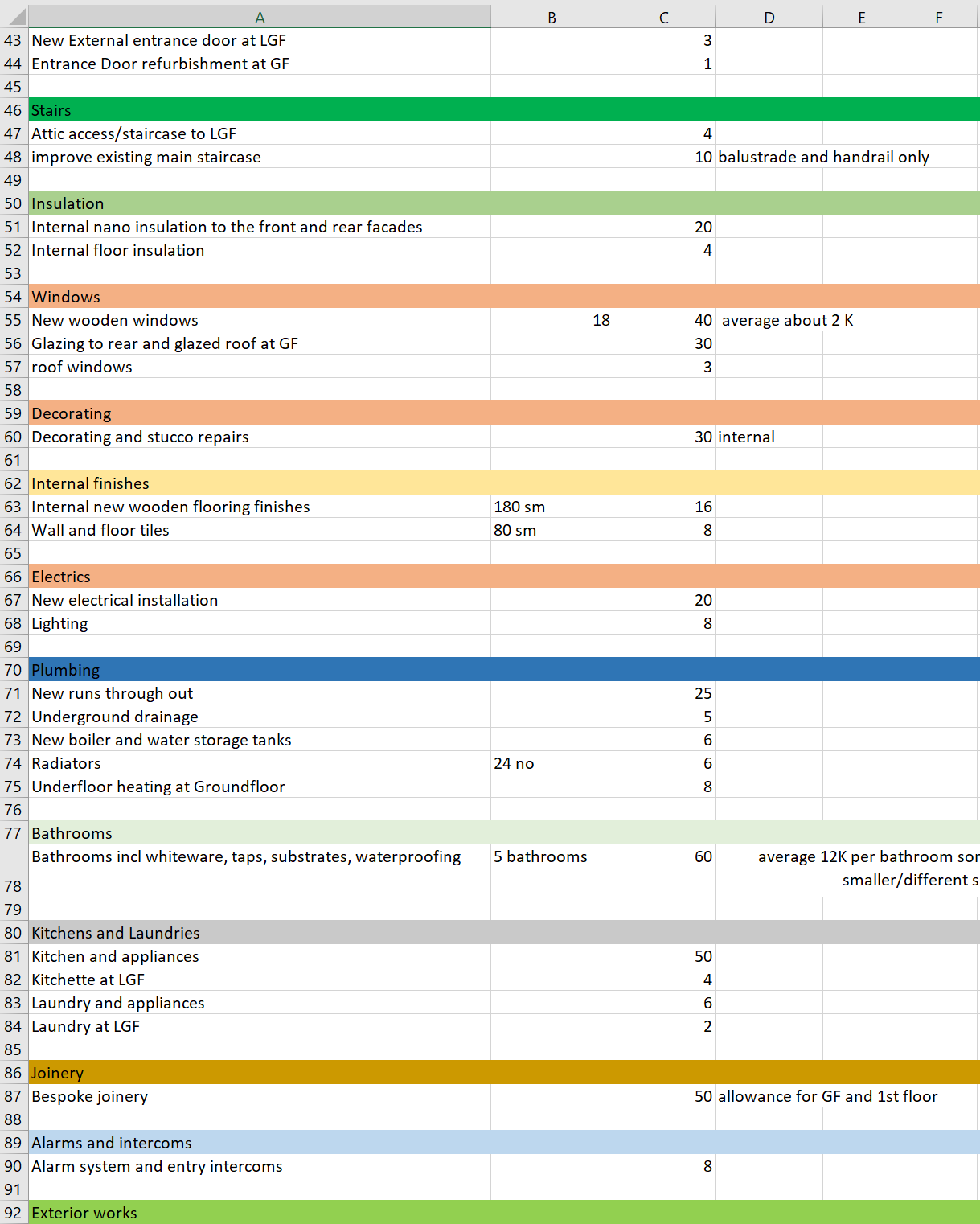
Once we have an understanding of what is possible given the constraints of the site and the options available and what you would like to do with the property, then we can start to consider the list of materials, products and systems required. Prices are constantly fluctuating. Availability is constantly changing. Technology is constantly evolving. Choice is constantly increasing.
Depending on the level of detail required we can look at all the building elements affected; Floors, Walls, Windows and Roof and get a reasonable estimate of the likely costs spread over the length of a project.
6 Space
Would you like to know how much space you can add to your property ?
The Feasibility Study can look at the specific constraints of your particular site, with an investigation that includes planning restrictions, the neighbours' right to light, Tree Preservation Orders (TPOs), flooding, conservation or historical covenants to name a few.
Whether you would like to extend to the rear or sides, to add a storey or create a basement, we may discover that it is possible to extend far more than you ever thought possible.


7 Light
Light Options and Daylight - the Key to a successful Project
Light is treated as a primary design driver from the outset. Early studies assess orientation, sun path and surrounding context to understand how daylight can enter, move through and define the internal environment.
Openings are positioned with care - not simply to maximise light, but to frame views, control glare and establish a balanced distribution across the plan. In deeper layouts, strategies such as rooflights, lightwells or double-height volumes are explored to draw daylight into the centre of the building, reducing reliance on artificial lighting.
At the same time, solar gain and shading are considered to prevent overheating, ensuring comfort throughout the year. Material choices - including surface reflectivity and depth of reveals - further shape how light is absorbed or reflected within a space.
By addressing daylight early, the design establishes a calm, legible spatial sequence, where light guides movement and defines atmosphere.
8 Land Options
Would you like to know what you can fit into a site ?
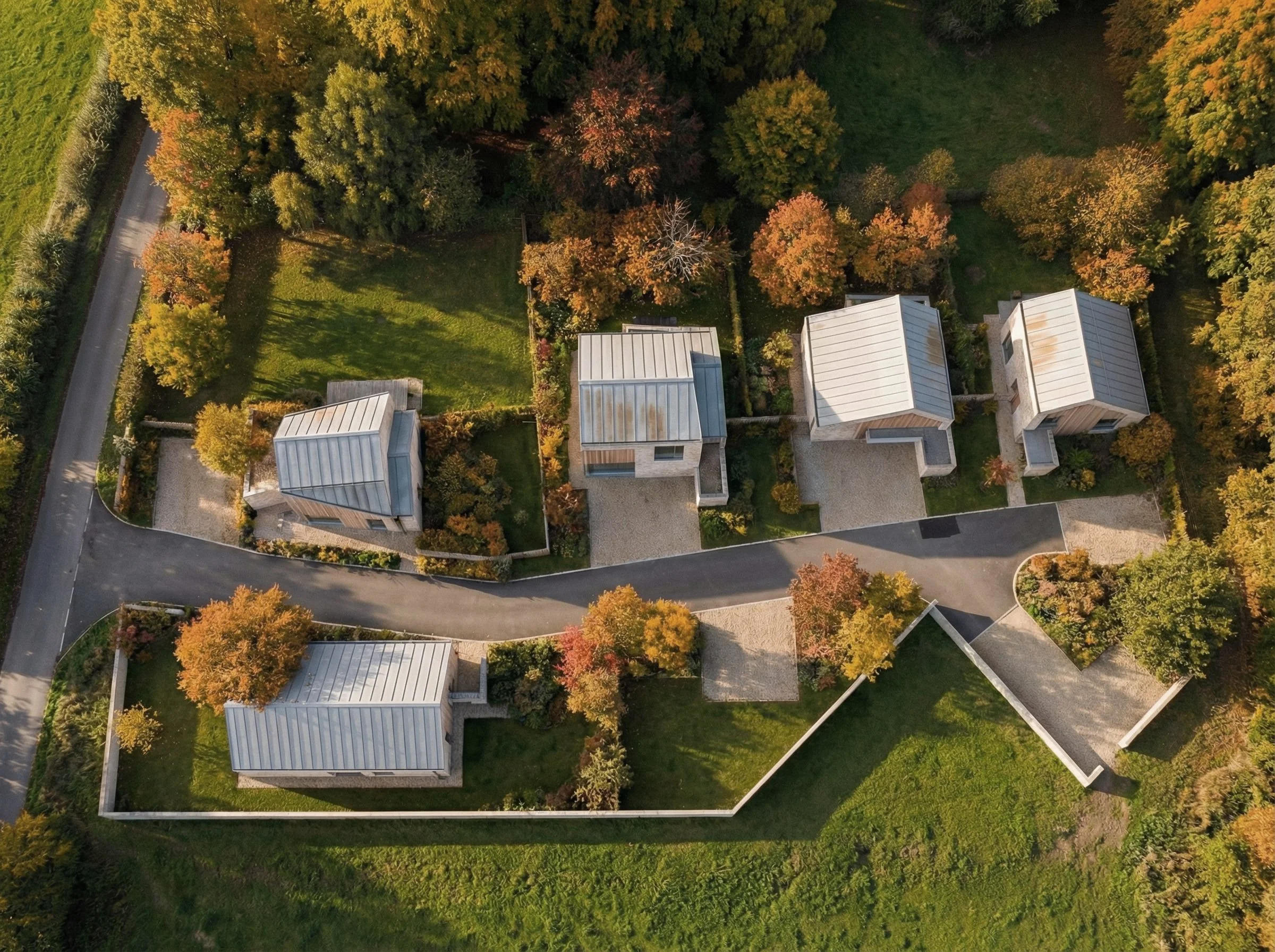
At feasibility stage, the capacity of the site is tested through a range of potential land use scenarios. Rather than fixing a single outcome too early, the study explores how different strategies might respond to planning policy, site constraints and market context.
This can include variations in footprint, height and massing, as well as the potential for subdivision, intensification or alternative uses where appropriate. Access, servicing and relationships to neighbouring properties are considered alongside the impact on the wider streetscape.
Each option is tested against planning acceptability and spatial quality, allowing both risk and opportunity to be understood in parallel. In some cases, a more restrained approach may offer greater certainty; in others, a more ambitious strategy may unlock additional value.
9 Layout
Would you like to explore different layouts for your home ?
The feasibility study takes a holistic view of the property, examining how the existing layout performs and whether it can be reconfigured to better support contemporary living. Many homes in London were designed for a different way of life, with compartmentalised rooms, limited connections and a hierarchy that no longer reflects current patterns of use.
The study explores how these constraints can be reworked - improving flow, introducing clearer spatial sequences and allowing spaces to adapt more flexibly. Opportunities to bring in light, improve connections between rooms, and redefine thresholds are tested alongside structural and planning considerations.
Using measured survey information and 3D modelling, accurate representations of the existing building are developed, allowing different layout options to be tested and compared.
Rather than proposing a single solution, multiple strategies are explored to understand the potential of the property and how it can be adapted to support a more tailored way of living.

10 Energy
Environmental Upgrades
The feasibility study can also investigate how the building fabric might be upgraded to meet current and future targets for thermal performance. This includes reviewing floors, walls, roofs and windows, identifying where improvements can be introduced without compromising the character or integrity of the existing structure.
A wide range of systems and materials are available, each suited to specific construction types and conditions. Selecting the appropriate approach requires a careful assessment of the existing fabric, moisture behaviour, buildability and long-term durability. Interventions are considered in relation to planning constraints, particularly within listed buildings and conservation areas, where external changes may be limited.
Alongside fabric improvements, the study can outline strategies for reducing energy demand and improving overall comfort, integrating insulation, airtightness and ventilation in a coordinated way.
We have certified in Passive House designer, providing a rigorous framework for assessing performance and ensuring that environmental considerations are embedded from the outset.