A Split Form within the Landscape
East Yorkshire, Cottingham
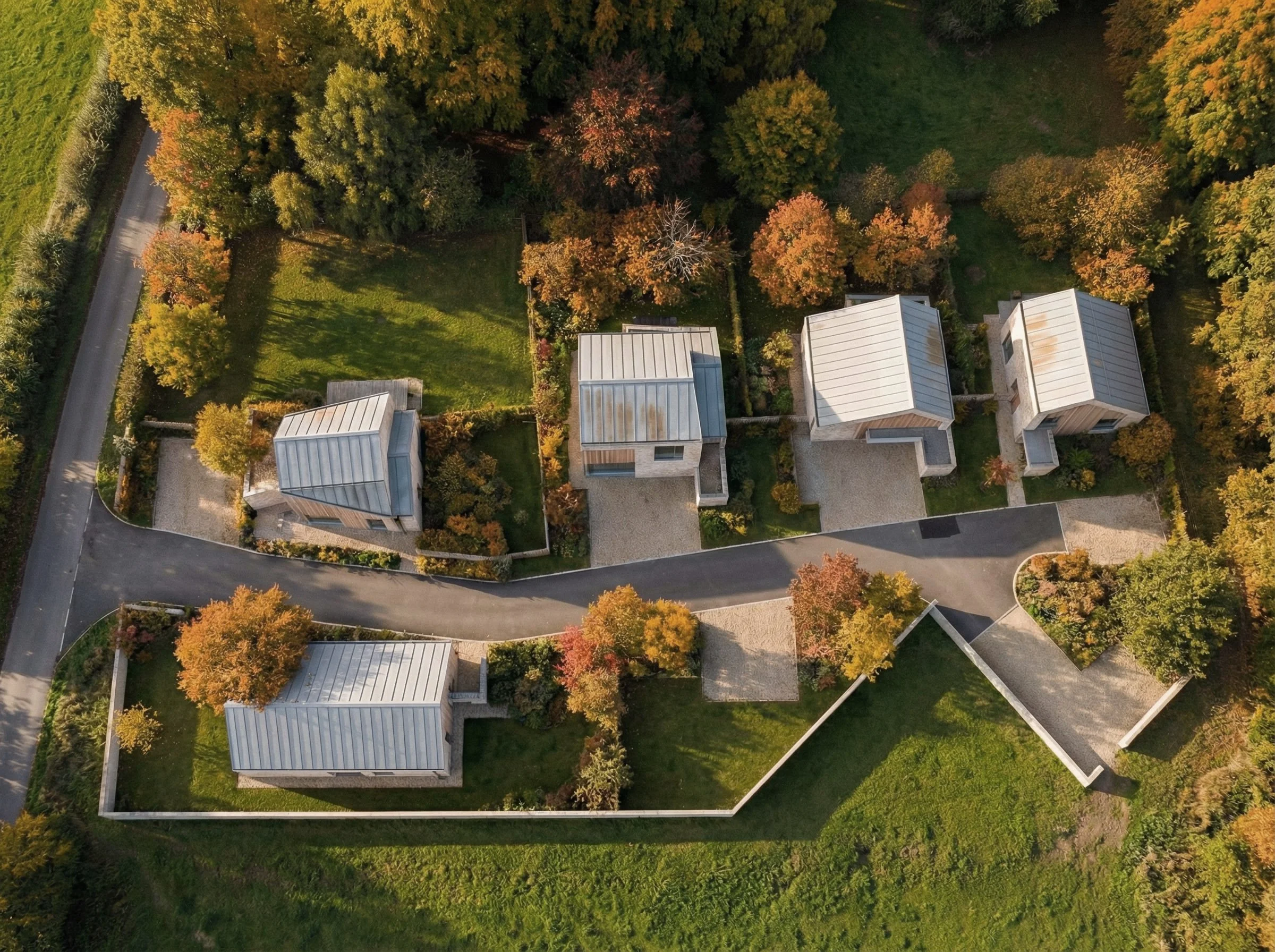
Bird’s-eye view of the proposed residential enclave, where six contemporary homes are carefully arranged along a shared internal lane, embedded within retained trees and landscaped gardens.
Introduction
This proposal sets out a carefully composed residential enclave of six contemporary family homes, discreetly positioned within a deep backland plot off New Village Road, Cottingham.
The scheme is guided by a landscape-first masterplan, where an internal lane structures access and movement while allowing each house to sit comfortably within generous green plots. Existing trees are retained and reinforced, ensuring the development reads as a natural extension of its setting rather than an imposition upon it.
Concept and Materiality
The proposal builds on a familiar London Atelier principle: breaking down domestic scale through articulation rather than reduction. Instead of singular, monolithic forms, each dwelling is conceived as a composition of interlocking volumes, allowing the houses to respond to landscape, light and movement across the site.
This idea of a “split” form is expressed through subtle shifts in roof geometry, massing and orientation. Pitched roofs are manipulated and offset, creating varied silhouettes that reduce perceived bulk while introducing hierarchy between primary living spaces and secondary elements.
The result is an architecture that feels carefully composed and human in scale, despite the overall density of the scheme.
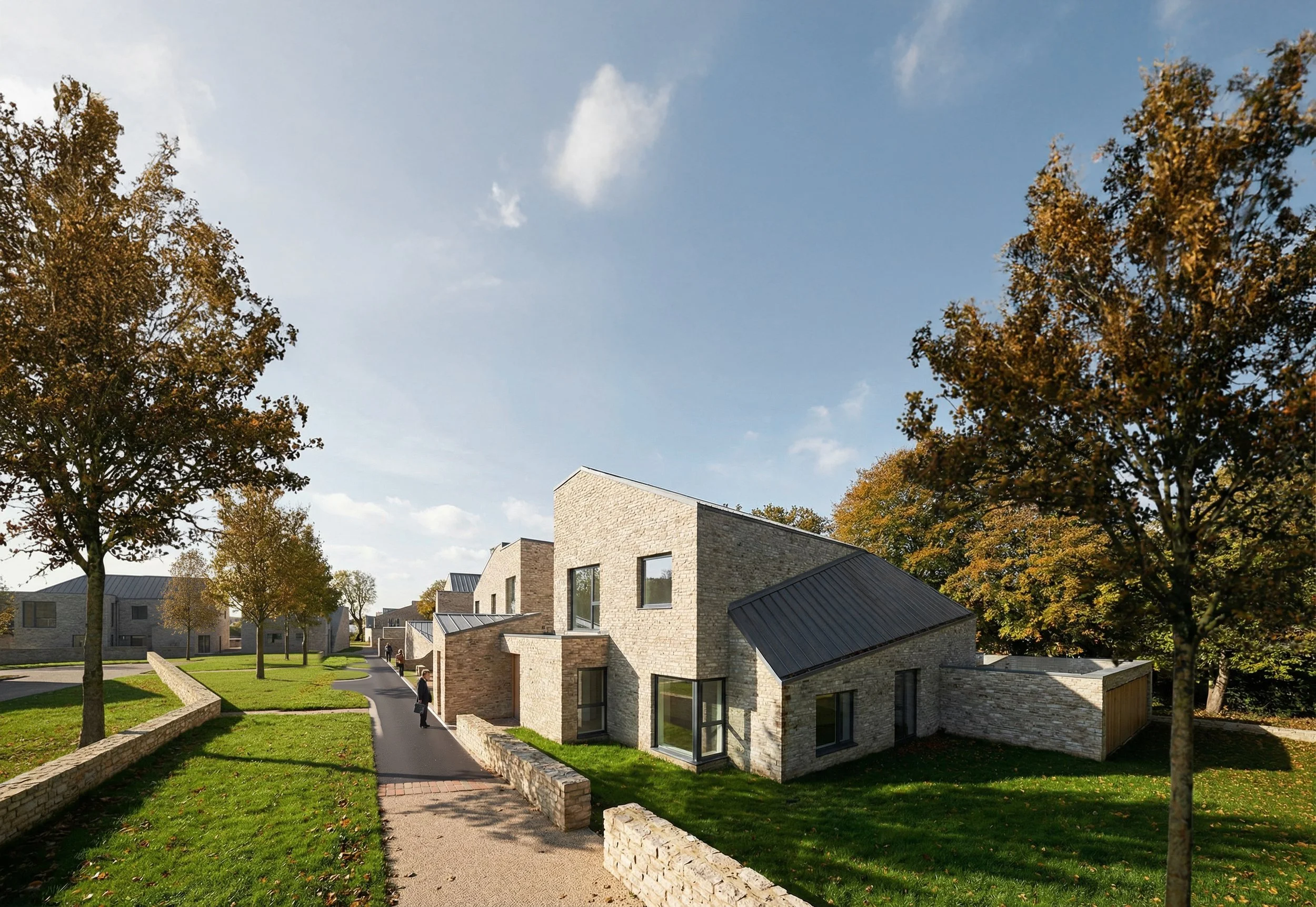
View along the shared internal lane, where articulated brick and timber houses are arranged as a sequence of split volumes, set within landscaped gardens and mature trees.
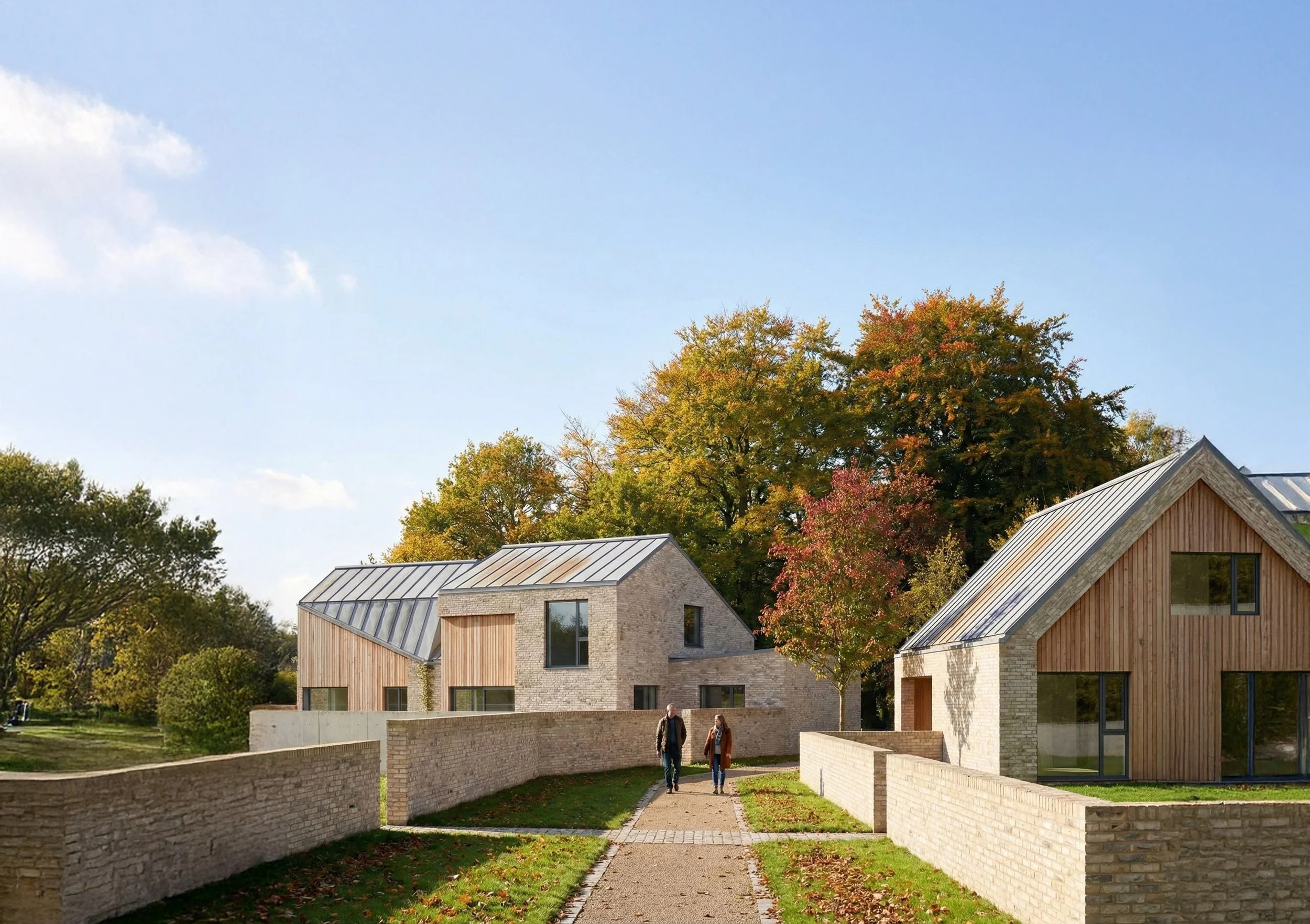
Entrance view to the development, where articulated brick volumes and timber-clad elements frame a calm pedestrian route through the landscape.
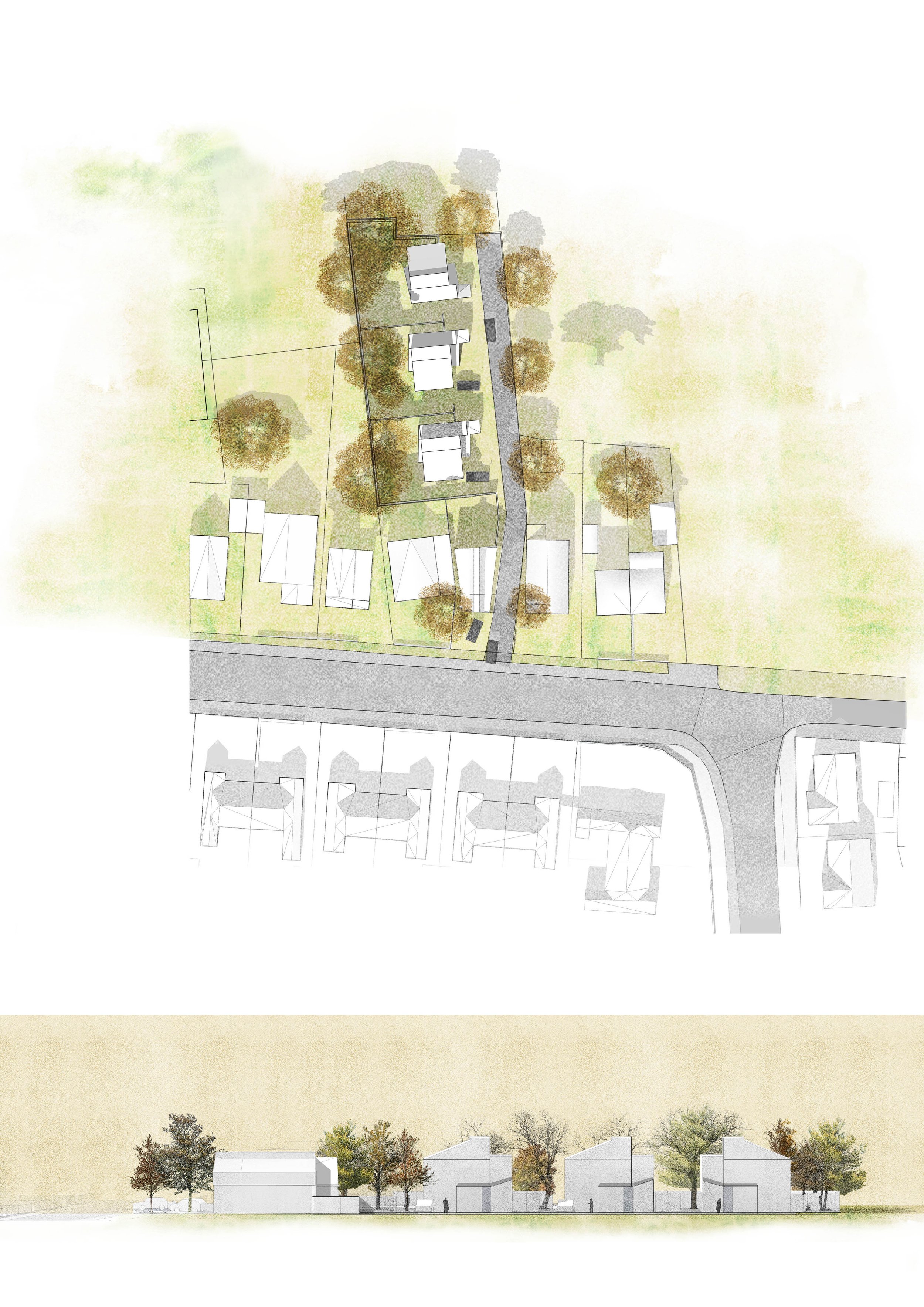
Earlier massing Study of the Scheme
Relationship to Landscape
The architecture is deliberately calm in expression, allowing landscape, light and seasonal change to play an active role. Views along the internal lane reveal a sequence of forms rather than a single frontage, with planting, trees and open green spaces softening transitions between built elements.
Together, the material palette and split-form concept create a development that is coherent yet varied, contemporary yet rooted in place - a residential environment designed for longevity, liveability and strong market appeal.
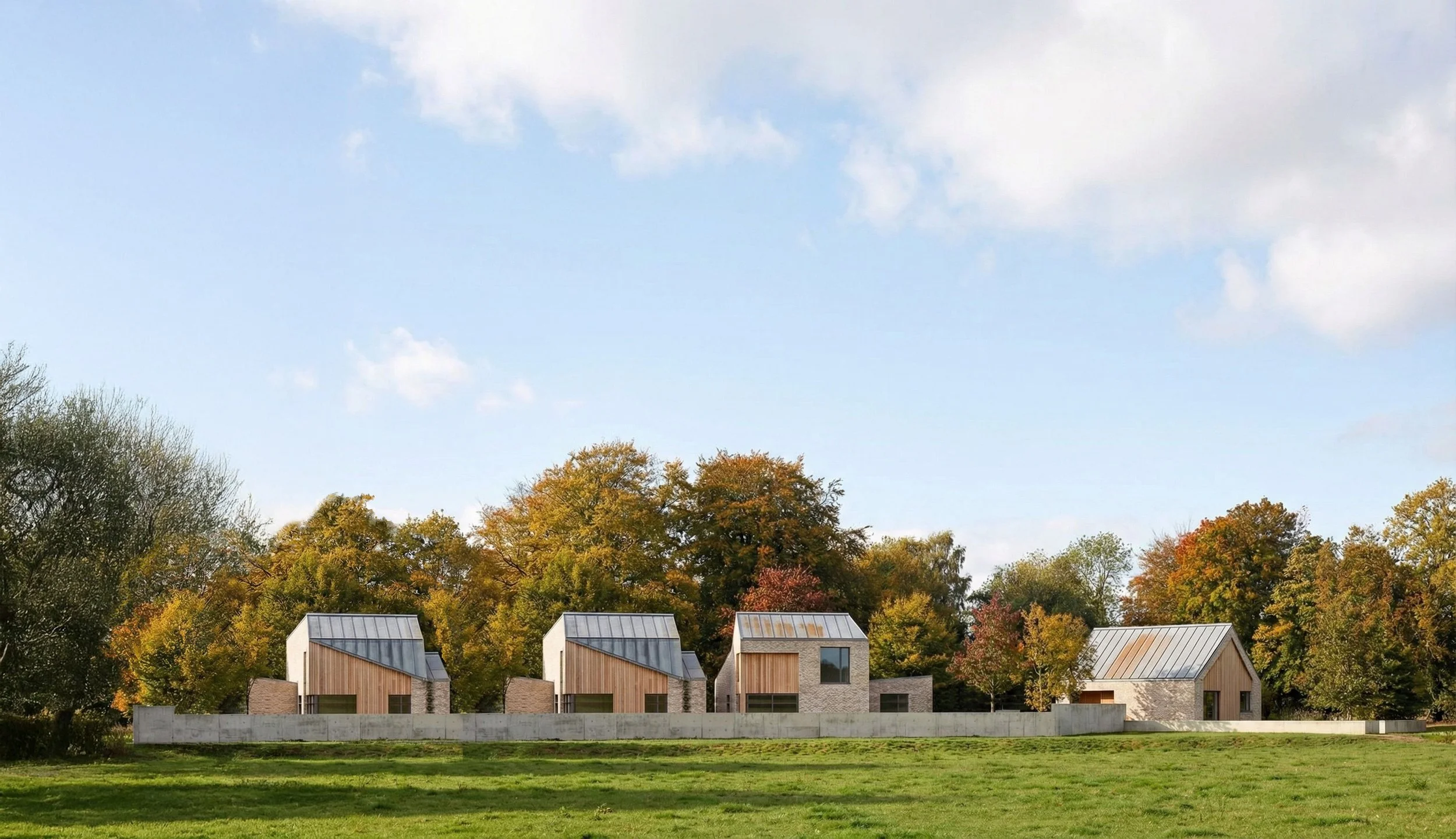
Long view across the landscape, showing the rhythm of pitched-roof houses set behind low brick walls, where brick, timber and metal roofs create a coherent residential edge.
Material Strategy
Materiality is central to the architectural concept, with a restrained palette used to express contrast and articulation rather than applied decoration. Brickwork provides a robust, grounding element, referencing local construction traditions while unifying the development as a coherent family of buildings.
Timber cladding is introduced to selected volumes and upper storeys, visually splitting the houses into distinct components and softening their relationship with the landscape. Designed to weather naturally, the timber will further embed the buildings within their setting over time. Standing-seam metal roofs unify the scheme, their crisp detailing lending a contemporary character while variations in roof form reinforce the individuality of each dwelling. Low brick boundary walls and integrated landscape elements extend the architectural language into the public realm, defining private gardens and thresholds with a calm, open character.
Get in touch and request your brochure:
Follow the links below to request our brochure which we’ll guide you through the design and service process of our projects!