Hamilton Terrace, Copper Garden House
Maida Vale, London
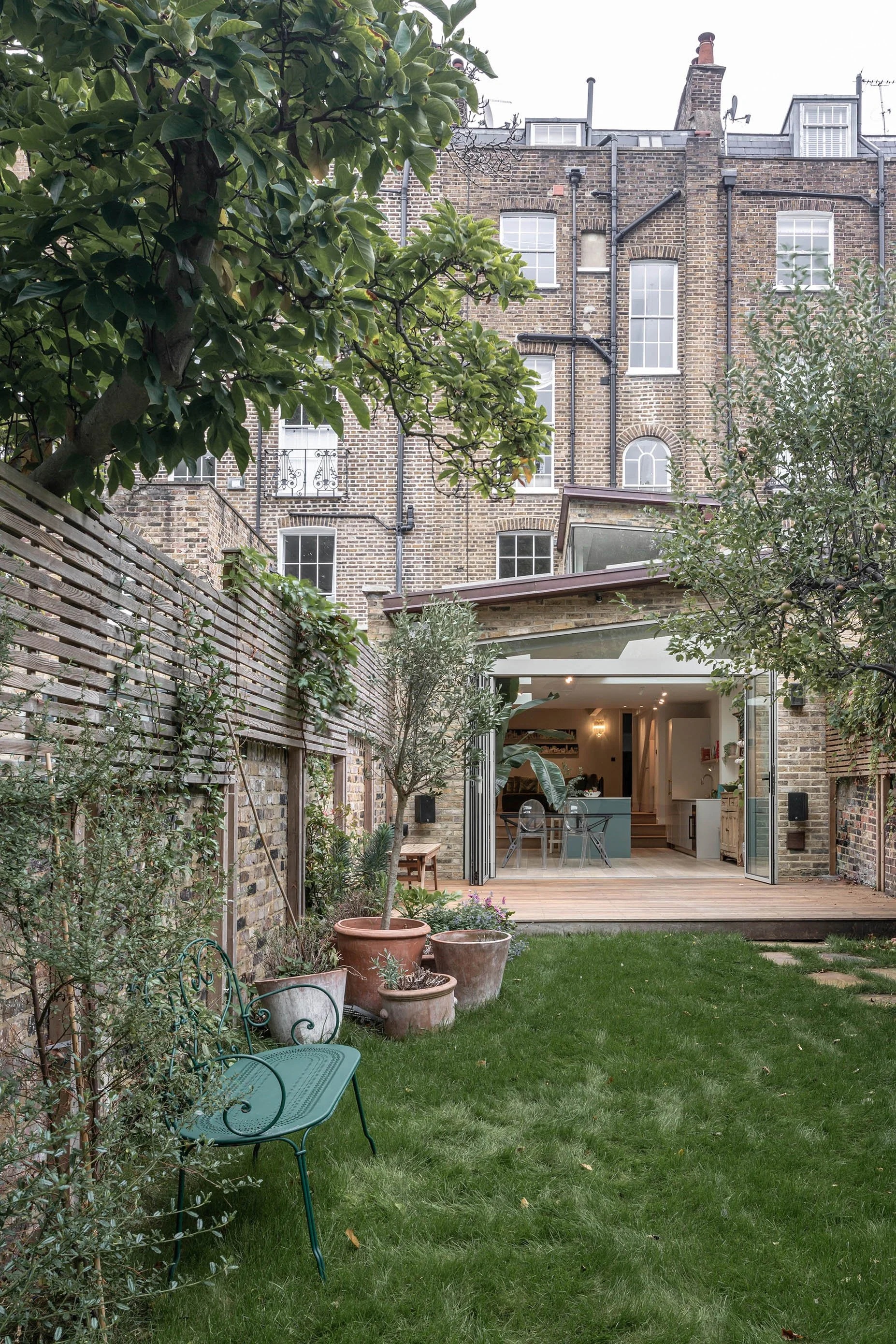
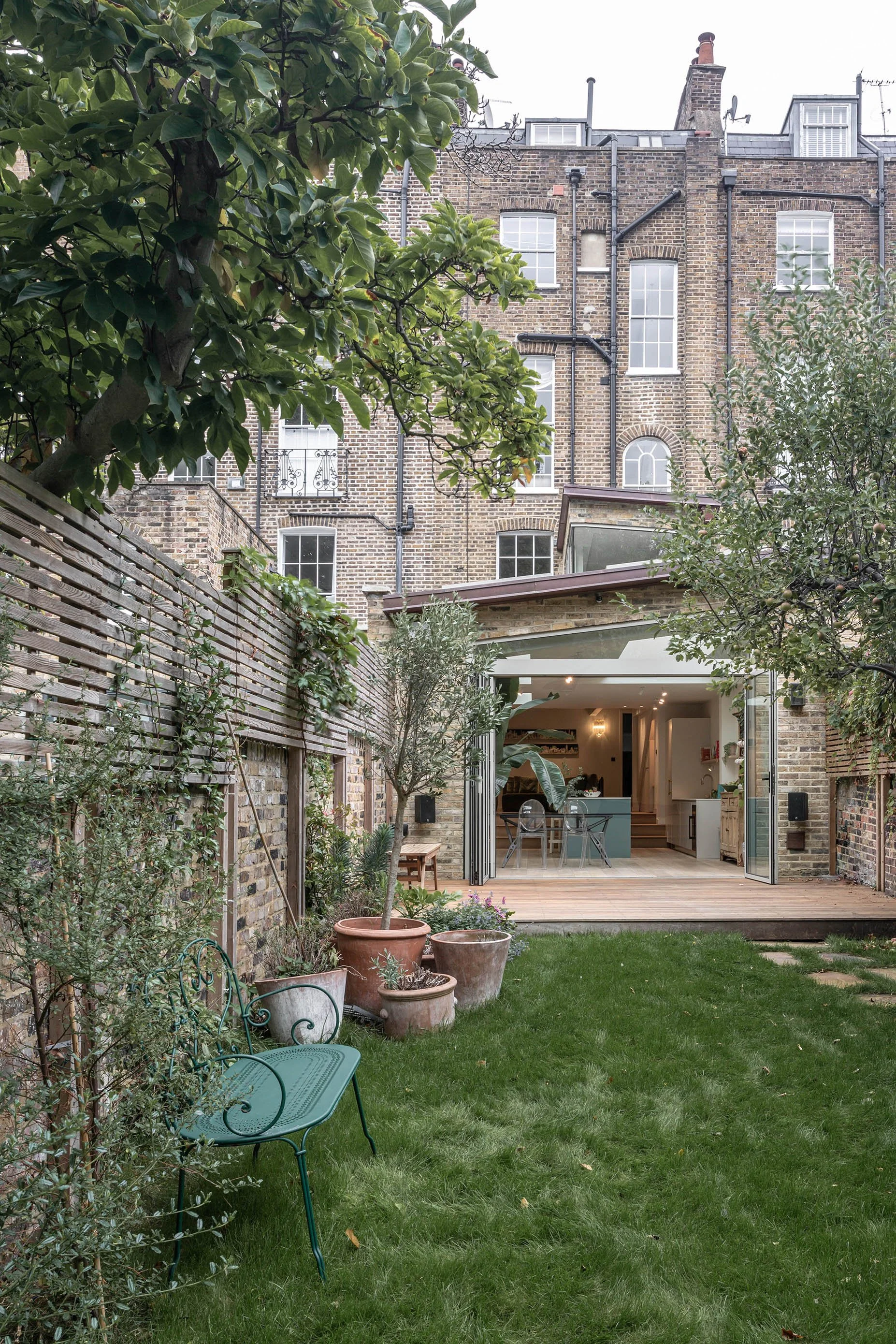
Lower Ground Floor Extension showing the sloping Copper Roofs of the new Additions
Introduction
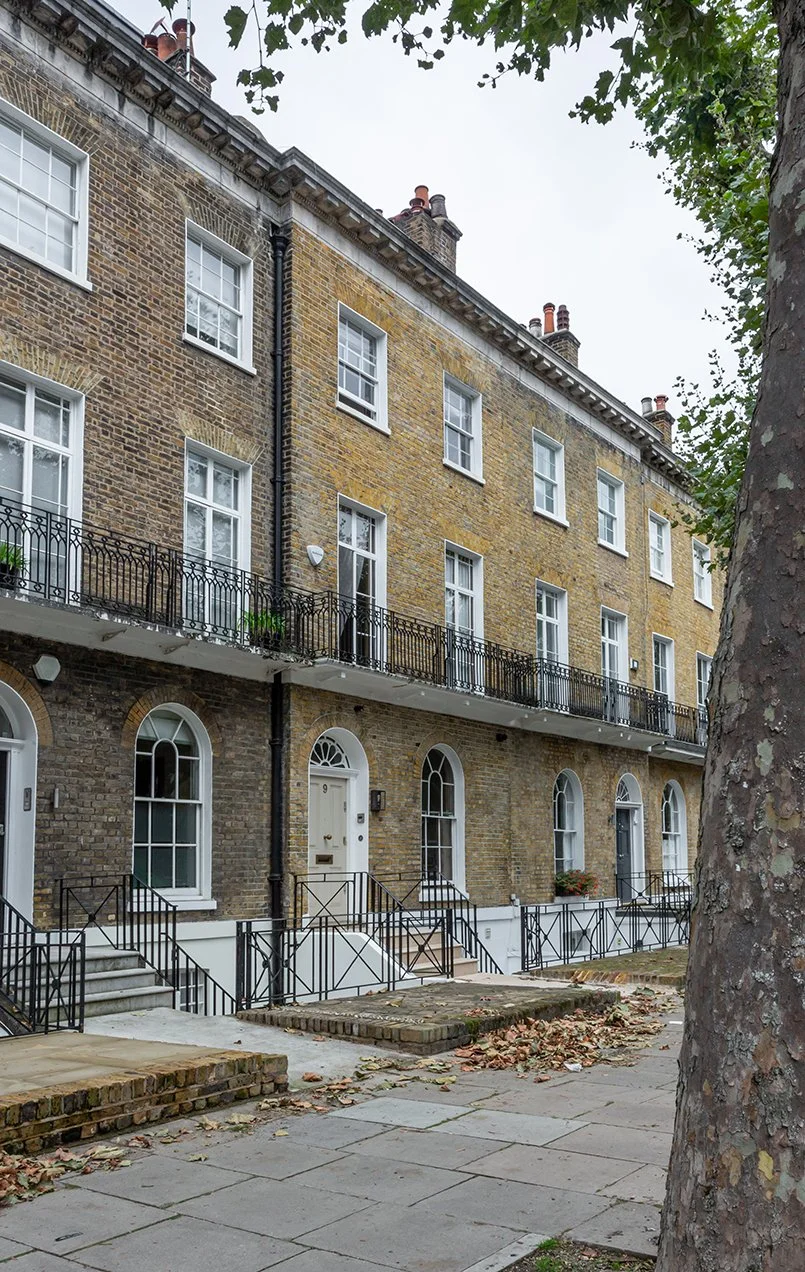
Set within the St John’s Wood Conservation Area, the Copper Garden House reworks a Grade II listed early nineteenth-century terrace on Hamilton Terrace. The building forms part of a wider composition valued for its group presence within a formal streetscape of yellow brick and stucco façades.
While the principal elevation remains intact, the interior and rear have undergone successive alterations, particularly during the late twentieth century. These changes have eroded the clarity of the original plan and weakened the relationship between house and garden.
The project restores coherence, reworking the interior and replacing unsympathetic additions to support contemporary living while maintaining the legibility of the historic structure.
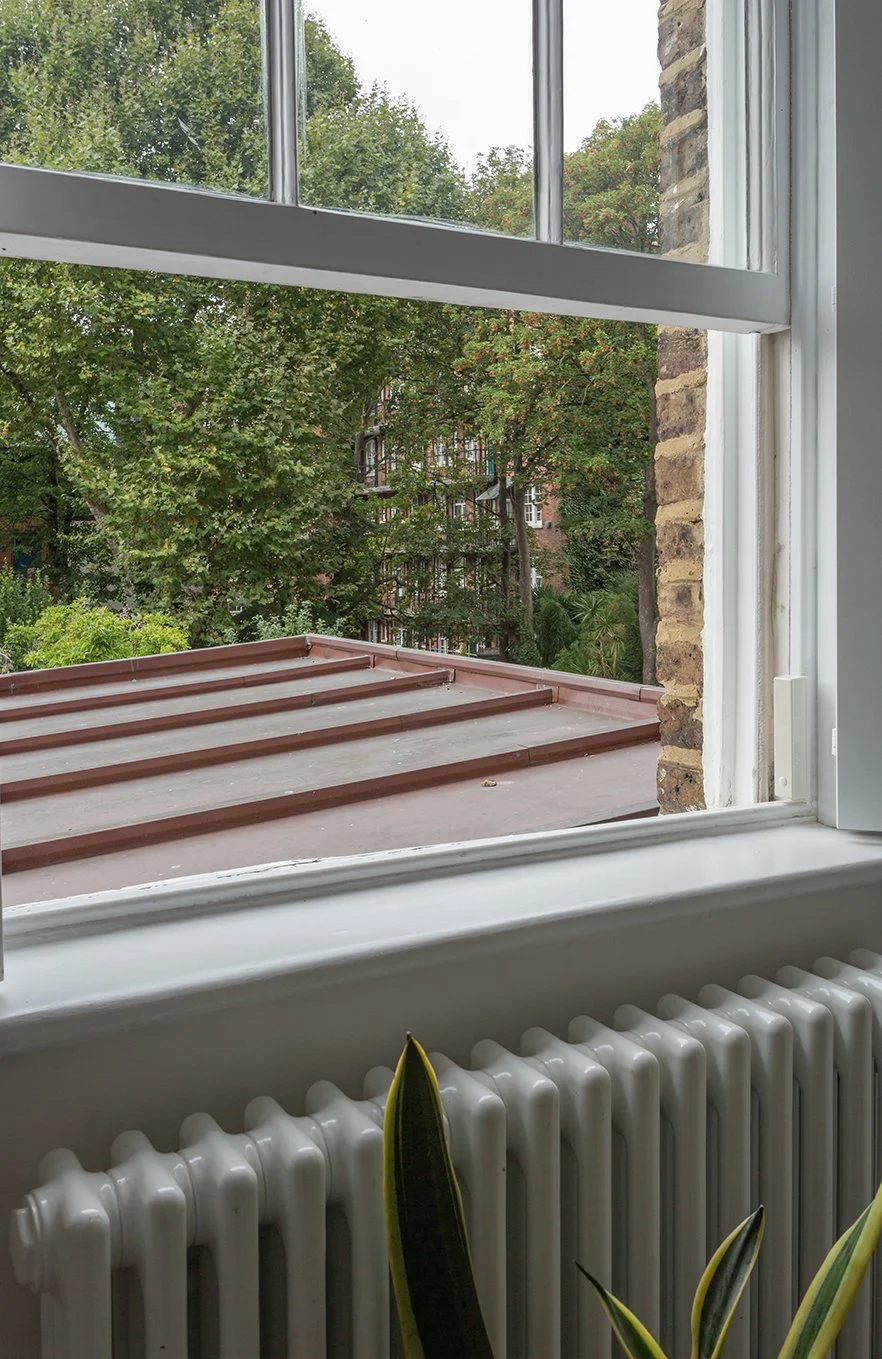
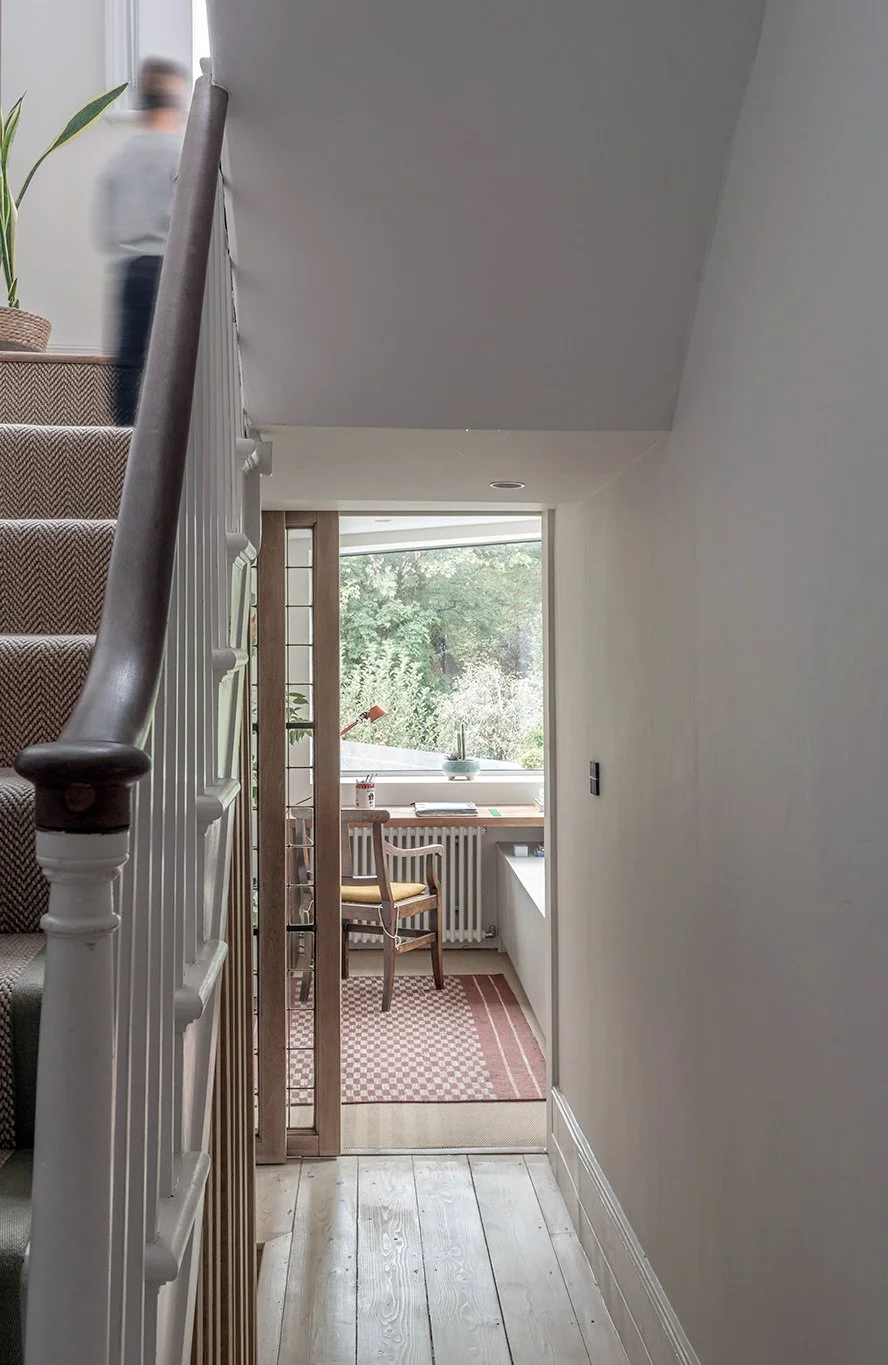
Overlooking the Office Extension at 1st floor half Landing
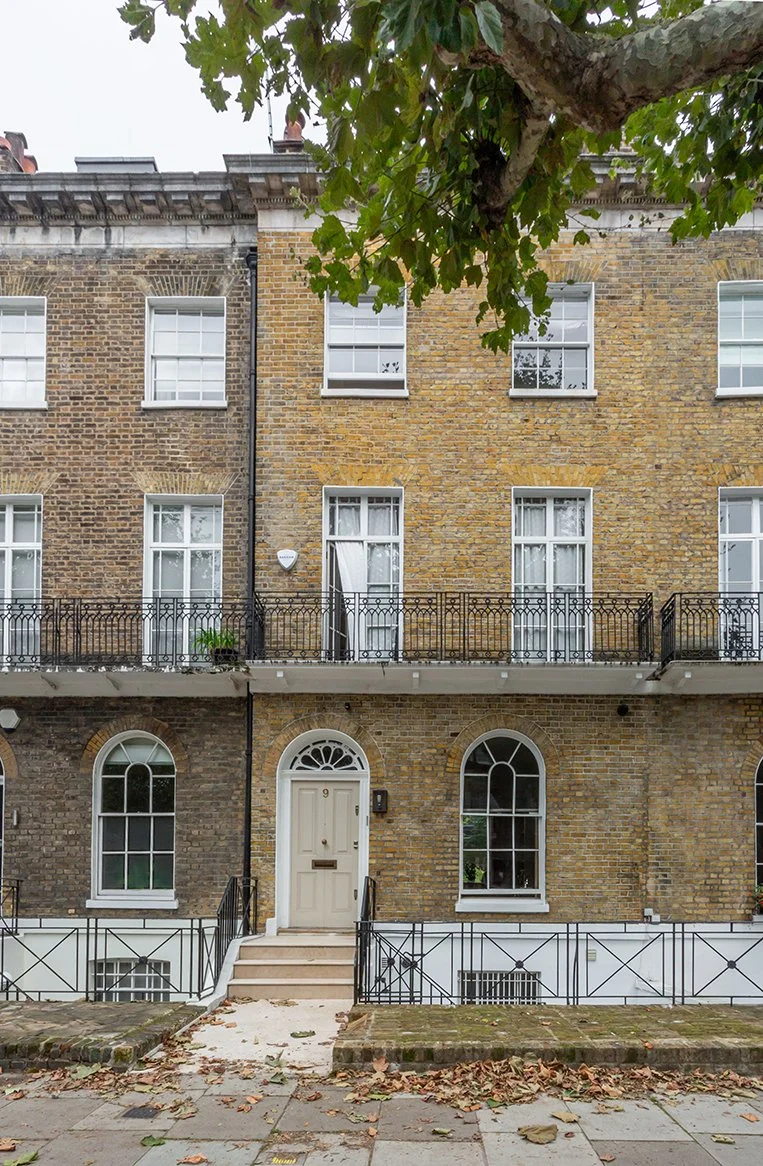
The restored Front Façade on Hamilton Terrance
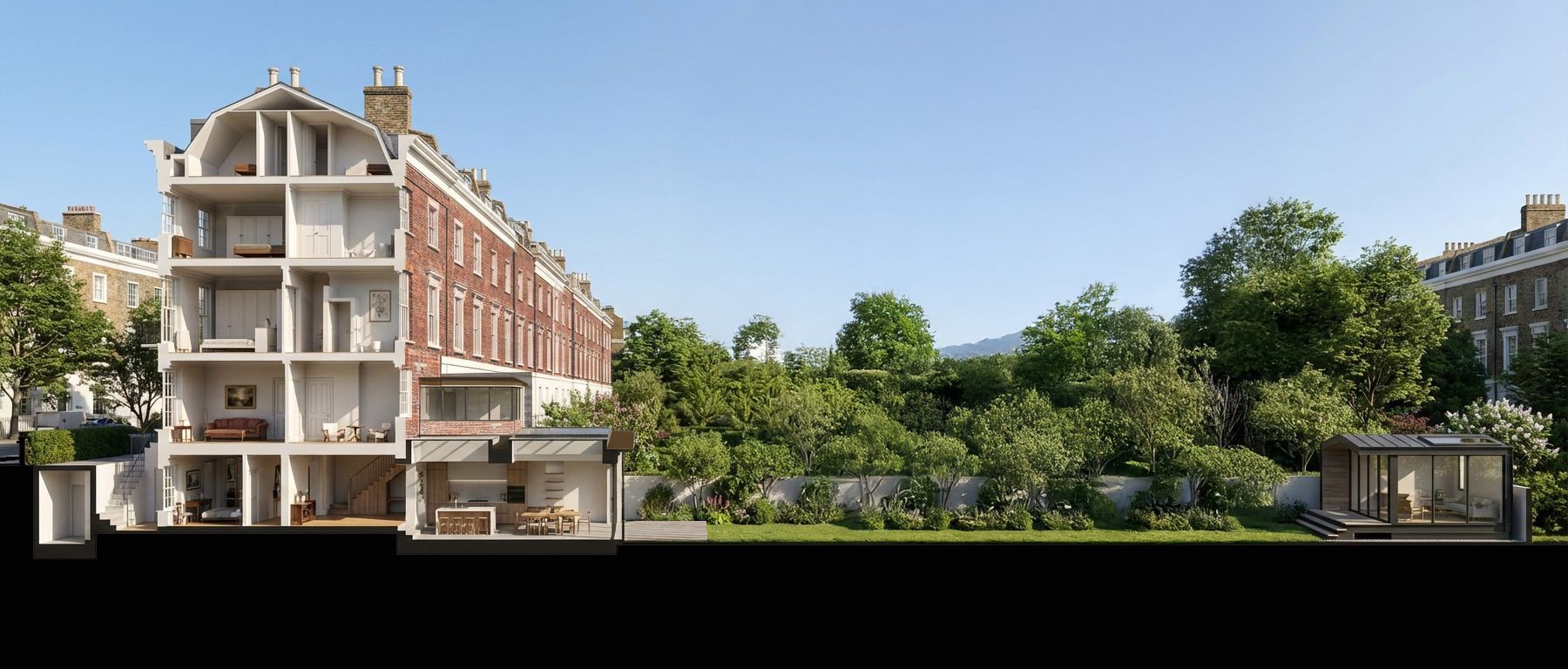
Long Section of the Scheme showing the Height and relationship to the Garden and Summerhouse
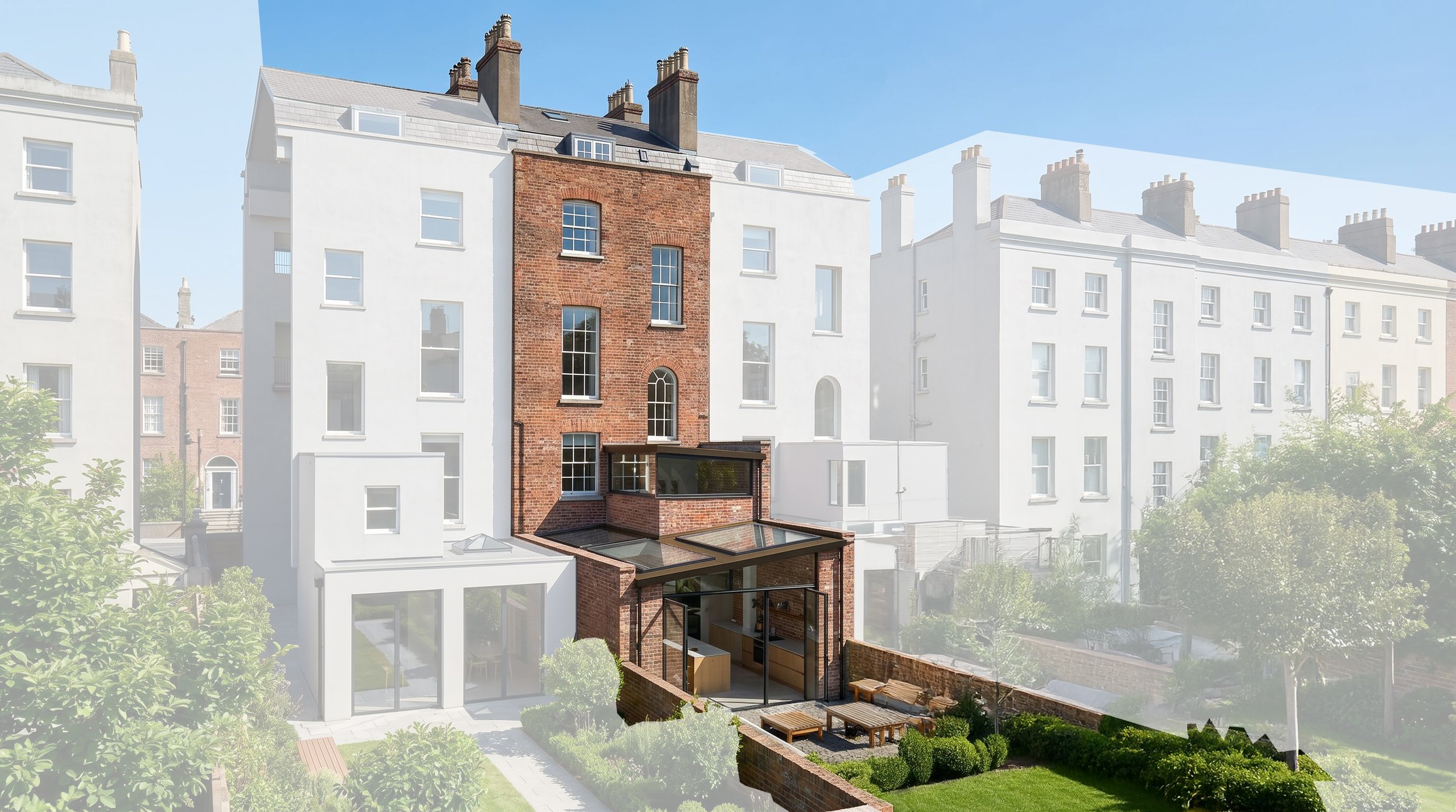
Render showing the new Rear Spaces with their Copper Roofs
Spatial Intervention and Additions
The intervention focuses on recalibrating the lower ground and ground floor levels, where earlier alterations had fragmented the plan. Non-original partitions are removed to re-establish a clear sequence of rooms, guiding movement from entrance to garden.
A new rear extension replaces the conservatory, extending the plan and aligning with neighbouring precedents. The opening between house and extension is widened to create continuity, allowing light to move more freely through the lower ground floor. A study at ground level forms part of a two-storey rear extension beneath a copper roof.
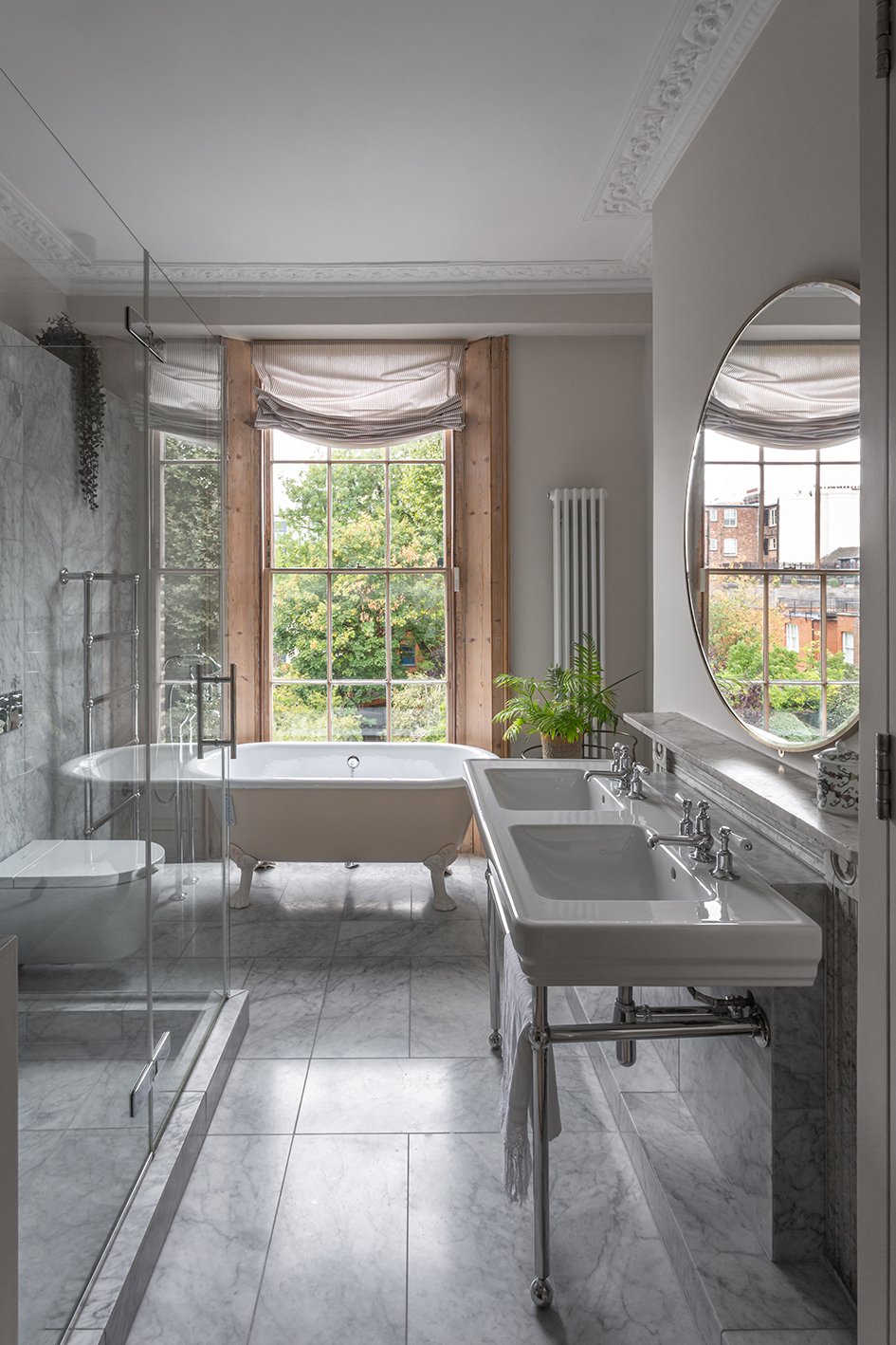
Across the upper floors, the cellular arrangement is largely retained, with targeted adjustments to improve use and circulation. Bathrooms are repositioned between chimney breasts and service zones, maintaining the integrity of principal rooms.
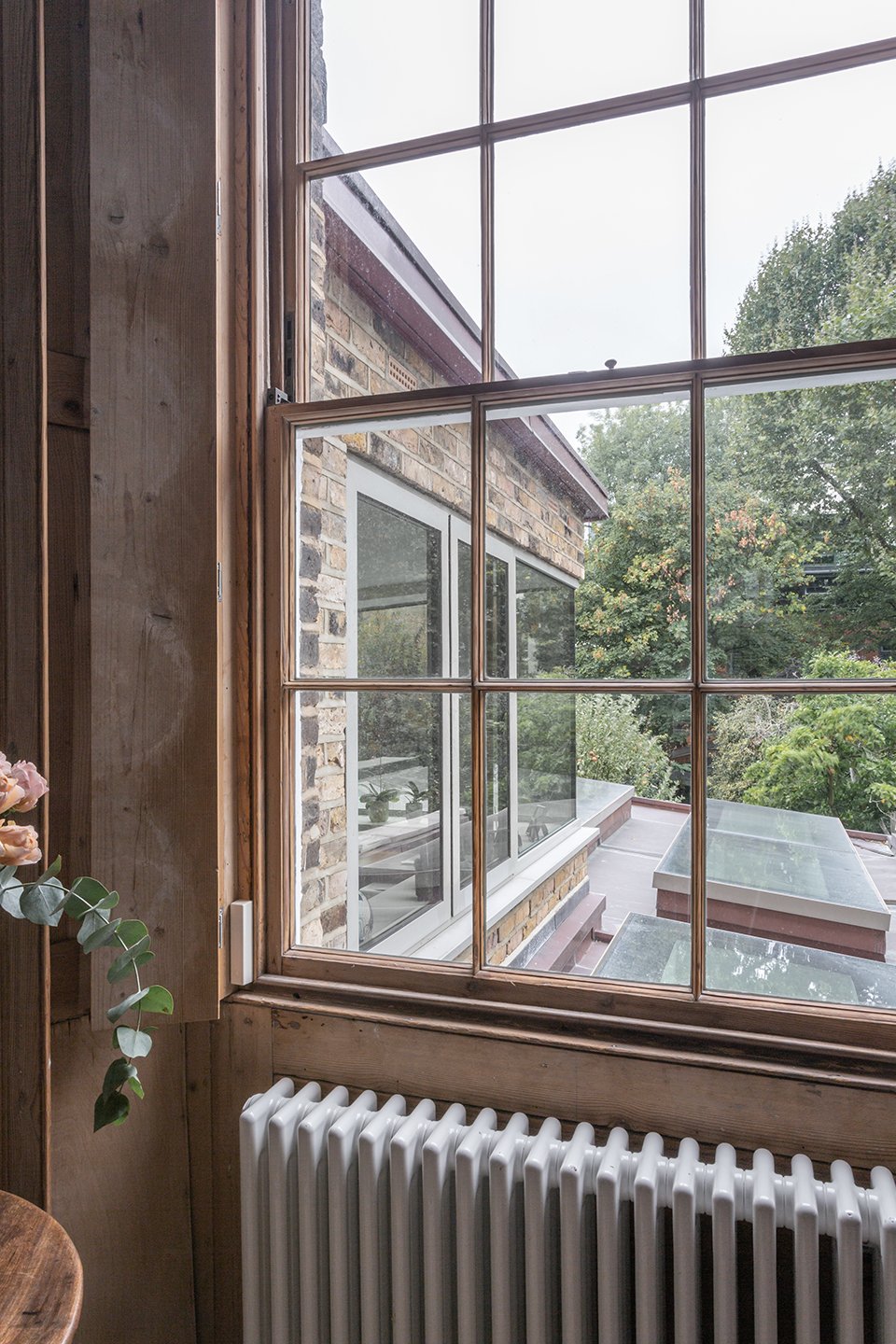
View from the 2nd Drawing Room looking in the lush Garden
Materiality and Colours
The material approach is restrained and restorative. Existing fabric is retained and repaired, with new work expressed in a quiet, complementary manner alongside the copper roof.
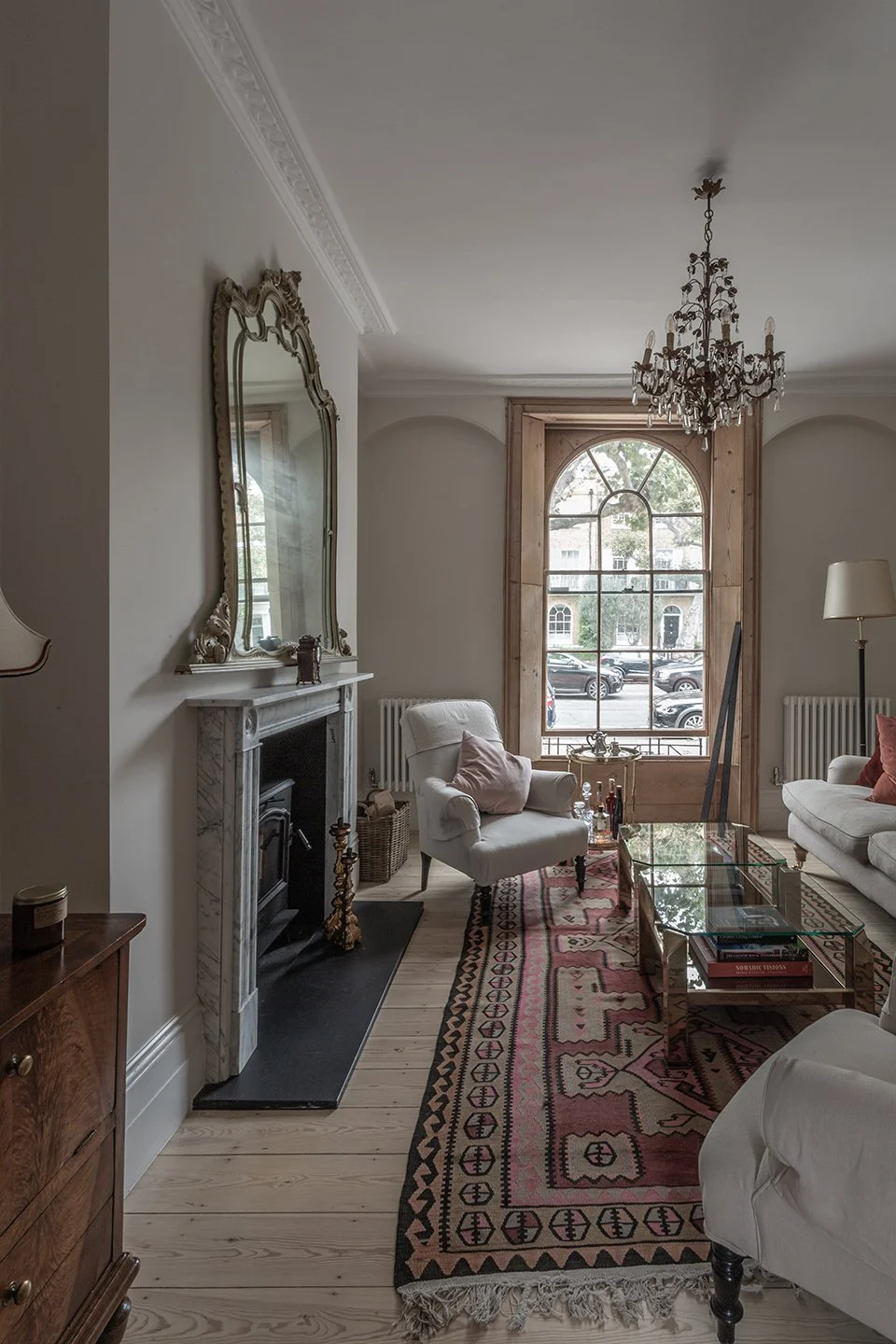
Timber flooring is reintroduced throughout, replacing later finishes and establishing a consistent tactile ground. Joinery is integrated within recesses and wall thicknesses, absorbing storage and services into the fabric.
Externally, the palette follows the existing terrace, with brickwork repaired to match the original construction. New insertions remain secondary, allowing the historic envelope to remain primary.
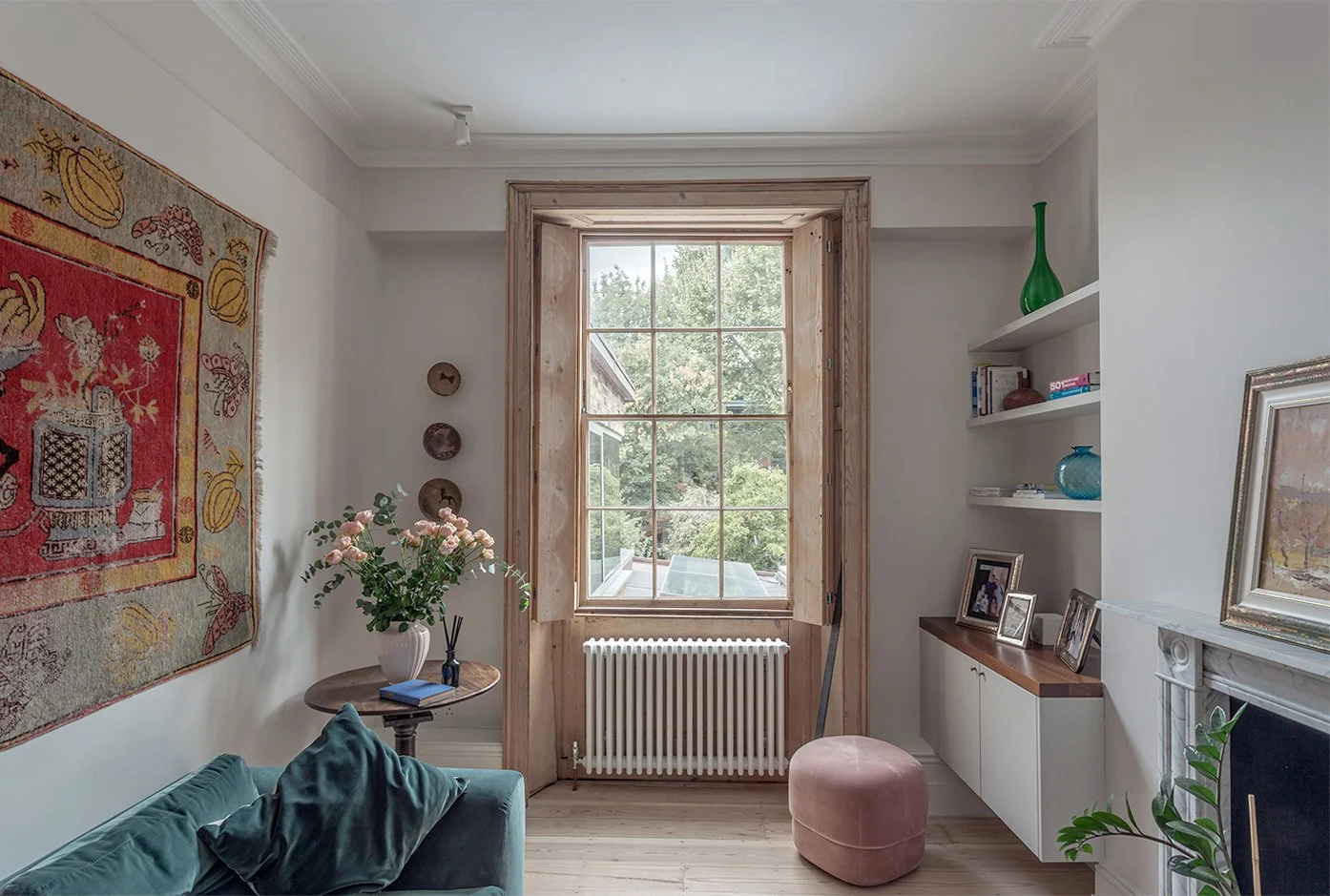
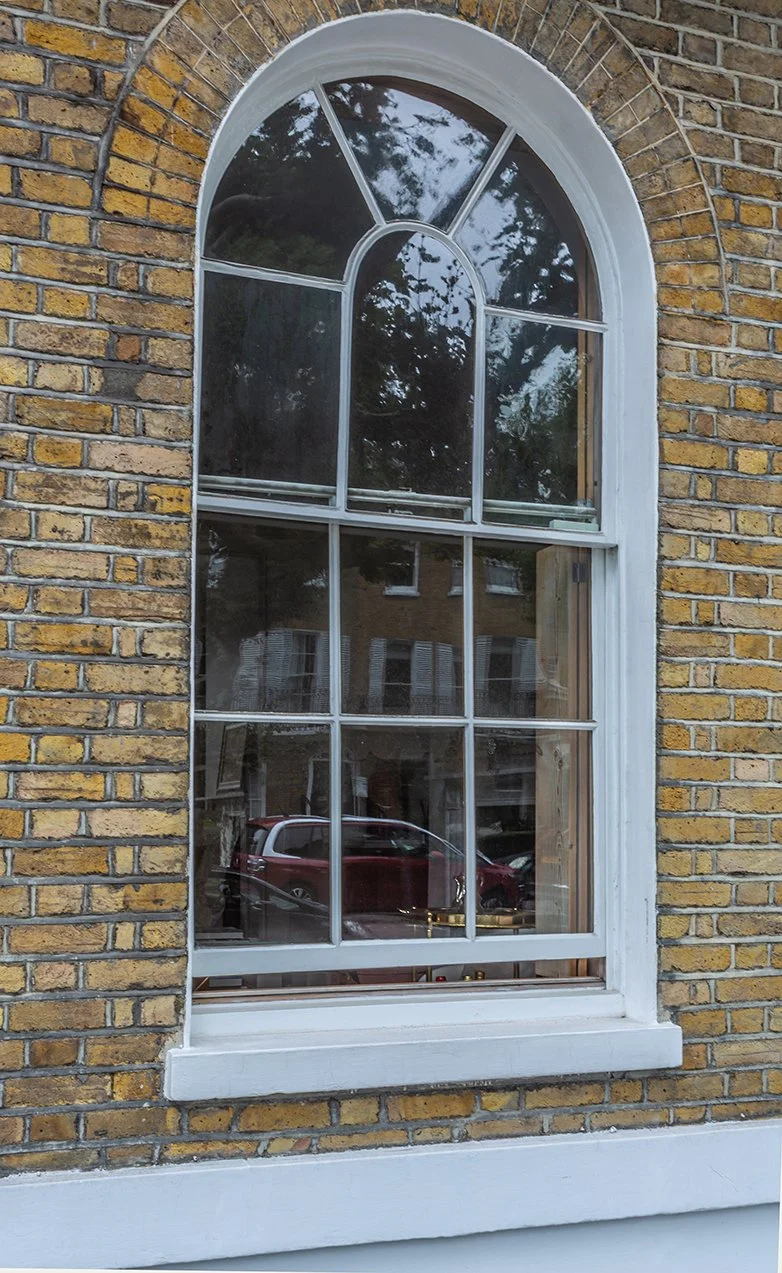
The second Drawing Room; View through the original timber sash Window into the rear Garden
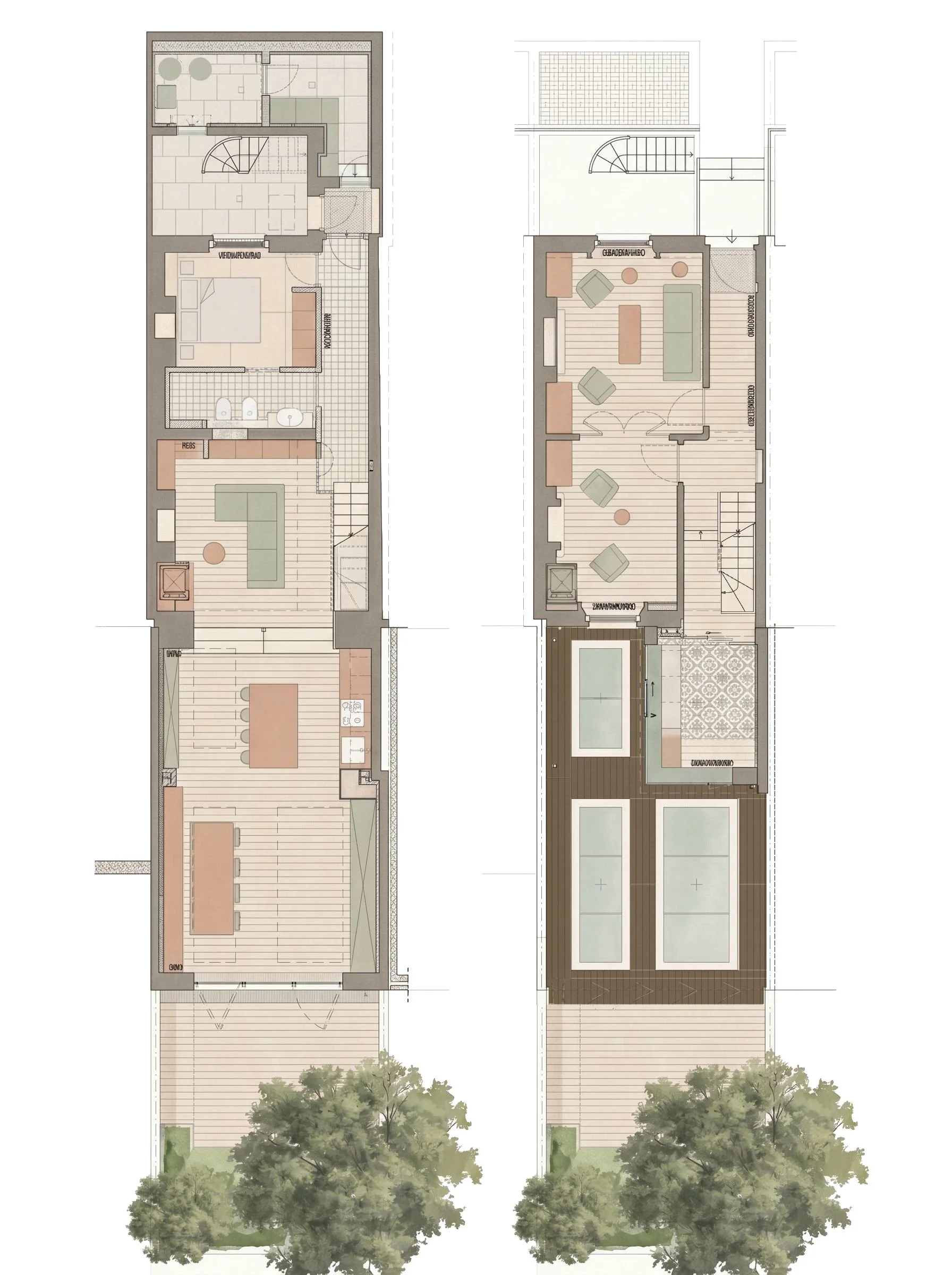
Proposed Lower and Groundfloor Layouts
The new Layout within a Listed Property
The reorganisation works with the inherent logic of the listed structure. Areas of limited historic value, particularly at lower ground level, are reconfigured for contemporary use, while more significant spaces are preserved.
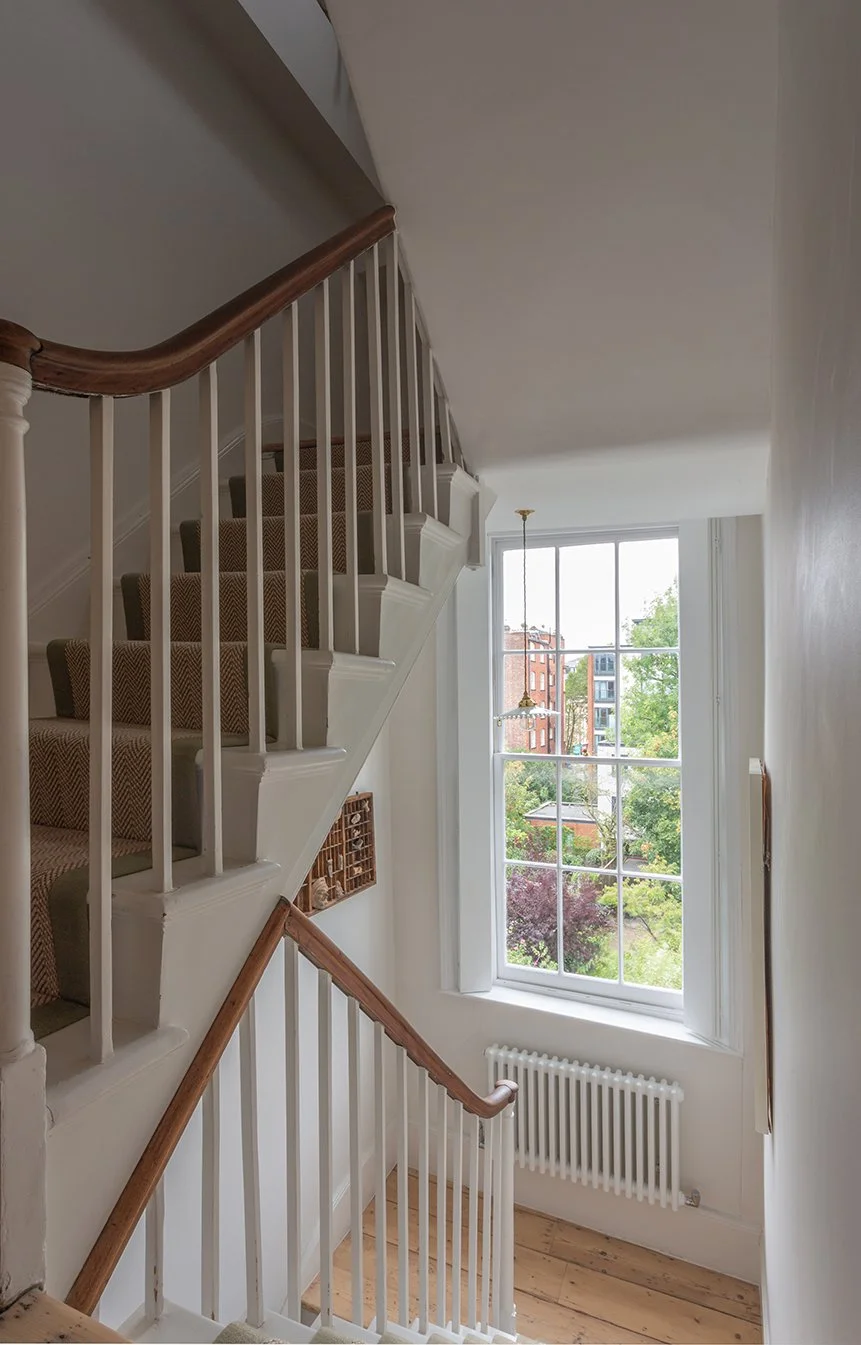
The original staircase is retained, anchoring vertical movement. Services are threaded through existing voids and chimney zones, minimising intervention.
The result balances continuity and change, maintaining spatial hierarchy while improving performance as a modern dwelling.
The Copper Roof and the Summerhouse
At the rear, the extension is defined by two sloped roofs responding to the varying heights of adjoining properties. This geometry mediates between neighbouring conditions while reducing visual impact.
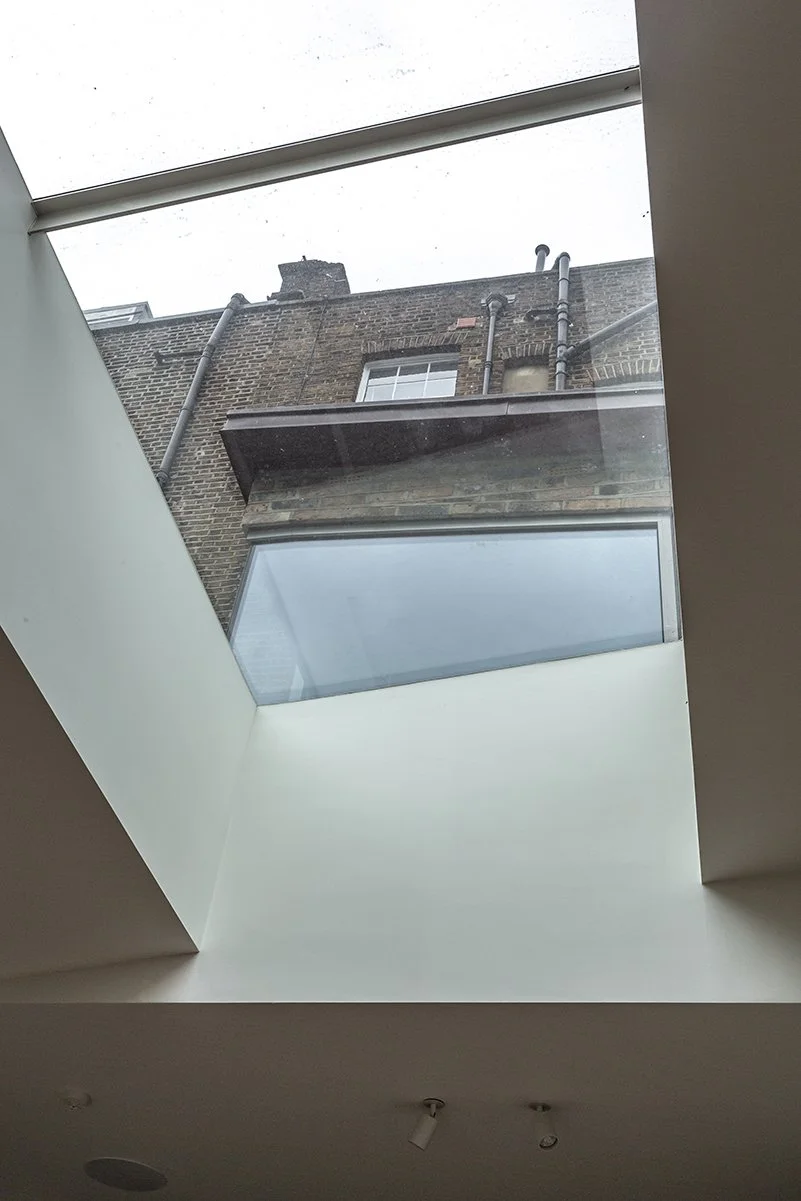
The lower ground roof is conceived as a continuous metal surface, designed to weather and develop patina. Its form draws light into the plan and distinguishes the new intervention from the original masonry volume.
A modest summerhouse sits at the far end of the garden. Positioned within a long, narrow plot and screened by vegetation, it extends the use of the garden while remaining visually recessive.
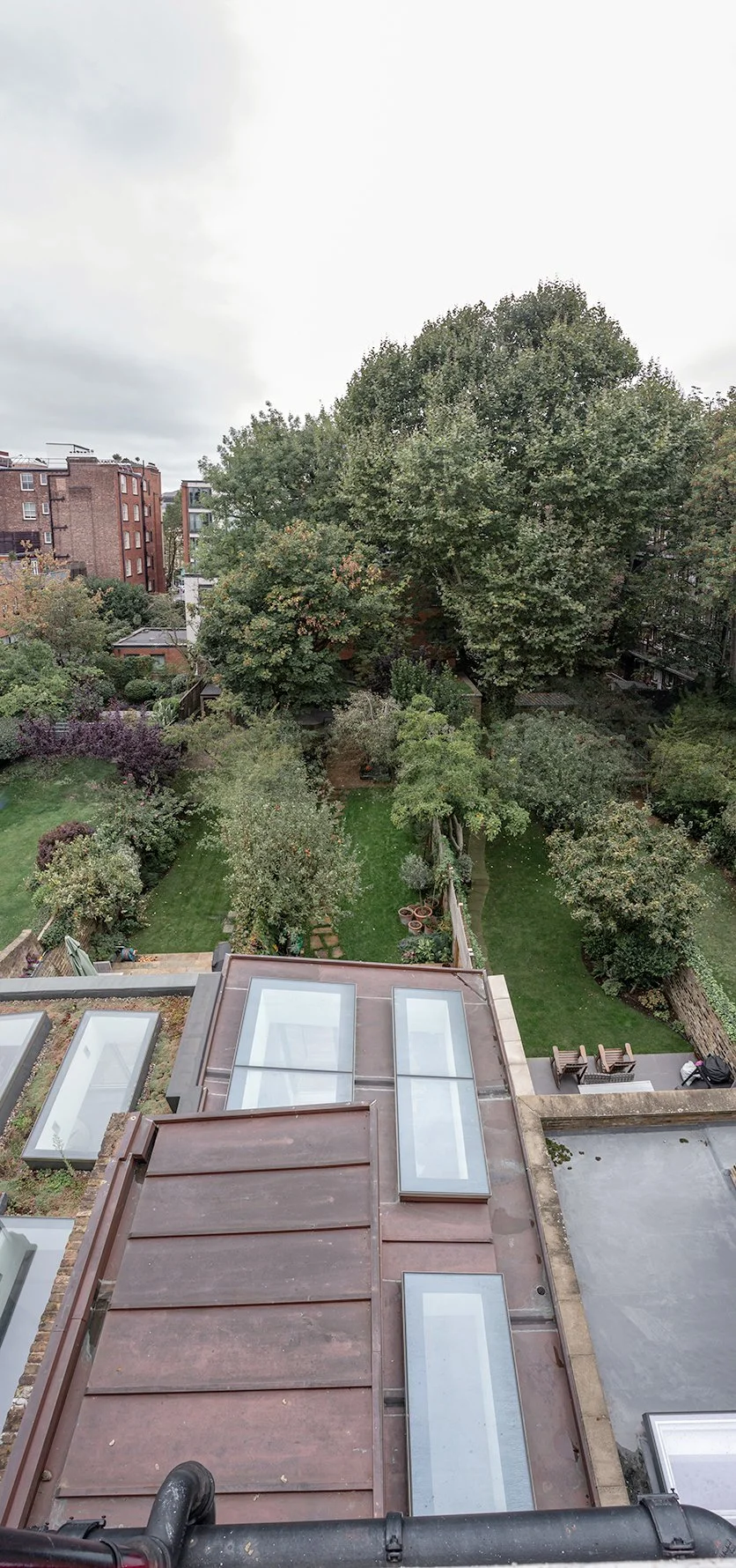
View over the copper roof with linear rooflights towards the Garden
The New Extensions
The new rear extensions replace late twentieth-century additions of limited value. Their removal restores a clearer relationship between house and garden and re-establishes coherence to the rear elevation.
The volumes are modest and confined to the rear, leaving the principal façade and terrace rhythm unaffected. A mono-pitched roof aligns with neighbouring extensions, contributing to a consistent rear condition.
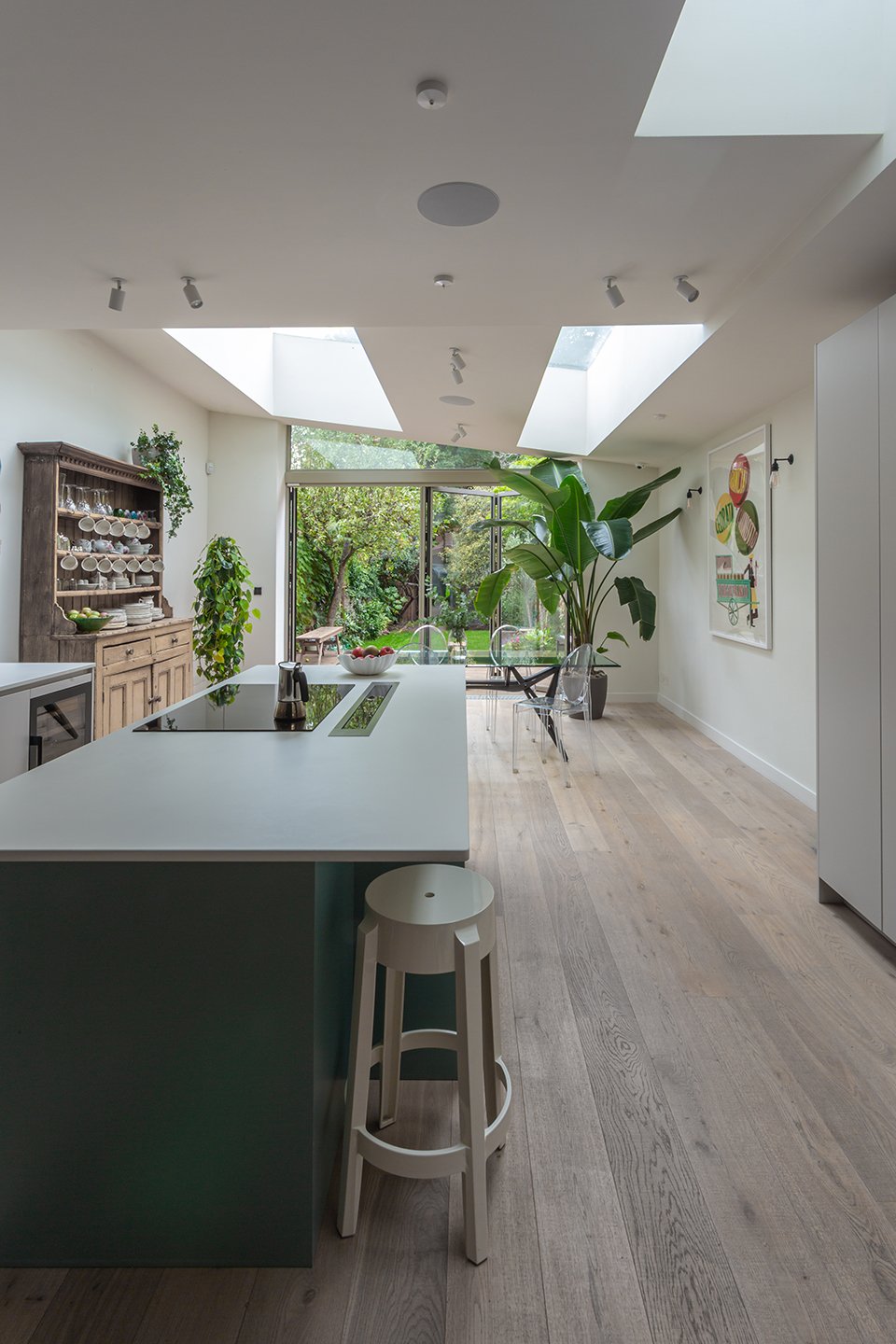
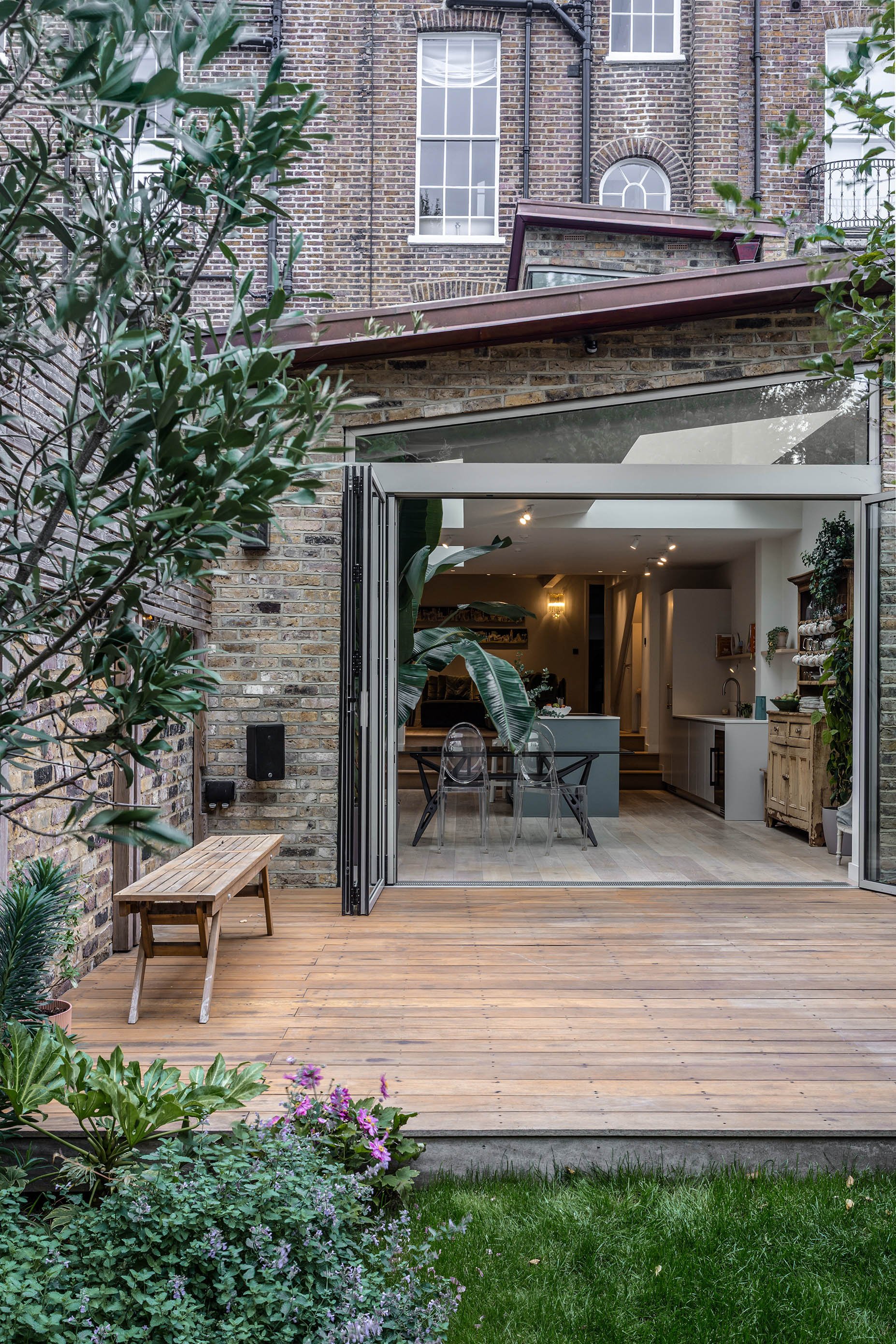
Glazed openings at lower ground level frame the garden and draw daylight into the plan, while the extension remains visually recessive within its context.
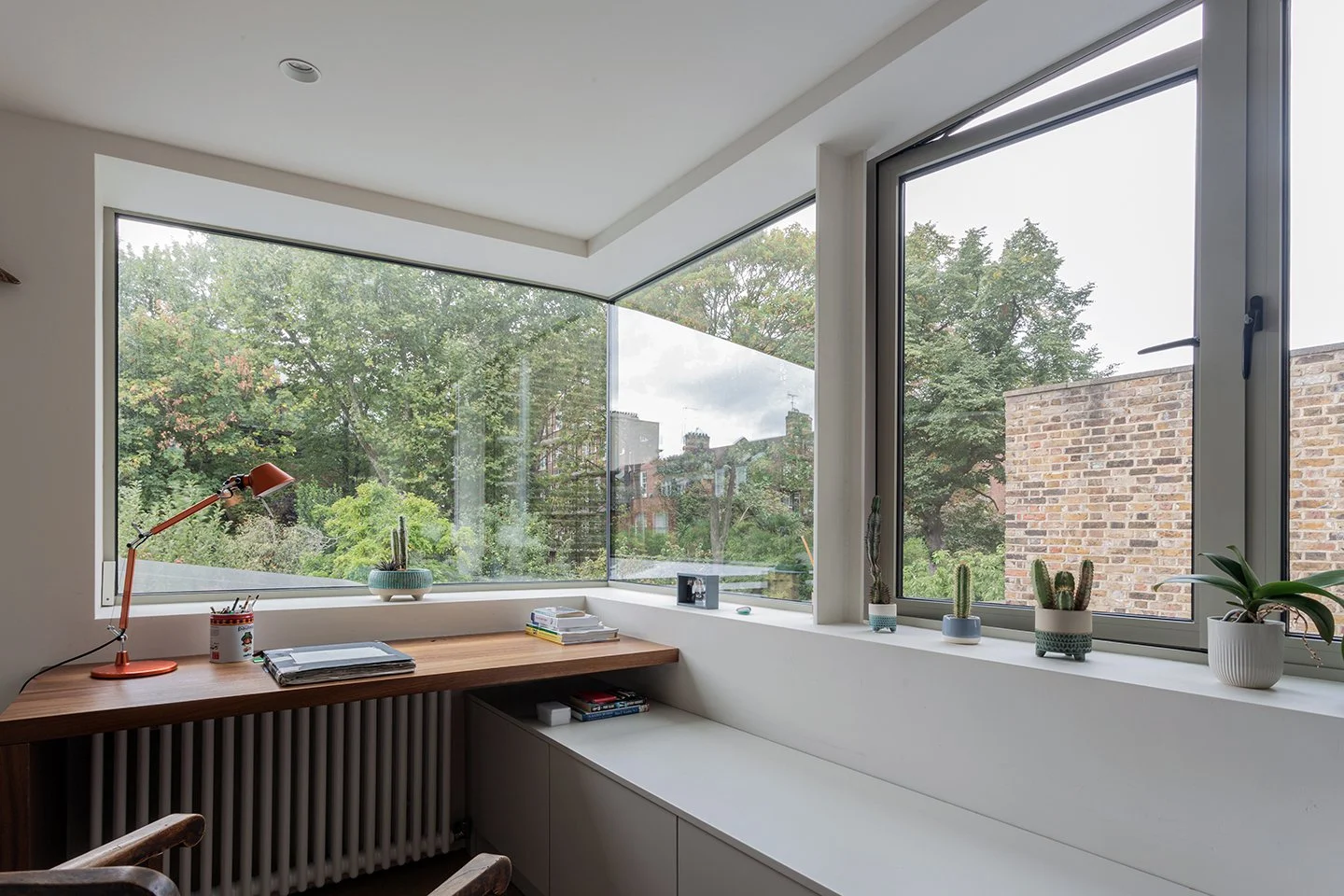
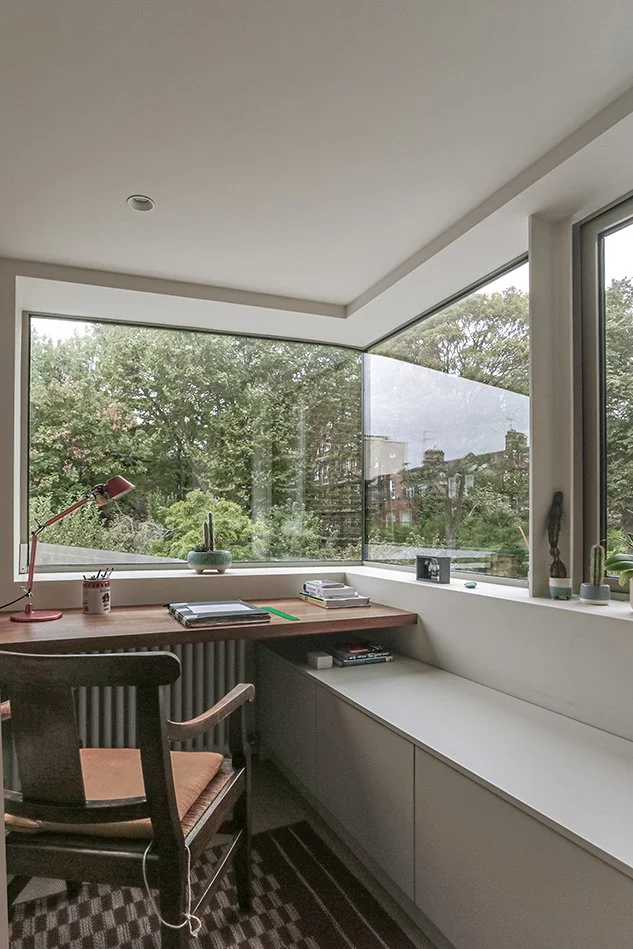
The Study with a fully glazed Corner Window
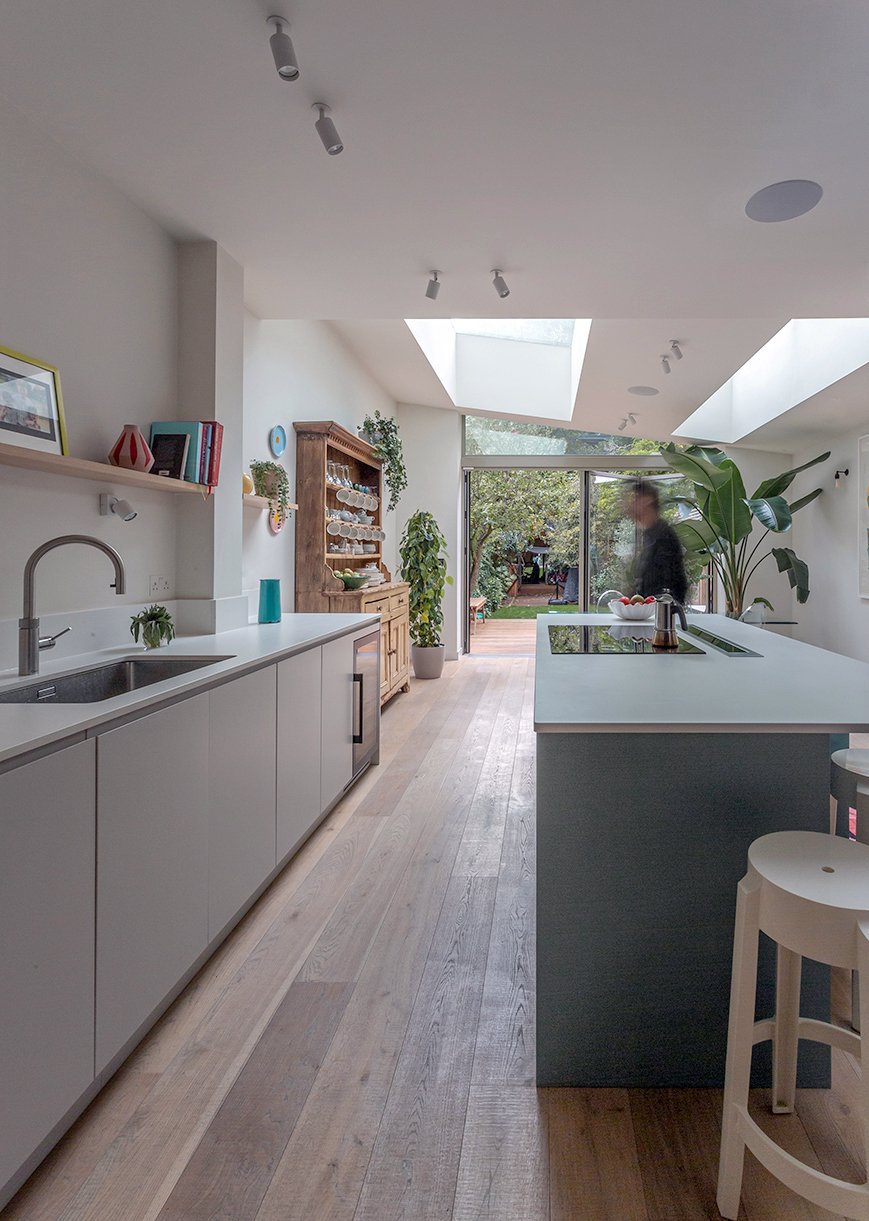
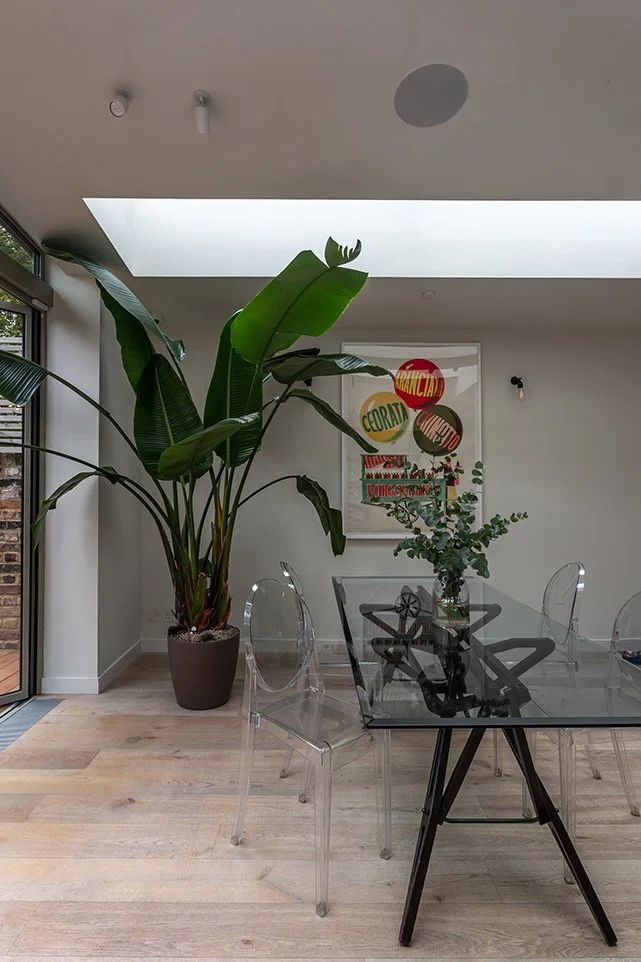
The new Kitchen with Dining Space leading to the Garden via large glazed Sliders
Get in touch and request your brochure:
Follow the links below to request our brochure which we’ll guide you through the design and service process of our projects!



More Images of the Project