The Old Sty, Somerset, Chard
Holiday Home

The former Sty remodelled as a holiday home in a tranquil Setting
Introduction
The Old Sty is the first completed project within the comprehensive masterplan for a historic Grade II listed Somerset estate.
London Atelier were commissioned to reimagine the entire site, identifying opportunities for a number of architectural interventions - a combination of sensitive refurbishments, characterful conversions and a sequence of new-build structures.
This small dwelling is the opening chapter in a long-term transformation that balances heritage stewardship with contemporary rural living.
Originally a piggery and later used as a garage, the modest stone outbuilding sits within the grounds and at the centre of the estate.
Our approach was to preserve the quiet agricultural character of the existing structure while introducing a series of precisely made contemporary elements that allow it to function as a compact, modern home.
The Exterior
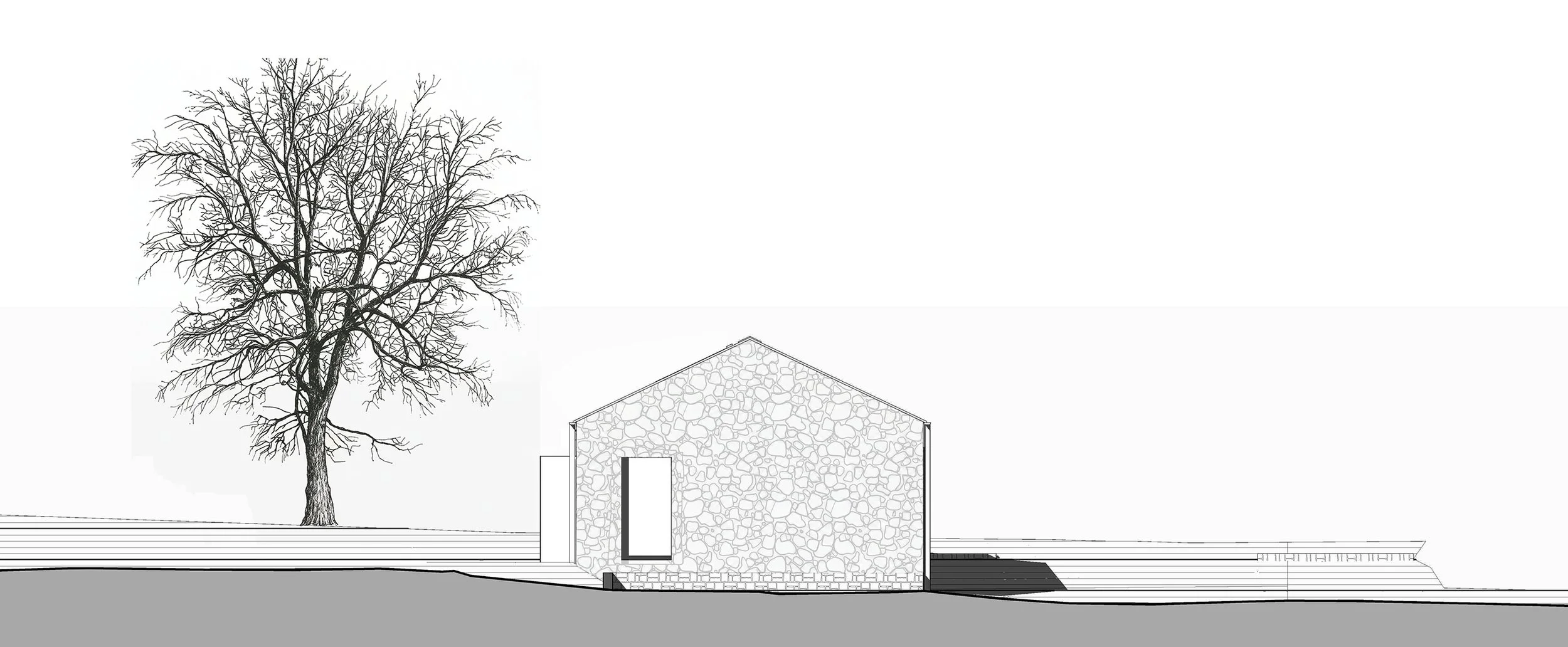
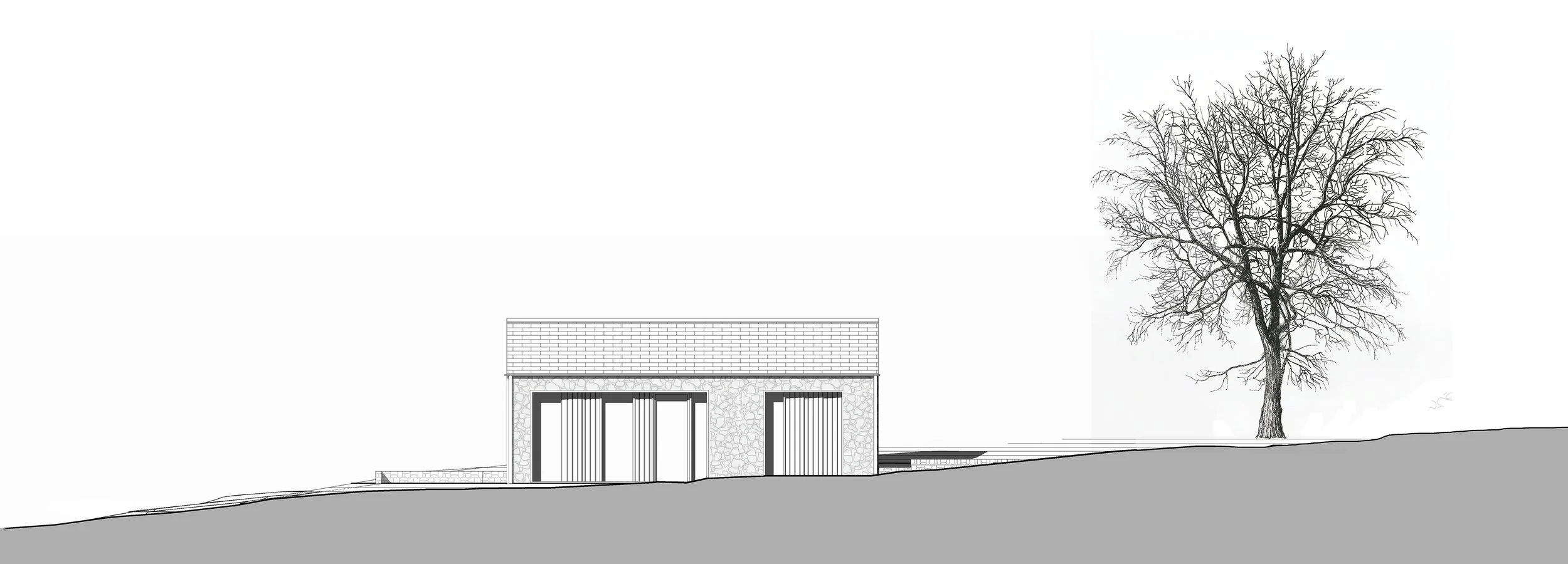
Externally, the building retains its robust, vernacular presence. The irregular rubble stone walls, simple gabled roof and deep-set openings are carefully repaired and expressed with minimal intervention. New timber doors and externally frameless windows form a clearly contemporary family of inserts - finely detailed, sympathetic in proportion, and consciously distinct from the historic fabric.

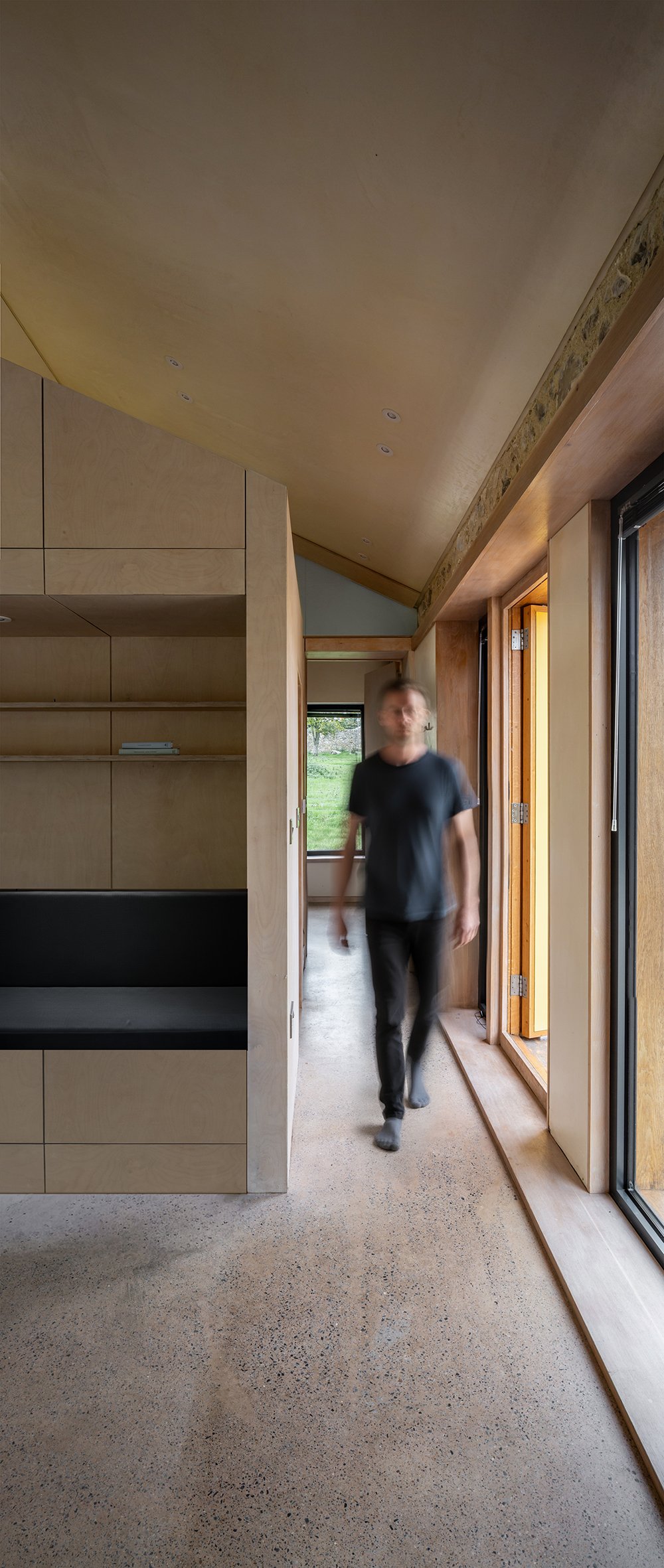
The corridor connecting Living and Bedroom areas
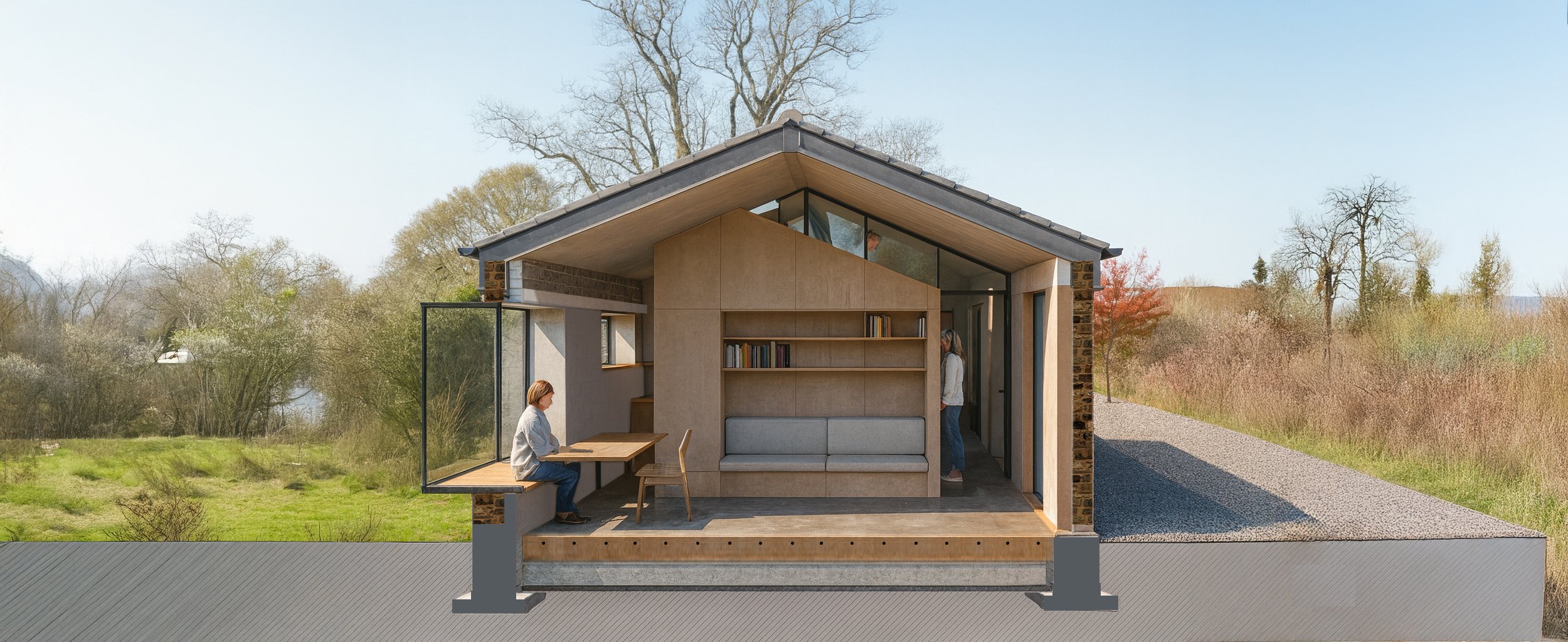
Sectional Drawing of the old Sty showing the House in House Concept
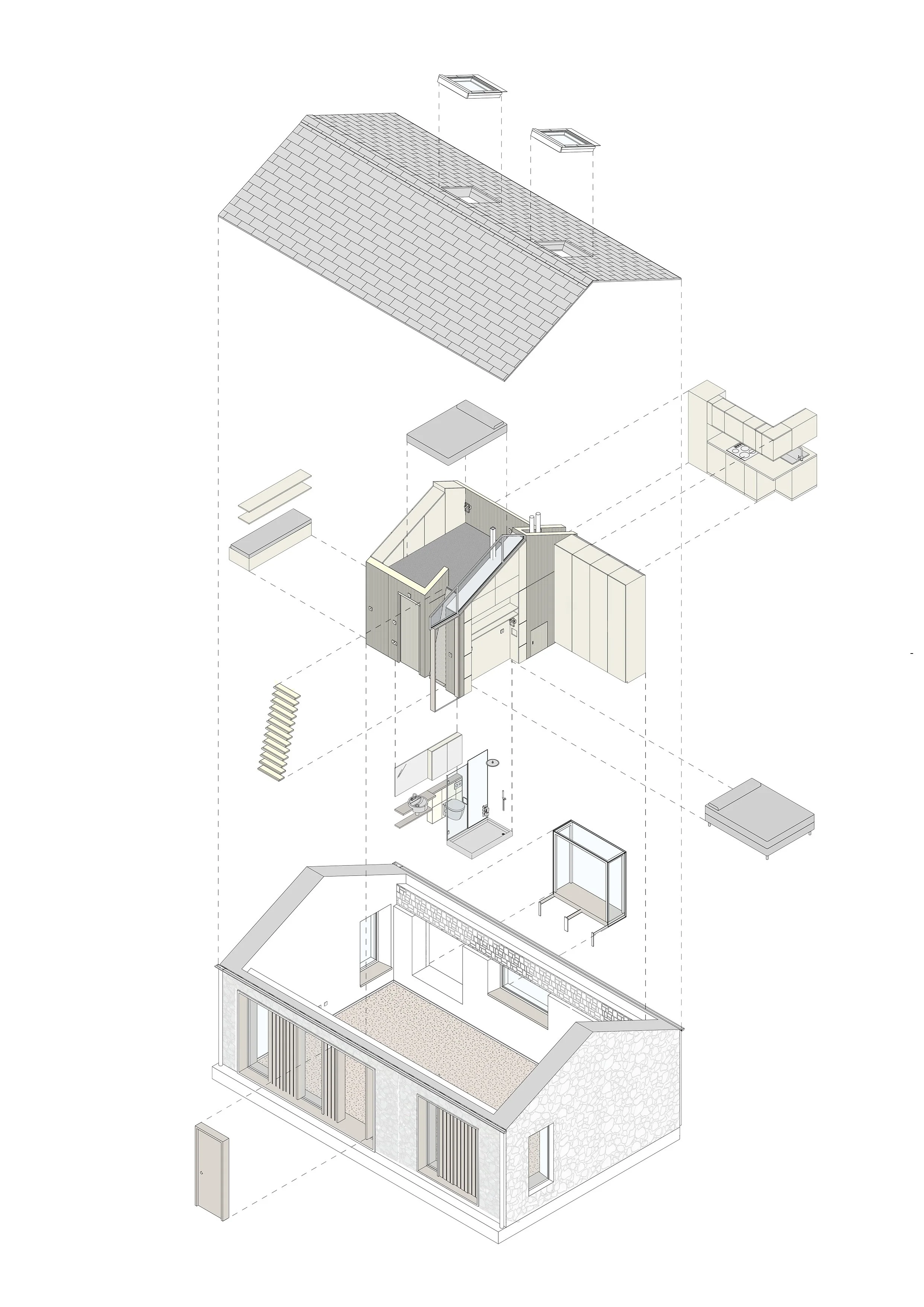
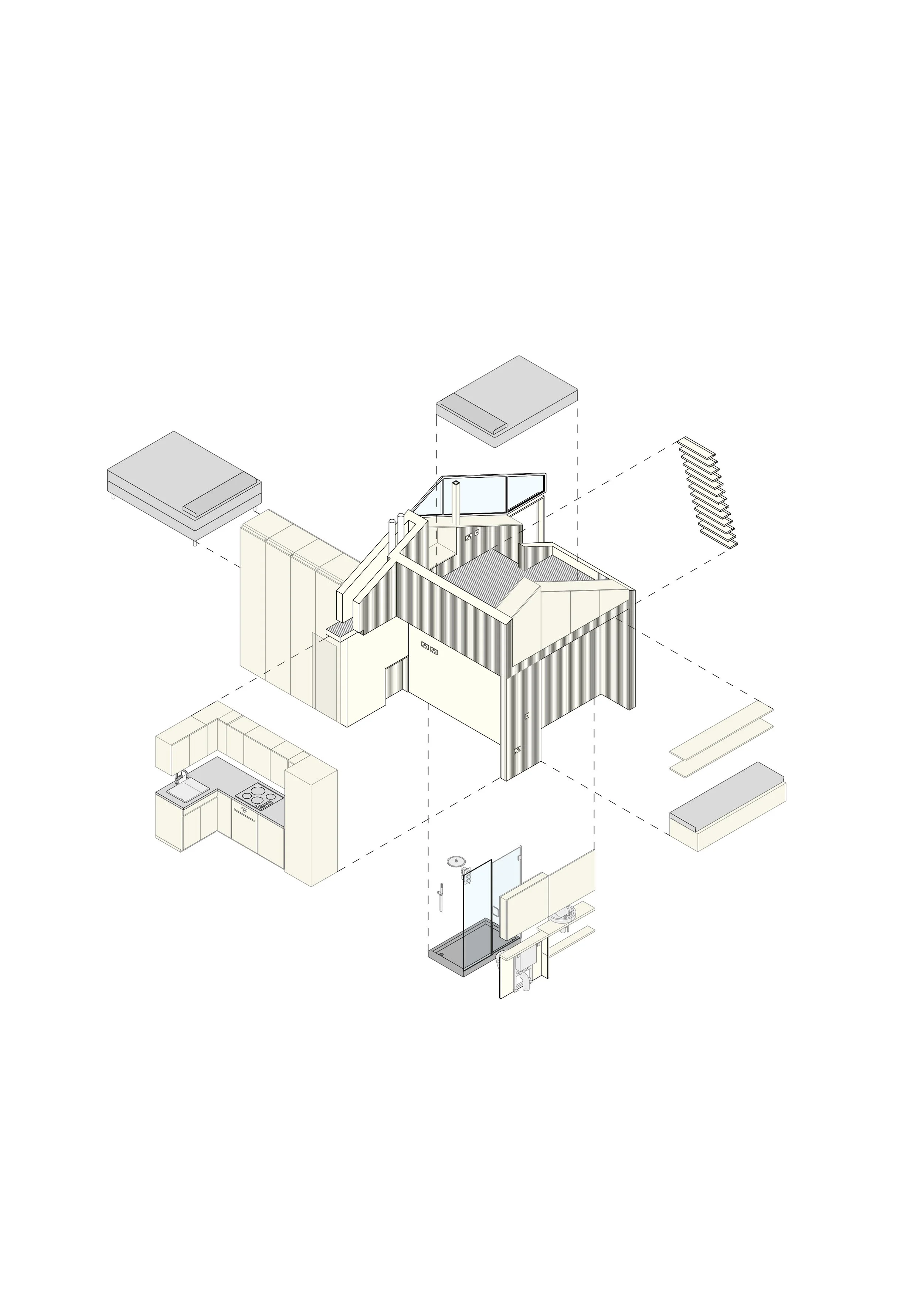
Exploded Axonometric Drawing of the House
The internal Arrangement
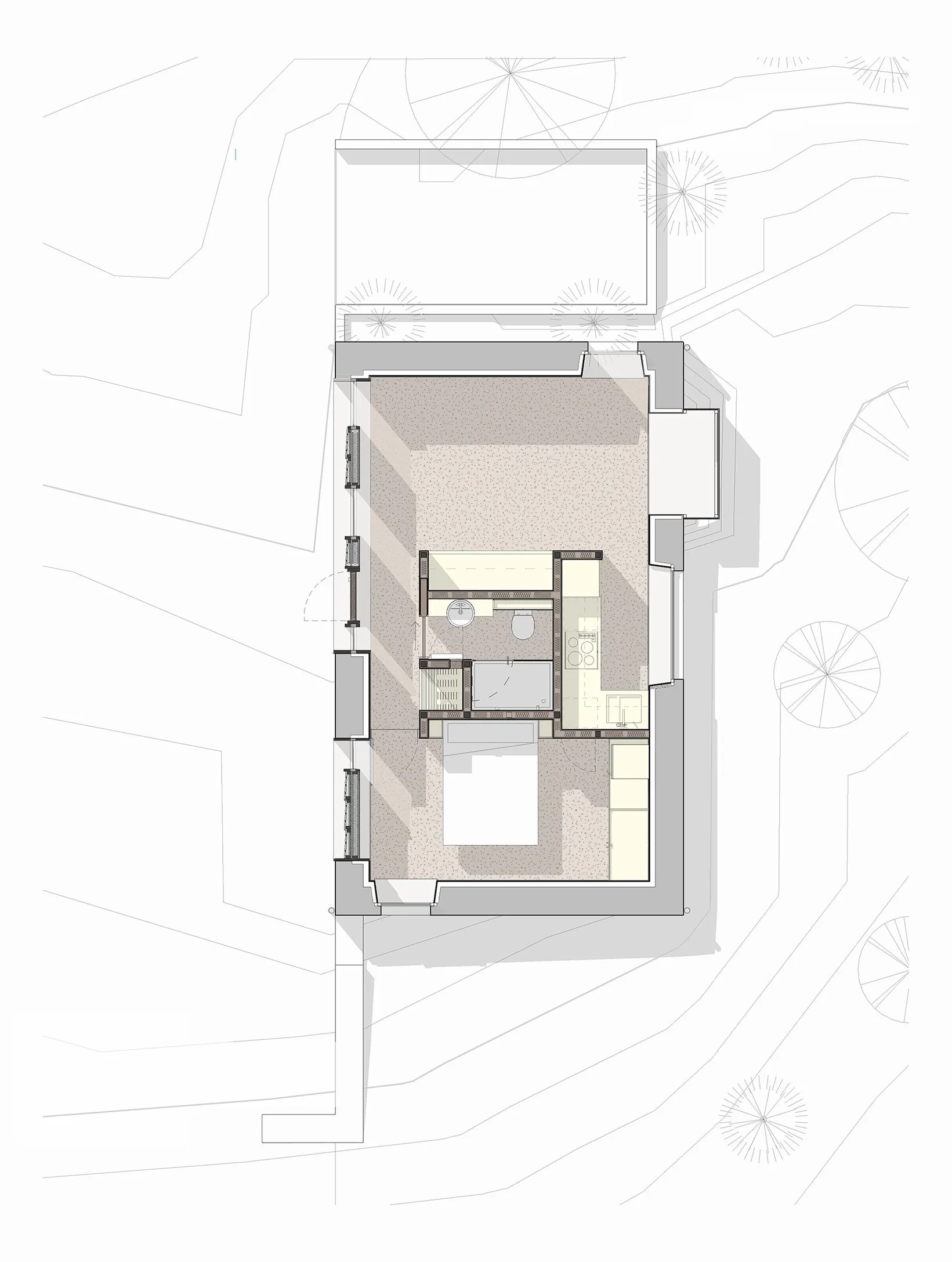
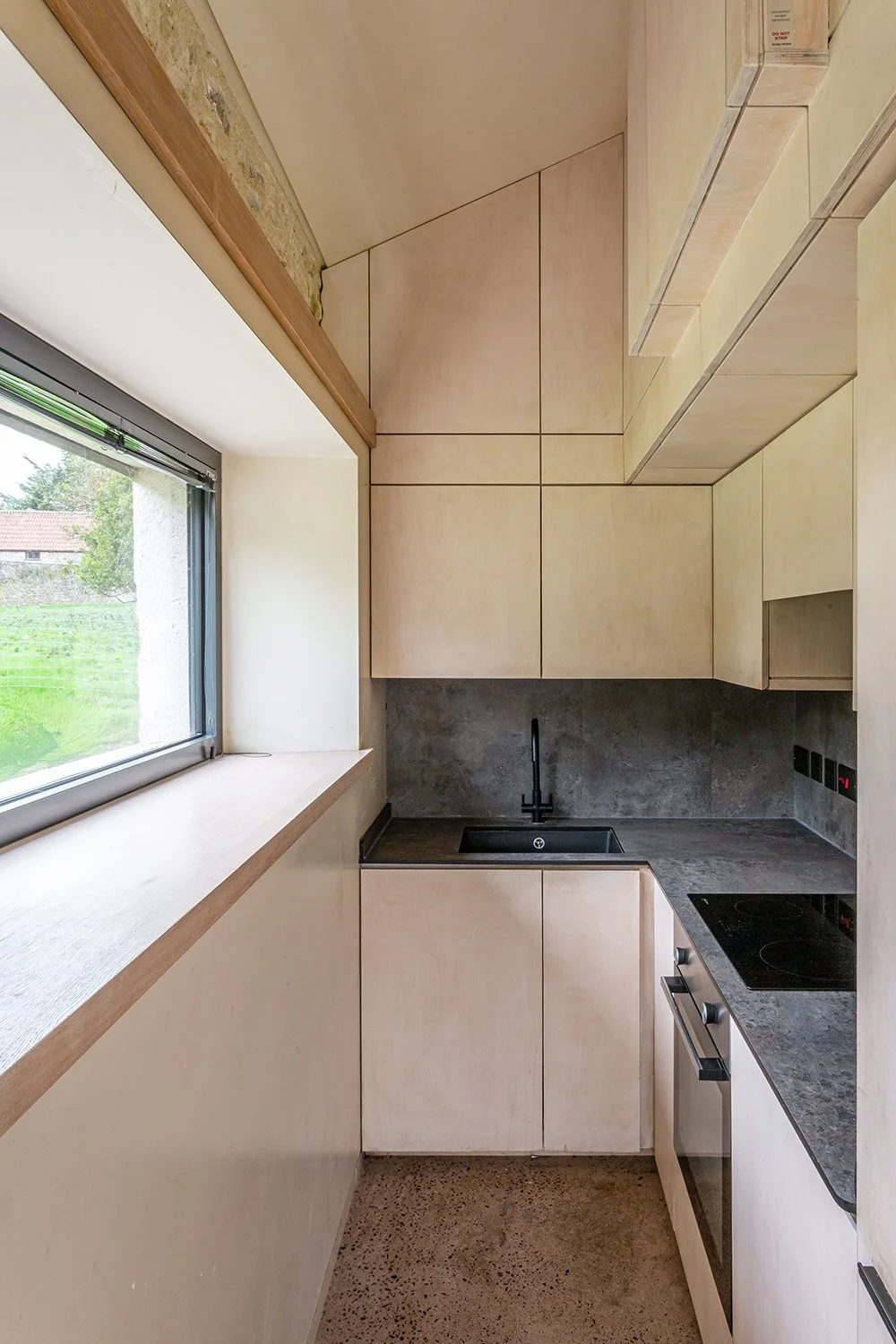
Internally, the organisation is driven by a single sculptural piece of joinery. This plywood volume contains the kitchen, bathroom, storage and ladder-stair, liberating the remaining floor area and allowing the space to read as one calm, continuous room.
The precision of the cabinetry contrasts gently with the rugged perimeter walls, establishing a dialogue between crafted new elements and the building’s historic shell.
Interior Design
The internal surfaces are finished in a sealed, pigmented plaster, not paint. Its subtle tonal variation adds warmth and depth, catching light softly and reinforcing the serene atmosphere of the interior.
Alongside this sits the polished concrete floor, cast using local the red Taunton sand, giving the surface its distinctive pink hue. This material anchors the project in its landscape and echoes the tones of local stone and brickwork, lending the home a grounded sense of place.
Light is introduced strategically through new and existing openings. Generous, minimally framed windows form inhabited thresholds and create a sequence of framed views into the gardens. Window seats, shelves and resting points are carved into the thickness of the wall, turning the building’s historic envelope into a habitable part of the architecture.
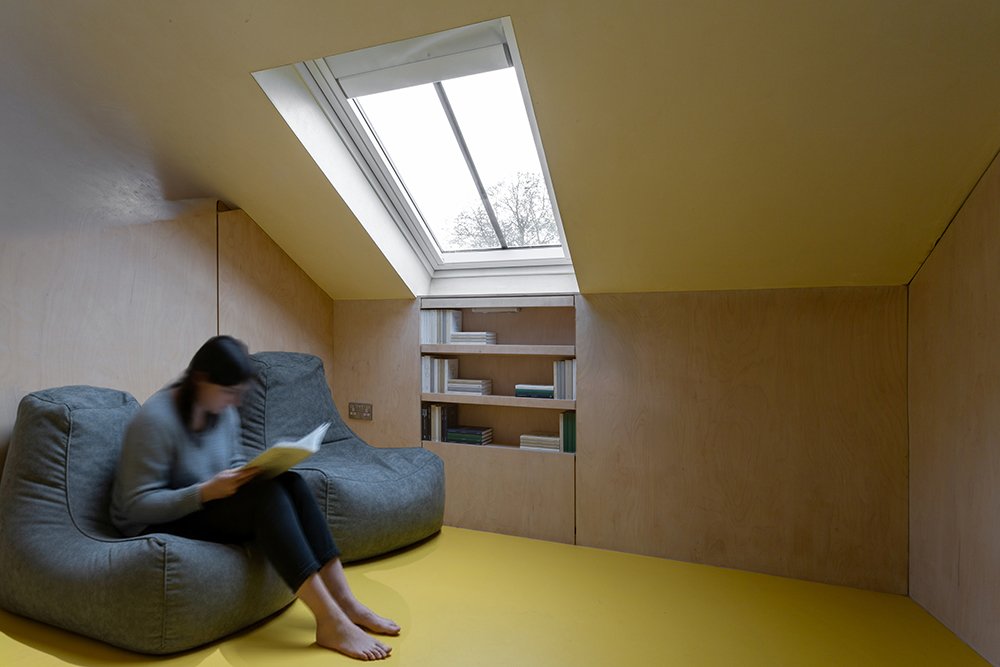
Above the bathroom, a compact loft accessed by a beautifully detailed ladder-stair -provides a quiet reading nook and storage space. Daylight falls through a large roof light, creating a cocoon-like retreat that enriches the spatial character of the home despite its small footprint.

The House in House concept … the freestanding plywood structure stands proud at centre of the development

Exterior View from the South-East.
The Concrete feature Floor
The polished concrete floor is one of the defining environmental and material features of The Old Sty, expressing both the local geology of the estate and the project’s fabric-first approach. Rather than adopt a conventional floor build-up of concrete, screed and surface finish, the design team developed a more efficient construction that reduced material use and allowed the distinctive colour of the local red sand to become a central aspect of the interior.
An insulation layer was placed at the base of the build-up, above which a single structural concrete slab was cast. Underfloor heating pipes were embedded directly within this pour, allowing the slab to act simultaneously as structure, thermal mass and final finish.
Once cured, the surface was polished to reveal the warm, pinkish tones of the local red sand. This method avoided the waste and embodied carbon of an additional screed layer, simplified construction by using techniques familiar to local craftspeople, and created a finish that is both environmentally efficient and deeply rooted in its context.

The Ladder Stairs leading to the Reading Nook

The Feature Window protrudes out and integrates for Bench seating

View from Bedroom towards the Living Room
This approach forms part of a broader environmental strategy based on low-impact, breathable construction and the careful retention of embodied energy. The original rubble-stone walls were left intact and upgraded with a vapour-permeable internal insulation system that enhances thermal performance without compromising the behaviour of the historic fabric.
Where the stone required repair, replacement pieces were sourced directly from the ground of the estate and laid using lime mortar to match the original construction, ensuring compatibility, longevity and appropriate moisture movement. The roof was rebuilt as a highly insulated warm roof, improving energy efficiency, while new windows and doors were fabricated as high-performance contemporary insertions that significantly reduce heat loss while maintaining a respectful relationship with the listed envelope.
Colour Palette
Internally, the use of sealed pigmented plaster instead of paint allows the walls to breathe, regulates moisture, and brings a subtle tonal richness that complements the birch plywood joinery and the pink-tinted concrete floor. Daylight is drawn deep into the building through carefully positioned openings and rooflights, reducing dependence on artificial lighting and promoting passive environmental comfort. Together, these measures create a home that is materially honest, energy-efficient and intimately connected to its site, demonstrating how thoughtful conservation and contemporary performance can be held in balance within a small, heritage-constrained structure

The large glazed projection contrasts with historic stone walls, opening the cottage to light and views.
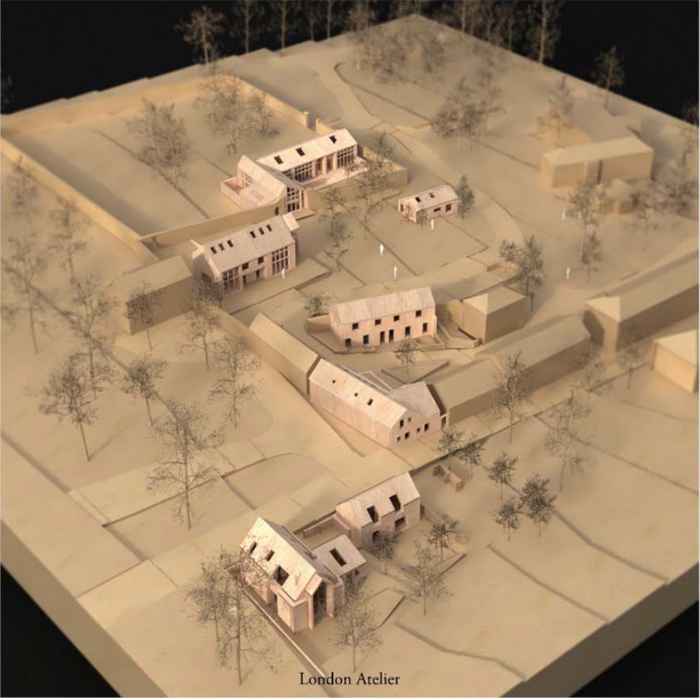
The Masterplan
As the first completed building within the wider masterplan, The Old Sty sets the architectural tone for the estate’s ongoing transformation: thoughtful, materially grounded, and carefully balanced between heritage sensitivity and contemporary craft.
With three conversions now complete and four new-build homes underway, it marks the estate’s evolution into a coherent, place-specific ensemble shaped by a long-term architectural vision.
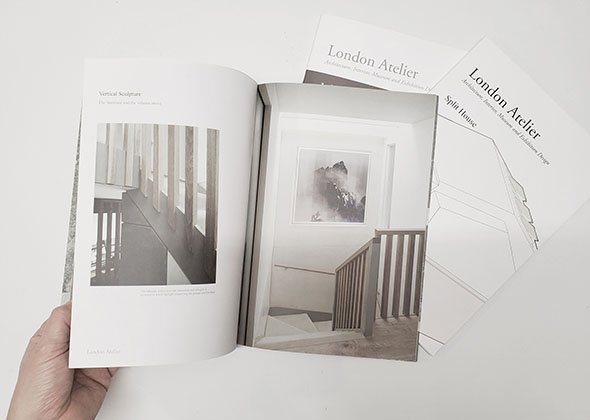
Get in touch and request your brochure:
Follow the links below to request our brochure which we’ll guide you through the design and service process of our projects!



More Images of the Project