Cast Courts Refurbishment, V&A Museum
Victoria & Albert Museum, London
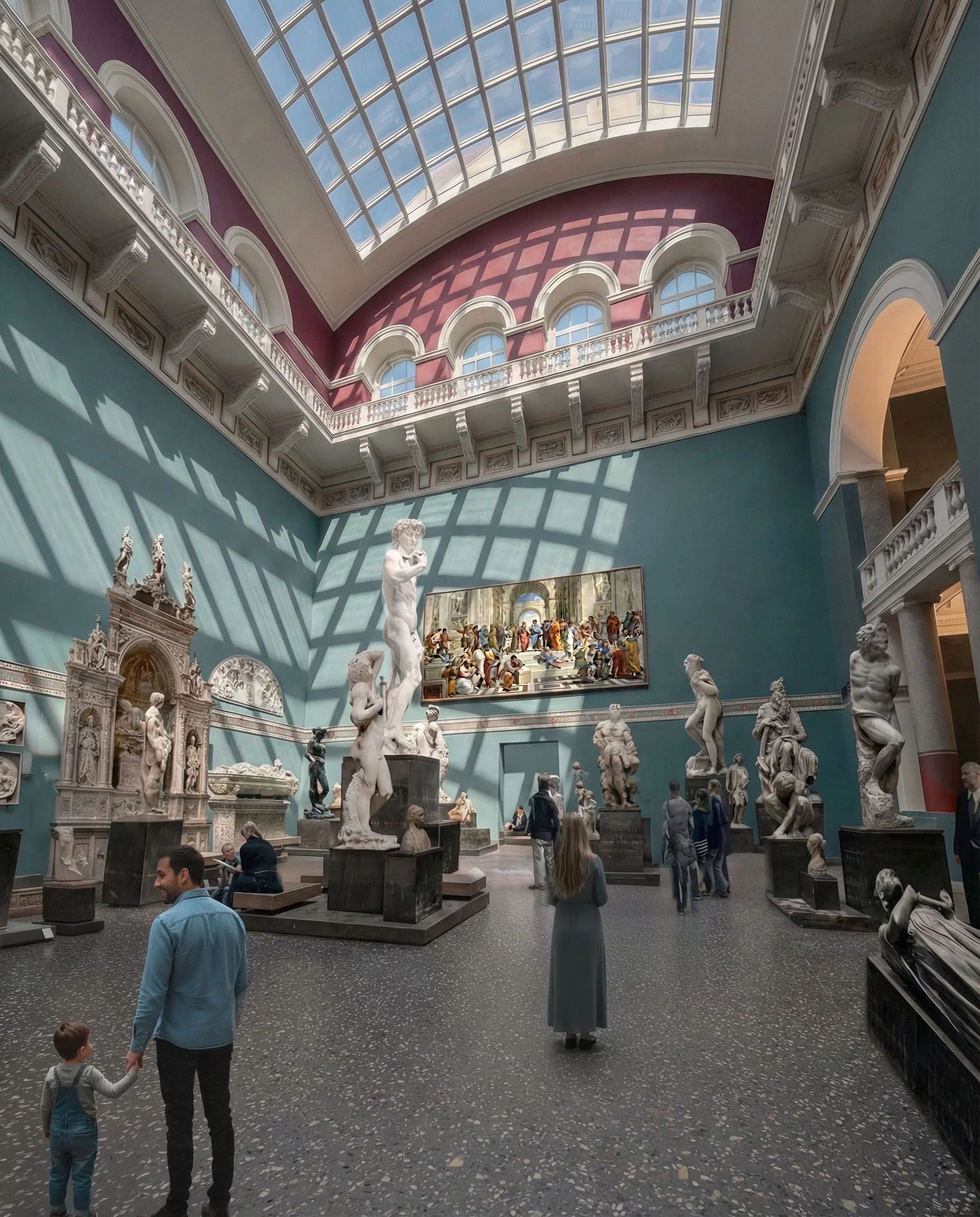
The Proposal of the Cast Courts at the Victoria and Albert Museum reveal the monumental scale of the collection within the original Victorian gallery, where carefully calibrated light, colour, and spatial clarity allow the casts to be read both individually and as a collective architectural narrative.
Introduction
Specialist Museum Design by London Atelier Architects
Conservation Architects: Donald Insall Architects
London Atelier Architects were appointed as specialist museum and exhibition designers as part of a competitive design tender for the refurbishment of the Cast Courts at the Victoria and Albert Museum.
The project brought together conservation-led architectural expertise with a contemporary interpretative approach to one of the V&A’s most significant historic interiors.
The project demanded an approach that carefully balanced conservation, clarity, and contemporary interpretation. It required not only the protection of a fragile and irreplaceable collection, but also a thoughtful re-examination of how these spaces are experienced by today’s visitors, scholars, and curators. The challenge lay in reasserting the intellectual and spatial power of the Cast Courts while adapting them to modern expectations of accessibility, environmental performance, and interpretative engagement.
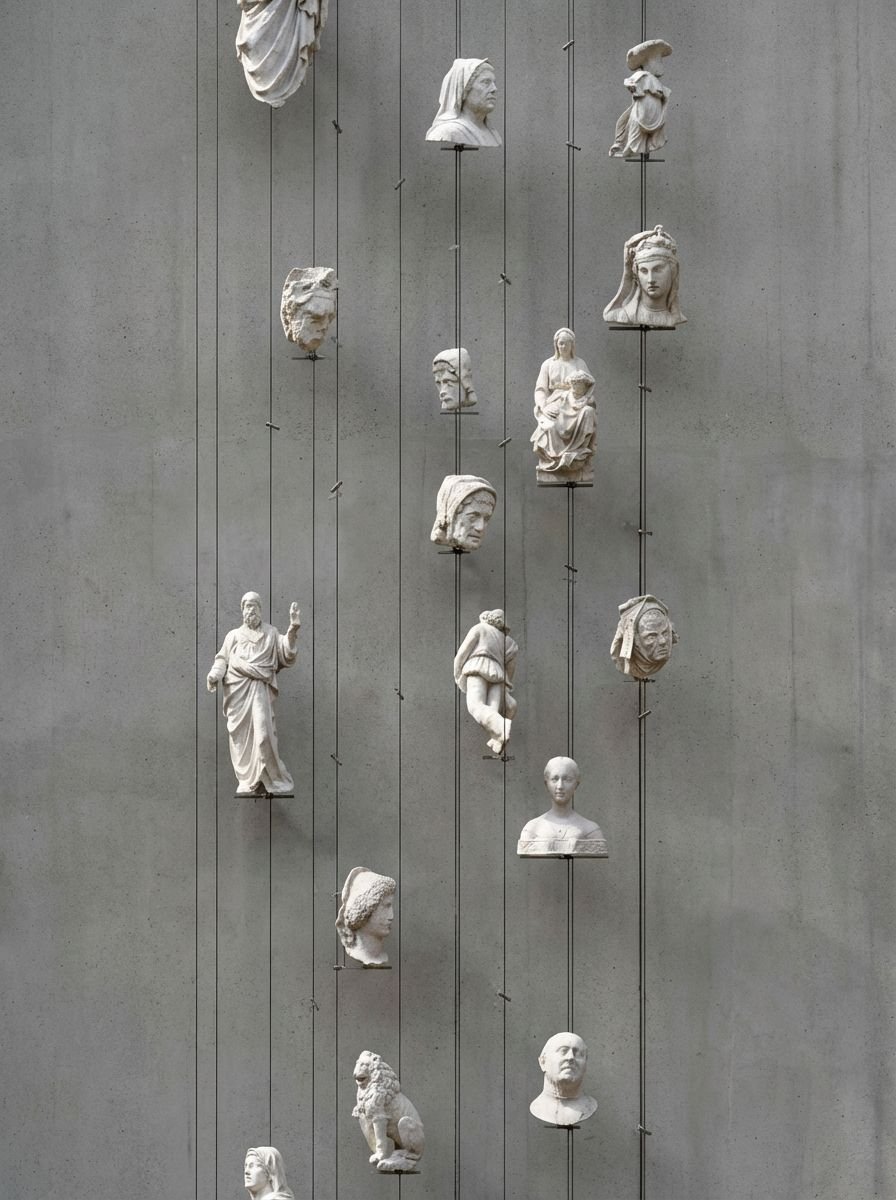
Suspended plaster casts are arranged as a vertical field within the Cast Courts, creating a light, permeable display that reveals scale, hierarchy, and spatial depth while minimising physical intervention within the historic gallery.
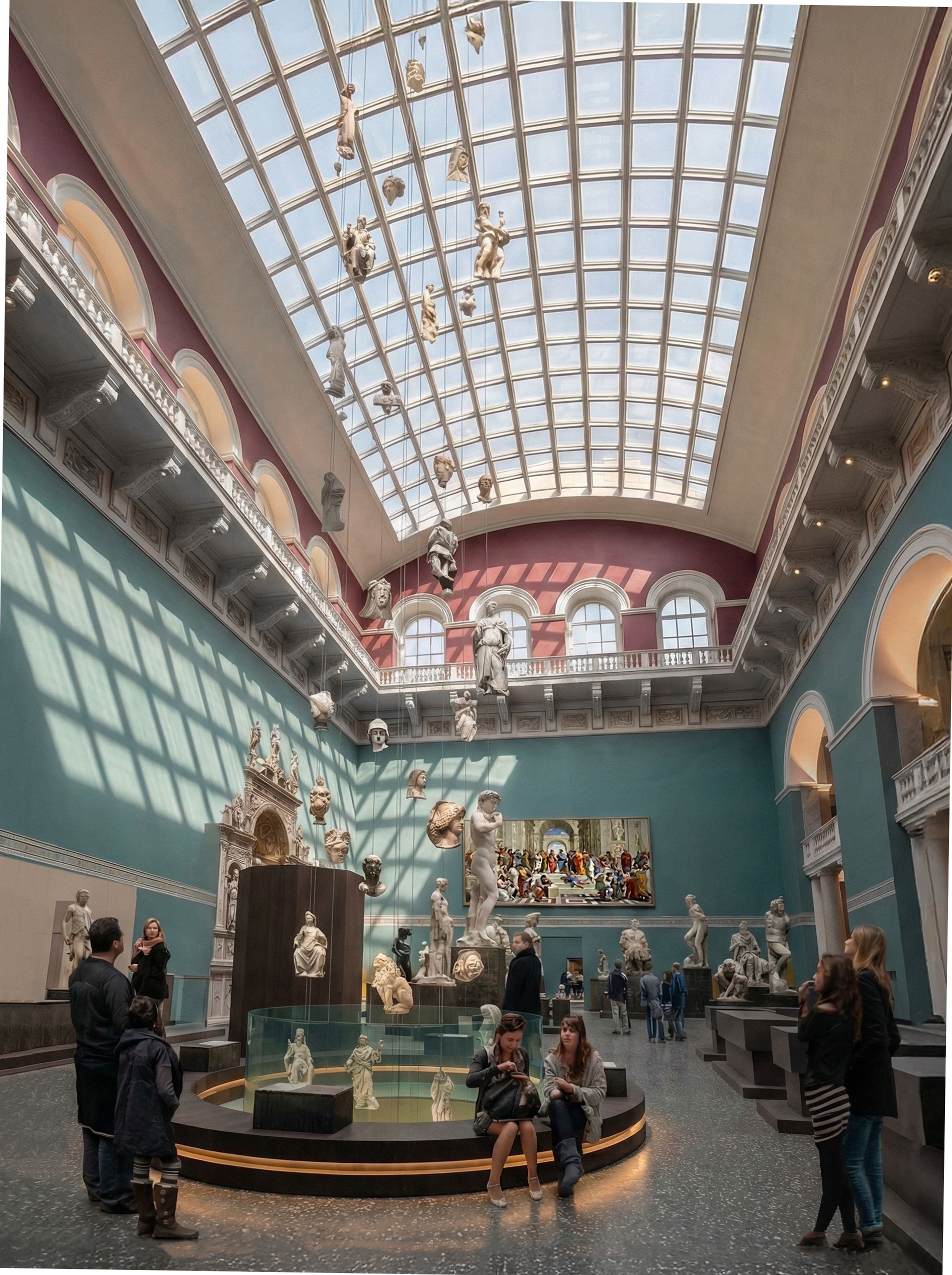
A central suspended installation animates the Cast Courts, reintroducing verticality and daylight as key curatorial elements while establishing a clear dialogue between the Victorian gallery architecture, the collection, and contemporary visitor movement.
Spatial Arrangement and Museums Design
Our design strategy sought to reveal the density, scale, and ambition of the collection without overwhelming either the architecture or the visitor. New display strategies were developed to improve legibility and circulation, allowing visitors to navigate the courts more intuitively and to read individual objects both in isolation and as part of a wider architectural and cultural narrative.
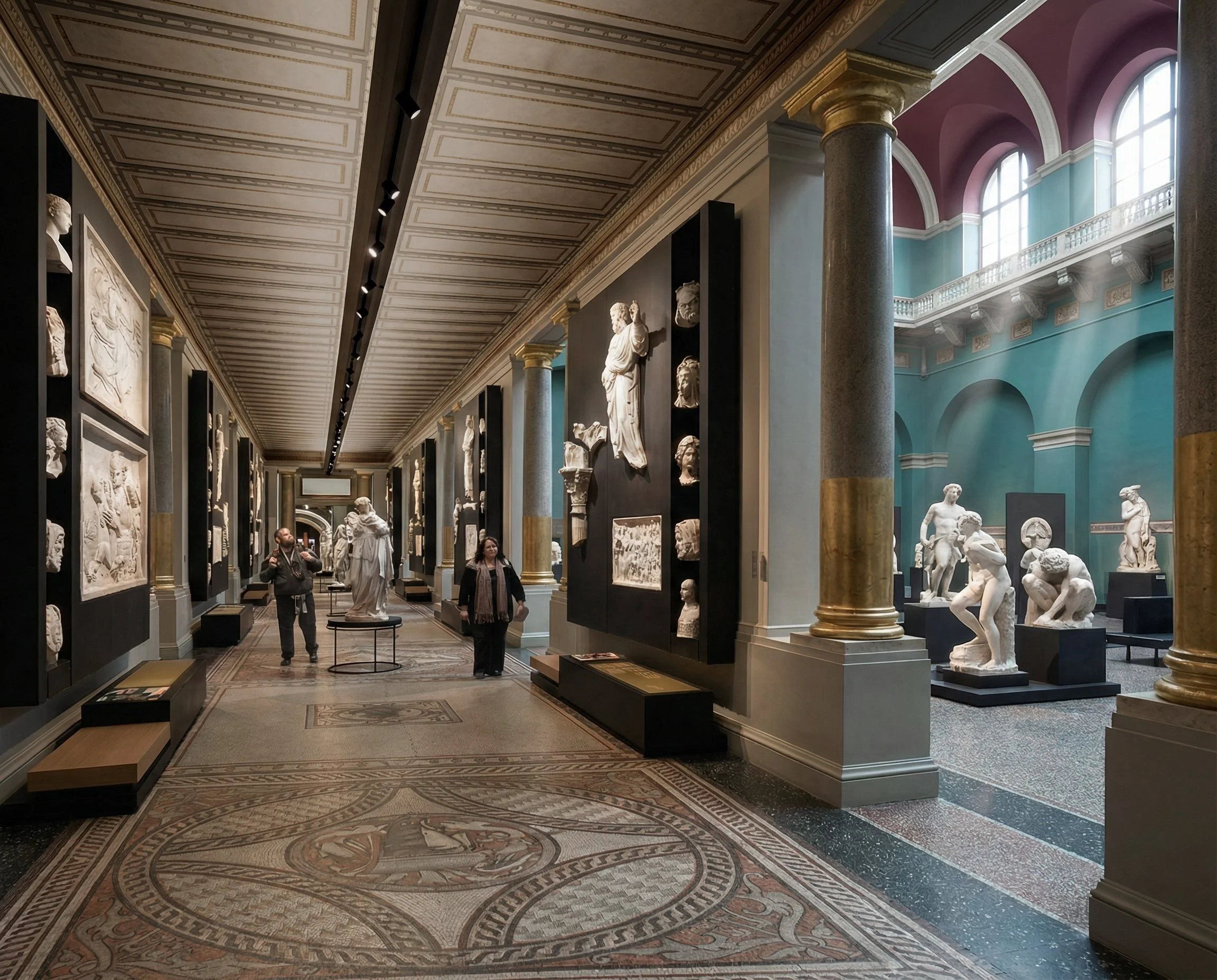
A sequence of gallery spaces within the Cast Courts is restructured to improve clarity and rhythm, aligning contemporary display elements with the historic colonnade while reinforcing axial views and visitor circulation.
Particular attention was given to the vertical dimension of the halls, with suspended and vertically articulated display elements introducing a lighter, more dynamic relationship between the casts, the surrounding volume, and the visitor.
These interventions enhance visual permeability through the space, reinforce the monumental height of the courts, and encourage new perspectives on familiar objects.
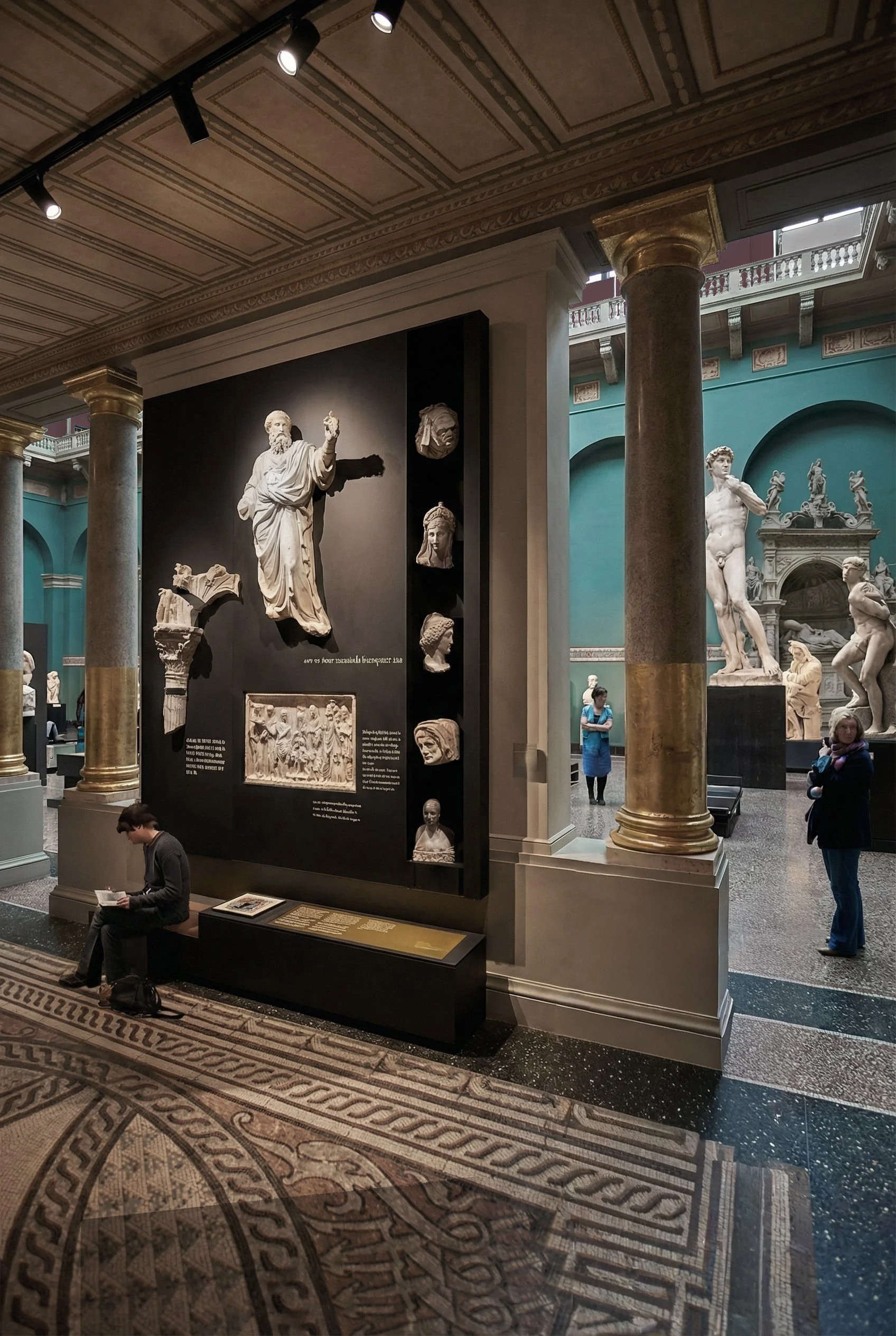
Interpretative wall displays are integrated within the historic colonnade, combining sculptural fragments, reliefs, and text to support close reading of the collection while maintaining clear sightlines to the wider Cast Courts.
Conservation Specialists
Donald Insall Architects acted as Conservation Architects, leading on the repair, restoration, and protection of the Grade I listed fabric. London Atelier Architects were responsible for the museum-specific design elements, focusing on exhibition strategy, spatial interpretation, display systems, and the visitor experience within the vast volume of the Cast Courts.
A conservation-led methodology informed every stage of the design. Detailed research and analysis were undertaken to understand the historic development of the Cast Courts, their construction, and their relationship to the wider museum complex. This understanding allowed the design to distinguish clearly between elements of historic significance and areas where carefully judged adaptation could enhance the long-term use and legibility of the spaces.
Colour Palette and Lighting
Material and colour choices throughout the project were deliberately restrained. A calm, neutral palette reinforces the sculptural presence of the casts and supports visual continuity across the courts, while allowing subtle differentiation between historic fabric, new insertions, and interpretative elements. New materials were selected for their longevity, reversibility, and tactile restraint, ensuring that contemporary interventions remain clearly legible without drawing undue attention to themselves.
Lighting was treated as a critical architectural and curatorial tool. Carefully calibrated lighting strategies were developed to meet conservation requirements while enhancing the spatial drama of the halls. Light is used to articulate depth, surface texture, and modelling, bringing out the qualities of the casts while reinforcing the hierarchy and rhythm of the architectural volumes. The result is a balanced environment in which atmosphere, clarity, and conservation are held in careful equilibrium.
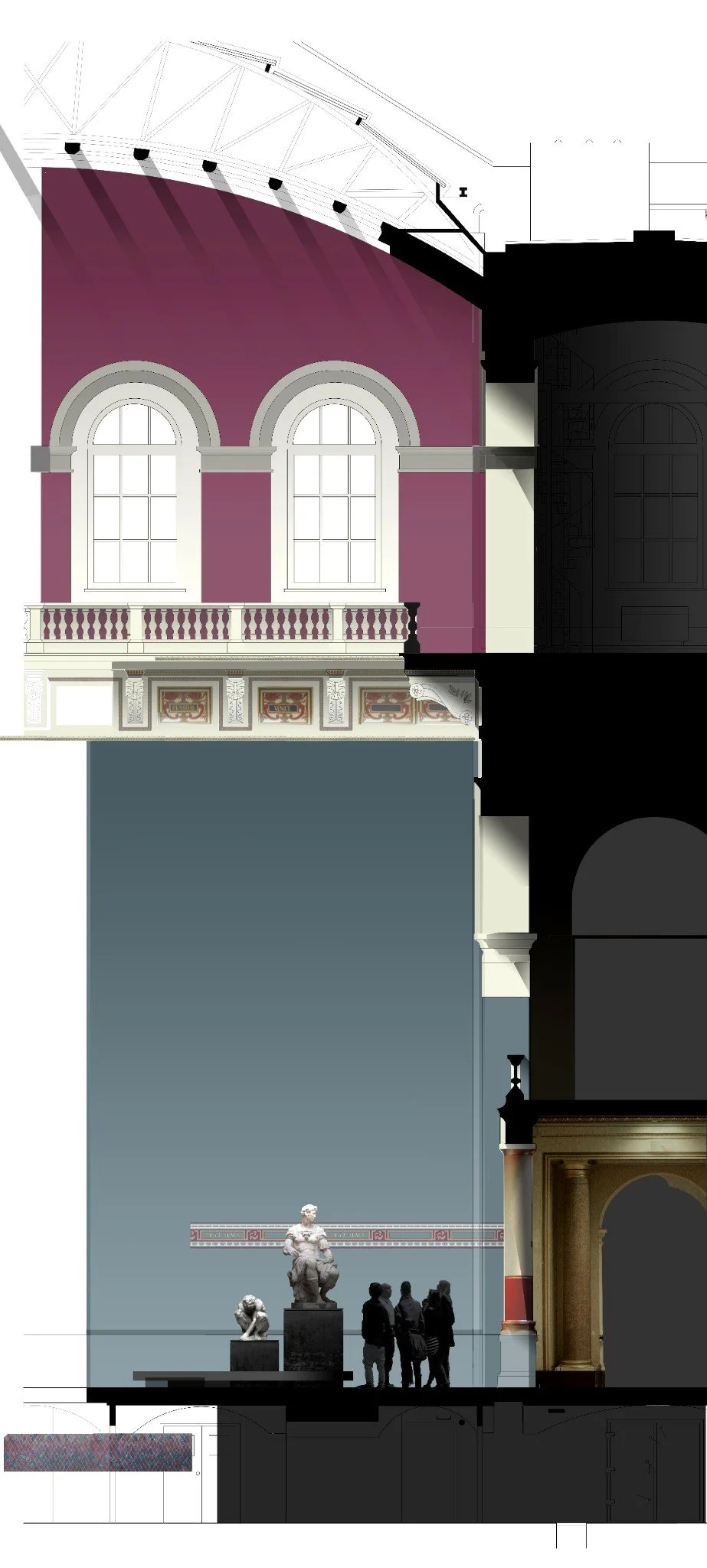
Sectional elevation illustrating the restored proportions and colour hierarchy of the Cast Courts, clarifying the relationship between historic fabric, natural light, and the vertical display of casts within the gallery volume.
Conclusion
The Cast Courts refurbishment represents a collaborative synthesis of conservation expertise, architectural interpretation, and curatorial ambition.
Through careful research, restraint, and a deep respect for the original vision of the courts, the project re-establishes these remarkable spaces as powerful public galleries - places of study, discovery, and awe - while ensuring their continued relevance within the evolving context of the Victoria and Albert Museum
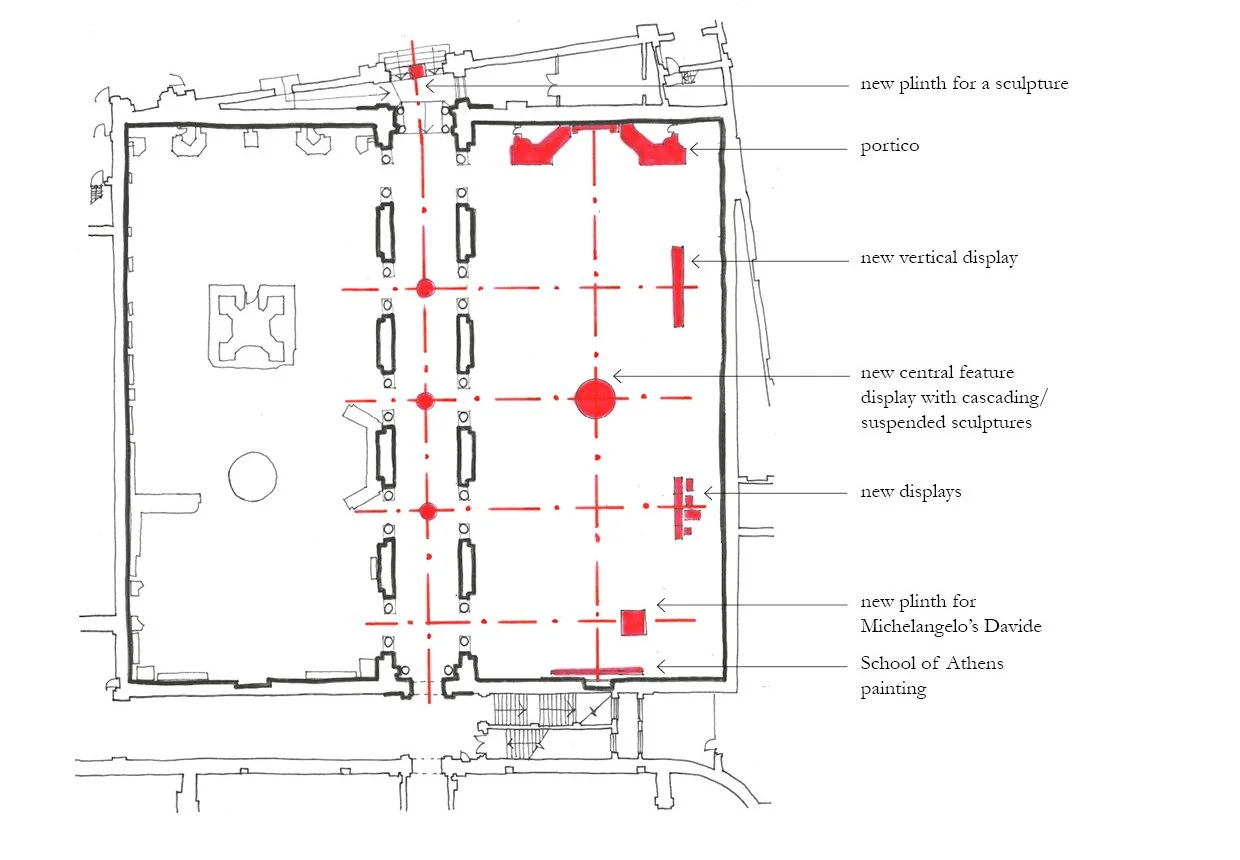
Plan drawing of the Cast Courts showing the historic gallery layout with central axes and key display positions highlighted in red against the existing building fabric.
Get in touch and request your brochure:
Follow the links below to request our brochure which we’ll guide you through the design and service process of our projects!