Working With Existing Rural Structures: Our Approach to Barn Conversions
Introduction
Across the British countryside, redundant agricultural buildings present an opportunity to create distinctive homes while preserving elements of the rural landscape. A successful barn conversion is rarely about inserting a conventional house into an old shell. Instead, it requires an understanding of the existing structure, its history and construction, and the qualities that make it unique.
At London Atelier, our approach begins with careful observation. We seek to retain the character embedded within the building while introducing contemporary interventions that improve performance, comfort and adaptability for modern life.
Understanding the Existing Structure
Every barn tells a different story. Some are timber-framed, others are constructed from stone or brick, each reflecting local materials and methods of construction.
Before any design decisions are made, the existing fabric should be carefully assessed. Structural integrity, historic significance, moisture behaviour and previous alterations all influence how a project can evolve.
Rather than imposing a predetermined design language, we allow the qualities of the existing building to guide the intervention.

Architectural Model of the larger Scheme on the Estate
Preserving Character Through Restraint
The most successful conversions often rely on a limited number of carefully considered changes. Existing openings can frequently be retained and adapted rather than enlarged unnecessarily. Original masonry, exposed timber structures and agricultural detailing provide texture and identity that cannot be recreated through new construction.
New insertions should remain legible, allowing old and new to coexist without imitation.
Light as a Design Material
Many traditional barns were designed for storage rather than occupation and therefore have relatively limited openings. Introducing daylight requires precision. Rooflights, carefully positioned glazing and new internal courtyards can define movement through the building while maintaining the integrity of the original envelope.
Rather than maximising glazing indiscriminately, each opening should frame specific views and reinforce the spatial sequence.
Honest Materials
Material selection should complement rather than compete with the existing structure. Timber, natural stone, lime-based finishes and carefully detailed metalwork often establish a dialogue between contemporary interventions and historic fabric. Bespoke joinery can organise storage and circulation while remaining visually restrained.
Maintaining material honesty helps preserve the authenticity of the conversion.

Improving Performance
Many agricultural buildings were never intended to provide thermal comfort. Careful upgrades to insulation, airtightness and ventilation can significantly improve energy performance while respecting historic construction. Depending on the building and planning constraints, discreet renewable technologies and low-energy systems may also be incorporated.
Sustainability should be embedded within the architectural strategy rather than applied as a separate layer.
Navigating Planning and Heritage Constraints
Barn conversions frequently involve planning considerations, permitted development rights or listed building legislation. Early engagement with planning authorities and heritage consultants can establish a clear framework for design and reduce uncertainty later in the process.
A thorough understanding of local policy is often as important as the architectural proposal itself.
Conclusion
A barn conversion represents an opportunity to extend the life of an existing structure through careful adaptation rather than replacement. By working with the qualities already present - its materials, proportions, light and relationship to the landscape - it is possible to create homes that are both contemporary and deeply rooted in their setting.
At London Atelier, we approach each rural project as a dialogue between past and present, allowing thoughtful interventions to reveal the enduring value of the existing building.
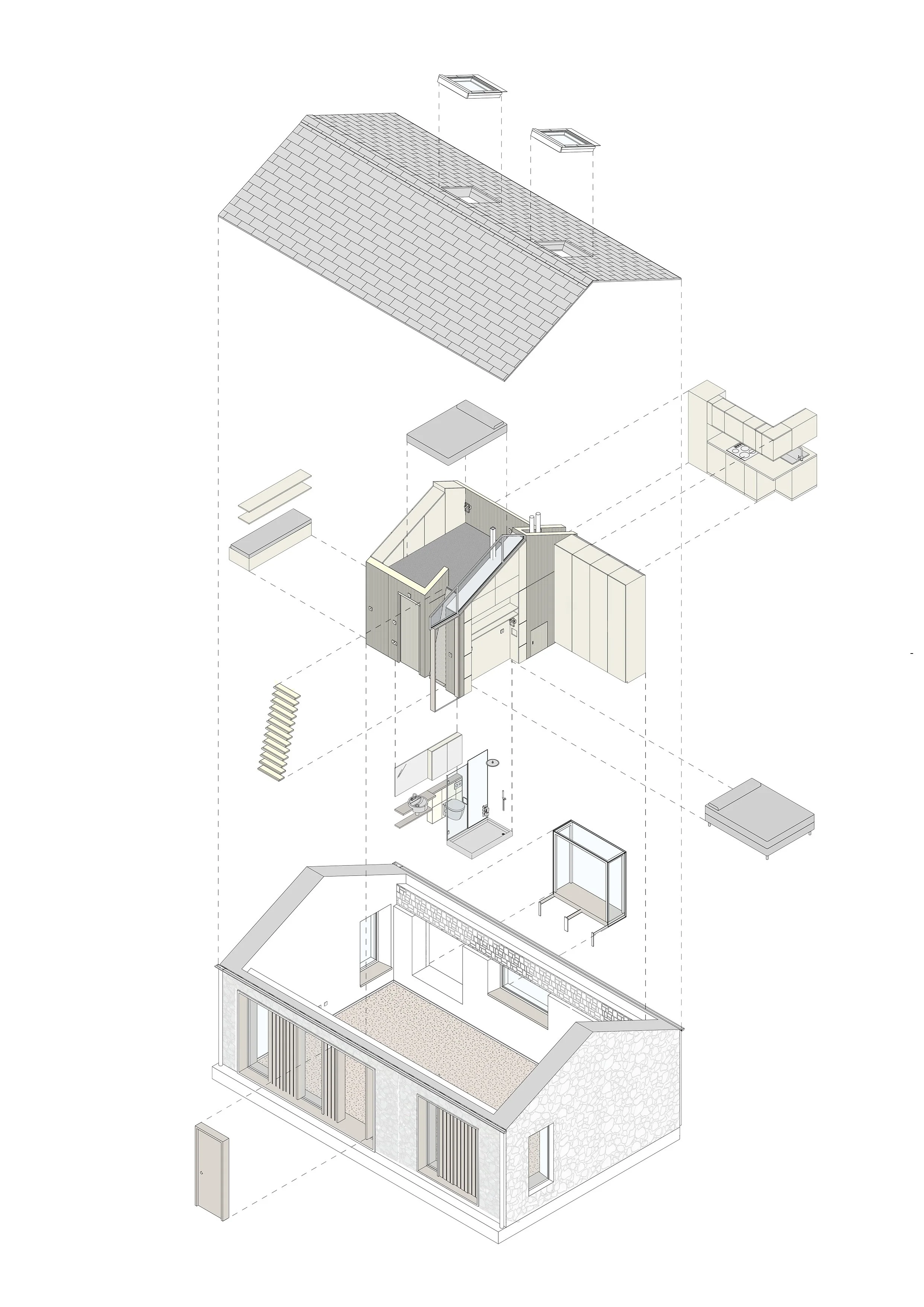
Exploded Axonometric Drawing of the House
The Old Sty
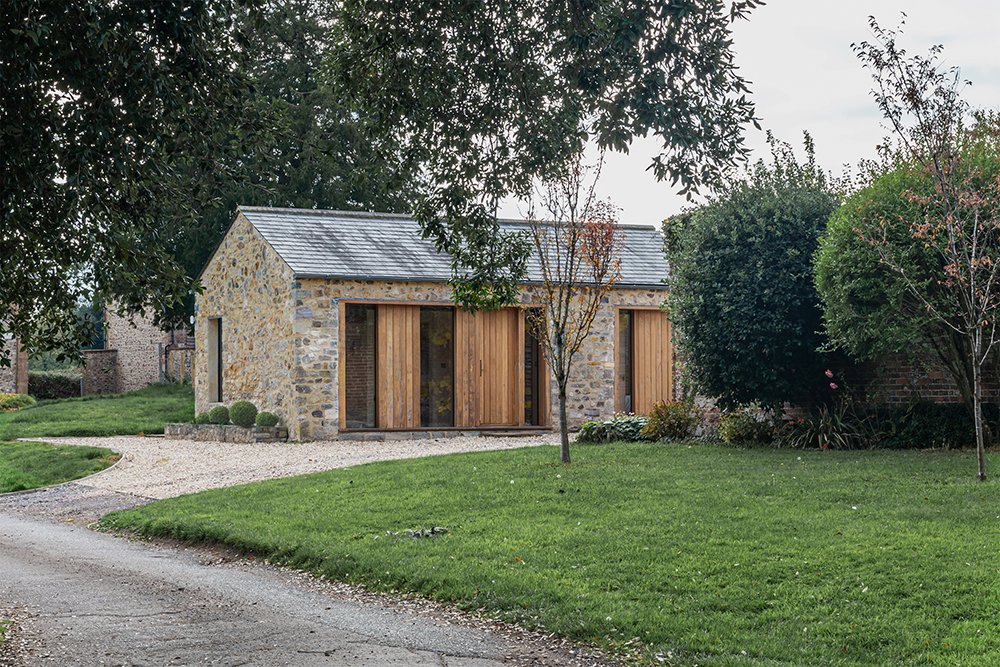
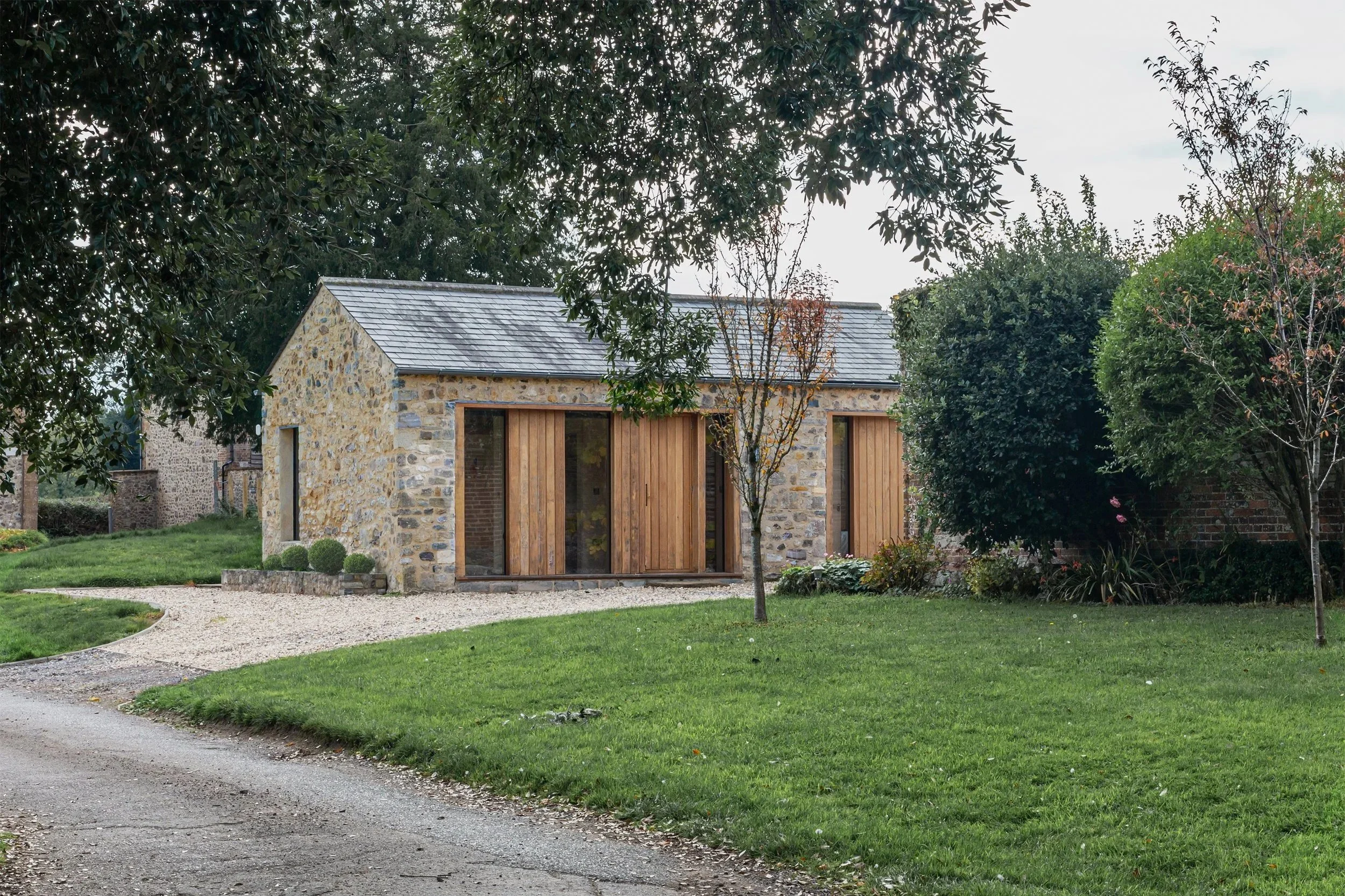
Originally a piggery, later used as a garage, the modest stone outbuilding sits at the centre of the estate. It is the first completed project within the masterplan.
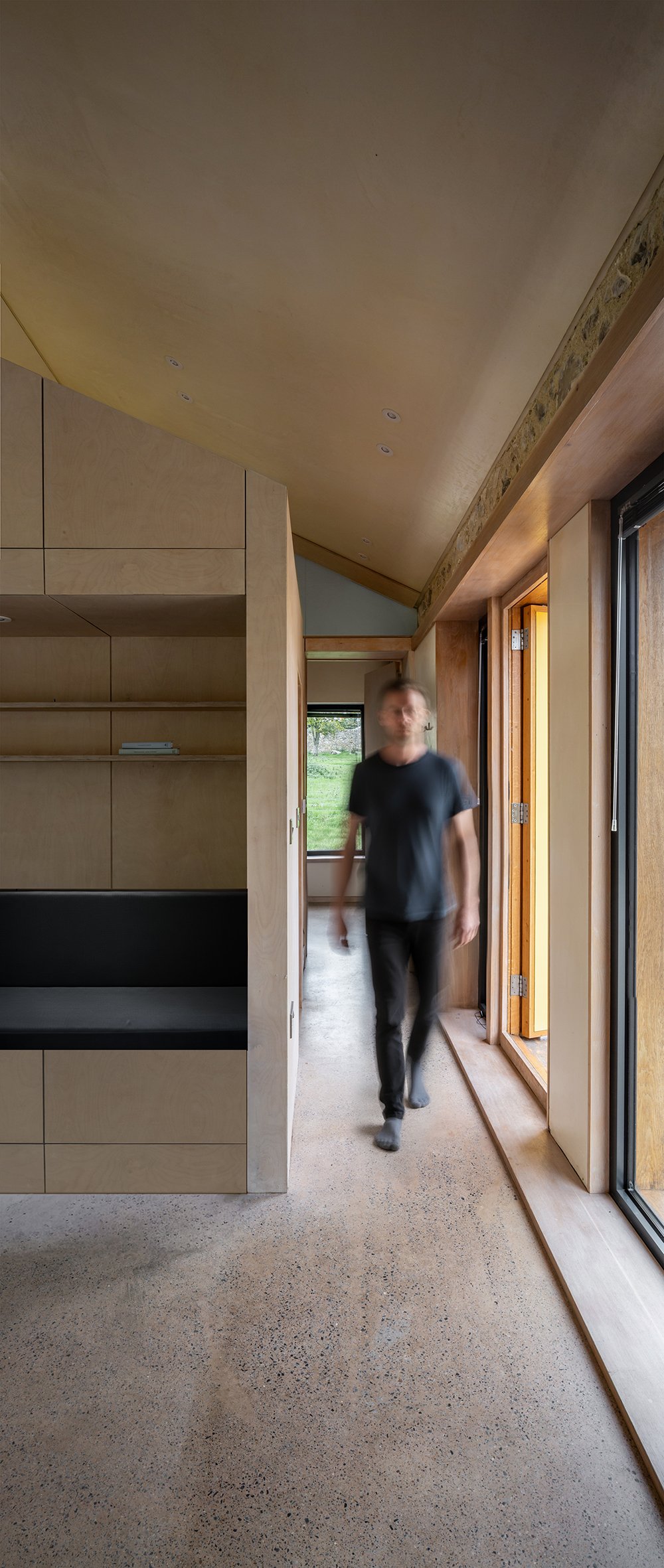
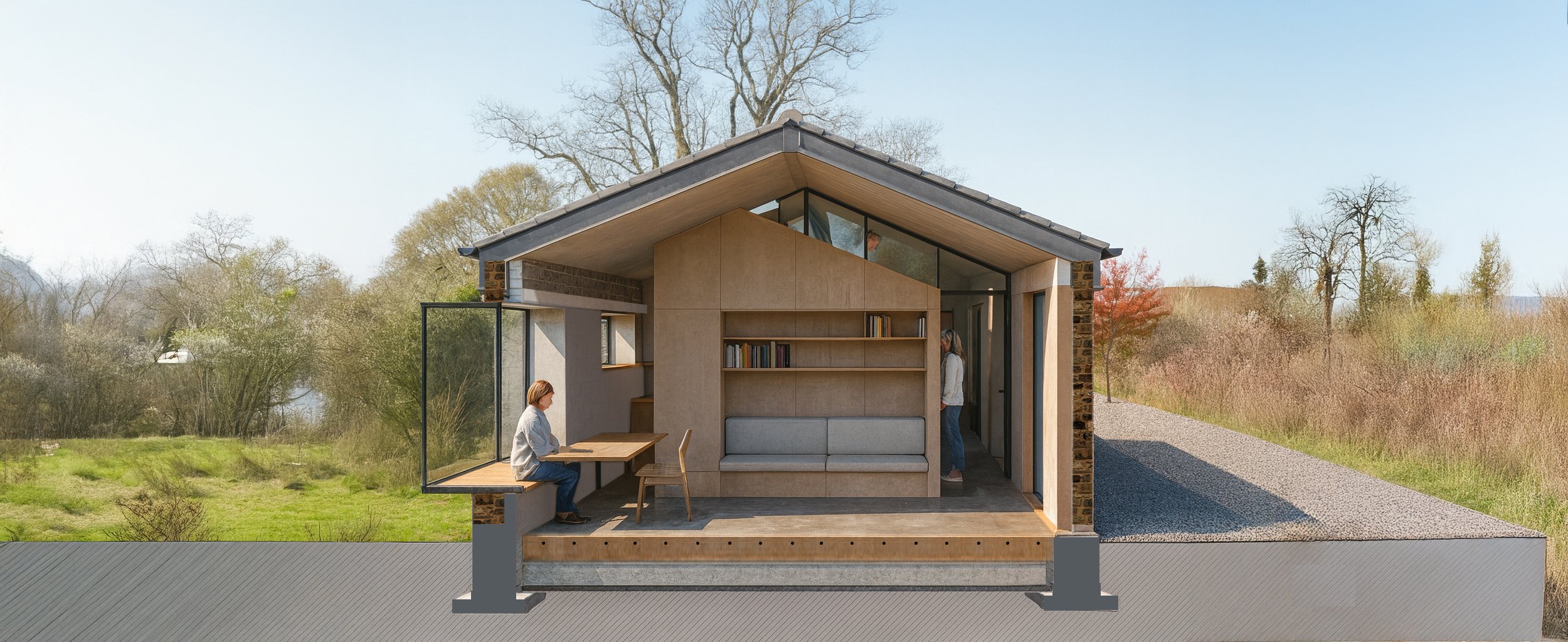
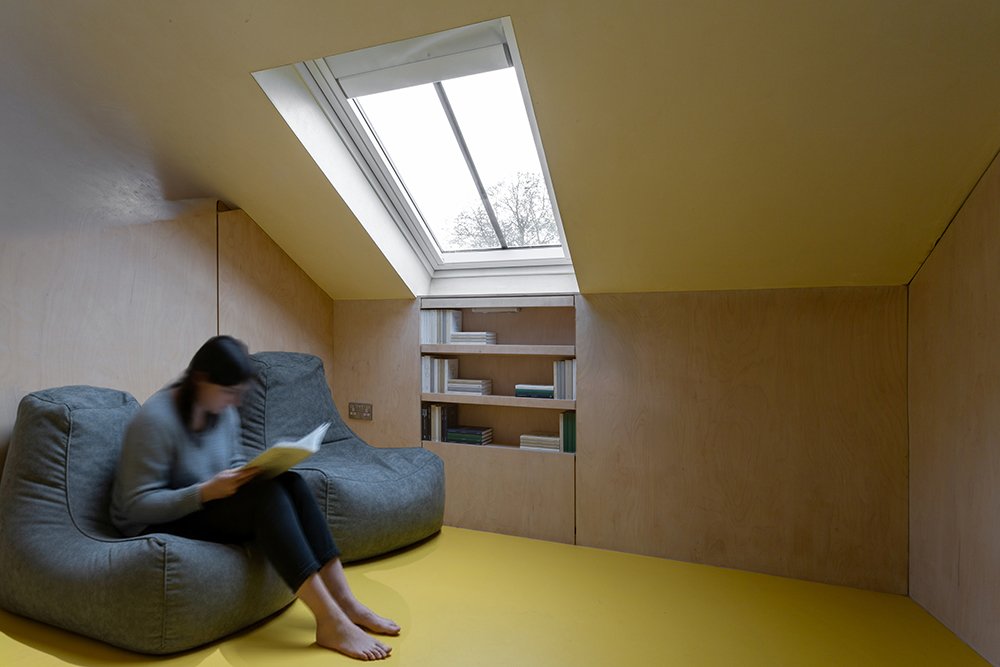
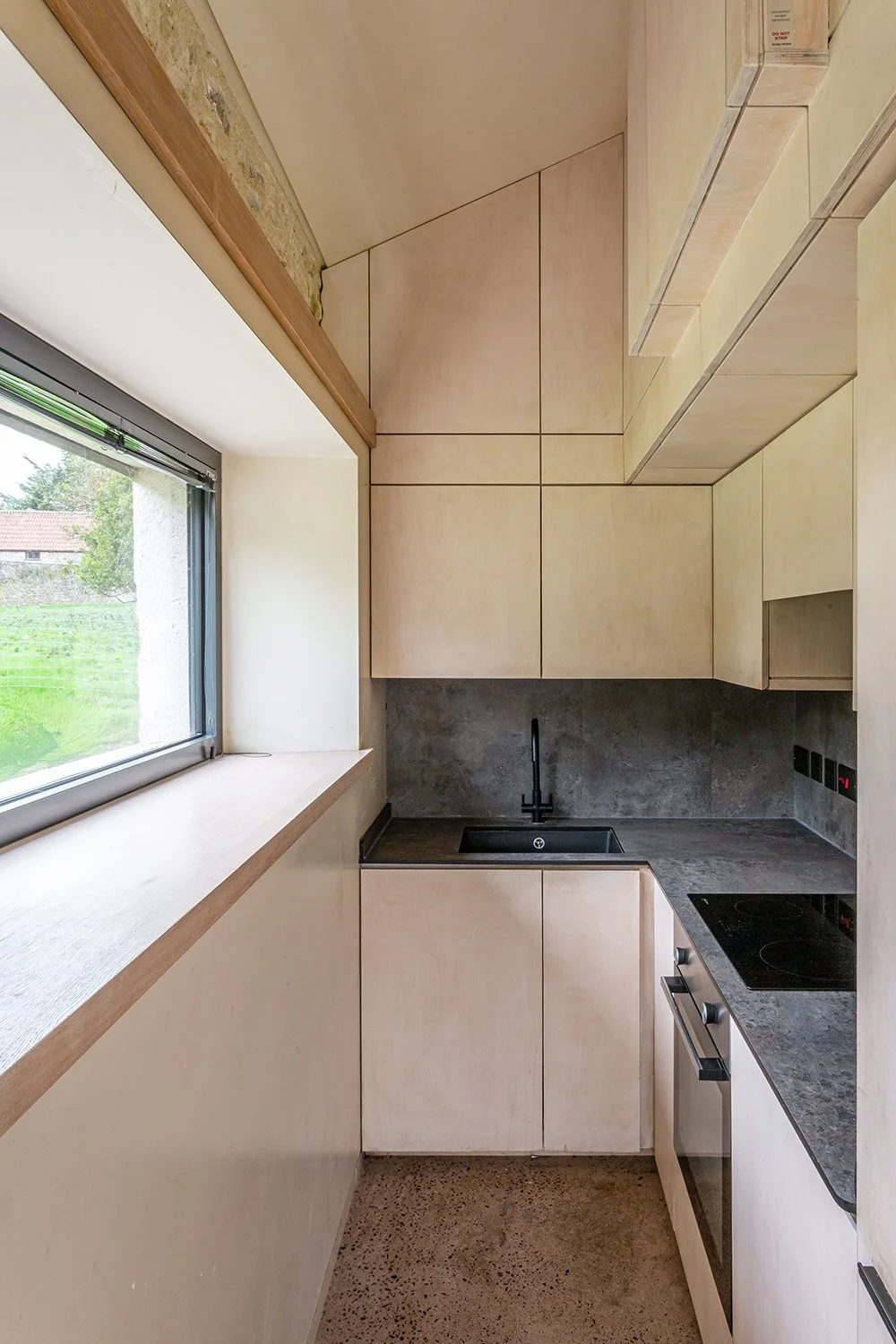
The organising idea: a single sculptural piece of joinery - a plywood volume containing the kitchen, bathroom, storage, and ladder-stair - liberates the remaining floor area and allows the space to read as one calm, continuous room. The precision of the cabinetry contrasts gently with the rugged perimeter walls.
Materials:
Polished concrete floor cast using local red Taunton sand, giving the surface its distinctive pink hue
Sealed pigmented plaster - not paint - for subtle tonal variation and breathability
Vapour-permeable internal insulation to the original rubble-stone walls
Stone repairs sourced from the estate's own ground, laid in lime mortar
Roof rebuilt as a highly insulated warm roof
Externally, the irregular rubble stone walls, simple gabled roof, and deep-set openings are carefully repaired with minimal intervention. New timber doors and externally frameless windows form a clearly contemporary family of inserts - finely detailed, sympathetic in proportion, and consciously distinct from the historic fabric.



The Stone Barns
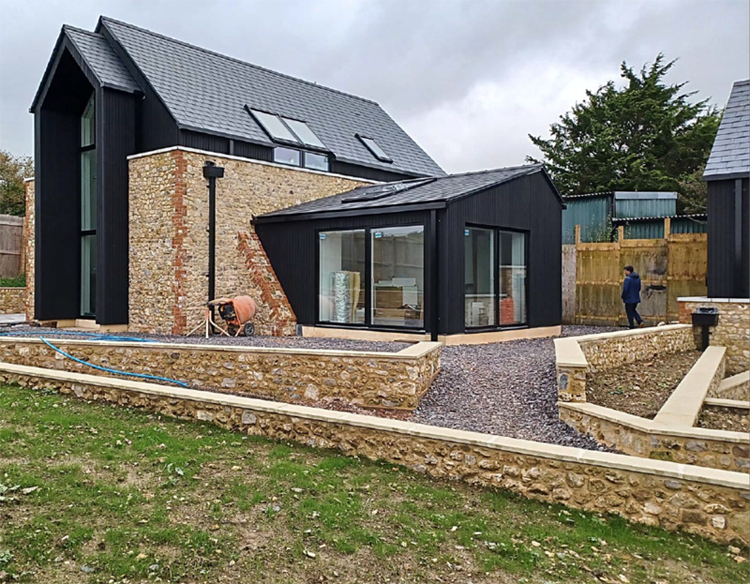
As part of the same estate masterplan, planning permission has been obtained for two barn conversions. Working within the proportions and footprint established by the historic barns, both new buildings are set within the remnants of the existing stone walls.
Prefabricated sandwich panels with cedar cladding rise from within the stone walls to form the structures
Both buildings open towards the south, offering spectacular views over the hills and allowing light to flood into the internal spaces
The larger barn features double-height glazing and tall ceilings, forming a dramatic living space that also benefits the accommodation on the upper level
The northern façade, facing the road, is kept relatively closed



Exploded Axonometric Drawing of the Wardrobe and Kitchen Storage Unit
What This Work Involves
Barn conversions within listed or Conservation Area settings require careful, well-prepared planning applications. Beyond consent, the construction detail must be precise - the interface between historic fabric and new intervention is where problems arise if care is not taken.
Our approach is fabric-first: low-impact, breathable construction, retention of embodied energy, and materials that are rooted in their context.
More info regarding the Masterplan here and regarding the Old Sty here …